

The Bannon Epstein exchanges revealed by US Justice Department documents detail discussions about efforts targeting Pope Francis. Justice Department documents...
Read More
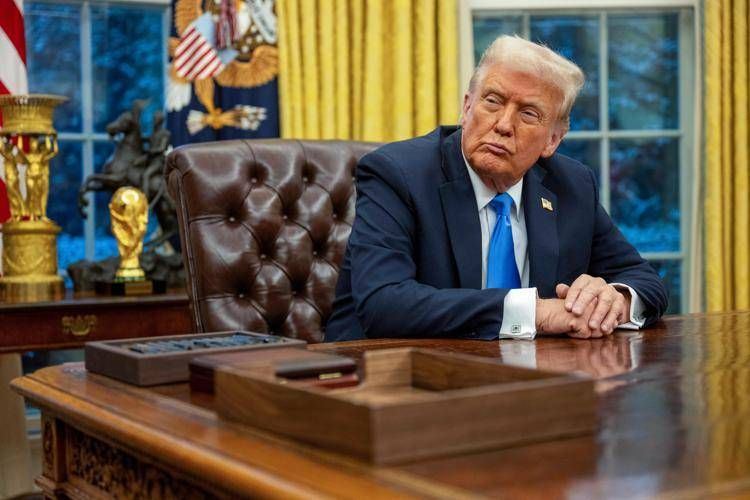
Trump towards cancellation of contracts with AP, Reuters and Bloomberg: new clampdown on the press
-

Video shock, poliziotto aggredito negli scontri di Torino
-

Alberto Trentini e Mario Burlò sono in Italia dopo la liberazione VIDEO
-

Overnight explosions in Caracas hit military area, widespread power outages reported VIDEO
-


Attacco Usa in Nigeria contro l’Isis, Trump: “Risposta al massacro di cristiani” VIDEO

President Donald Trump does not want gags: the tycoon has launched an unprecedented campaign against major international news agencies, with the revocation of contracts and access to the White House. A move that raises questions about press freedom and the right to independent information
The relationship between Donald Trump and the press has always been characterised by tensions and confrontations, but the escalation in recent weeks has led to decisions that are deeply shaking the American media environment. Indeed, the Trump administration has started the process of terminating contracts with Associated Press (AP), Reuters and Agence France-Presse, the main international news agencies, accused of spreading a narrative contrary to the interests of the White House.
Trump’s decision was made official by Kari Lake, special advisor to the US Agency for Global Media (USAGM), the government agency responsible for disseminating news and information internationally. Lake announced on ‘X’ that cancelling these contracts will save taxpayers around $53 million, stressing that ‘we don’t need to outsource the responsibility of telling our story’.
But the administration’s action does not stop there. Trump has already begun to change the dynamics of the pool of journalists who follow the president on a daily basis. On 25 February 2025, the White House made it official that from now on it will be the government itself that chooses which media outlets will be allowed access to restricted events such as briefings in the Oval Office and trips aboard Air Force One. The move excluded AP and restricted access to Reuters as well, giving more visibility to perceived favourable media outlets, including Bloomberg News.
This change is a direct blow to the White House Correspondents’ Association (WHCA), the association that has been managing the rotation of accredited journalists for decades, ensuring fair and transparent access to presidential information. The WHCA responded with a harsh note, reiterating that ‘in a free country, it is not the authorities who choose the journalists’.
Tensions between Trump and the press are nothing new. Already during his first administration, relations had been characterised by constant clashes, culminating in such egregious episodes as the withdrawal of accreditation from several journalists. However, this new phase seems to mark a further step towards total disintermediation, with the declared intention of wanting to ‘tell its story’ directly to the public, bypassing the mediation of traditional newspapers.
This shift worries not only journalists but also many members of civil society, who see in these measures a threat to press freedom and the right of citizens to receive accurate and impartial information. In a joint statement, the heads of AP, Reuters and Bloomberg emphasised that ‘in a democracy, it is essential that the public has access to independent news’, adding that restricting news agencies’ access to the President puts the dissemination of reliable information globally at risk.
Trump’s decision now seems irreversible. The question on many people’s minds is what the long-term consequences of this strategy will be on press freedom and the public’s ability to receive information from independent sources.
THE LATEST NEWS

Iran regime mass killing justification claims in leaked video
13 Febbraio 2026
Leaked footage allegedly shows a regime security strategist defending mass killings during anti-government protests, according to activists Leaked video and...
Read More

New Epstein revelations and scrutiny on Prince Andrew
13 Febbraio 2026
Royal family highlights charity and social causes as attention returns to Epstein documents and links to the former duke. New...
Read More

Robert F. Kennedy Jr cocaine admission sparks backlash in US
13 Febbraio 2026
The Robert F. Kennedy Jr cocaine admission during a podcast interview has triggered political backlash and calls for resignation in...
Read More

UN scandal: Iran elected vice-president of social development despite human rights violations
13 Febbraio 2026
Iran has been elected vice-president of the UN Commission for Social Development, sparking fierce controversy over its violations of women's...
Read More

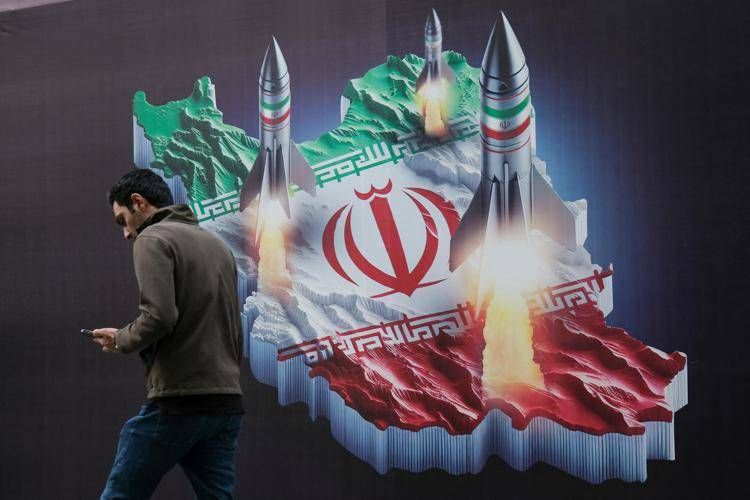
Iran marks Islamic Revolution anniversary with anti-US and Israel display
11 Febbraio 2026
Missiles, drone wreckage and propaganda symbols shown during mass rallies in Tehran Iran marks Islamic Revolution anniversary with anti-US and...
Read More
(Photo: © AndKronos)
Condividi su:




-

 News23 ore ago
Tentato rapimento di una bambina a Monteverde Roma: indagini in corso
-

 Flash6 ore ago
Furto ad Arezzo: uomo muore dissanguato durante la fuga dopo tentato furto
-

 International-News20 ore ago
New Epstein revelations and scrutiny on Prince Andrew
-

 International-News7 ore ago
Bannon Epstein messages reveal plan against Pope Francis