

A CSIS analysis highlights the financial burden of the U.S. military campaign against Iran during the first days of the...
Read More
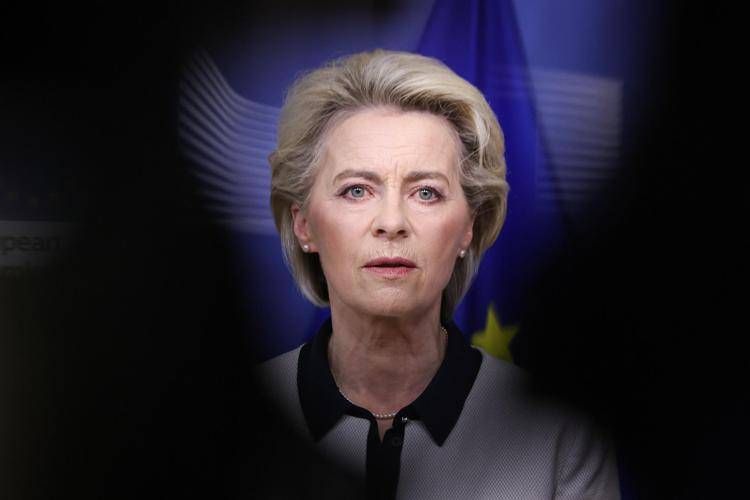
EU-US, clash over duties: von der Leyen calls on Trump to avert squeeze from 1 June
-


Caso David Rossi, video ricostruzione Commissione: “Morte compatibile con omicidio”
-


US-Israel joint attack on Iran targets strategic sites VIDEO
-


Incendio teatro Sannazaro Napoli: fiamme distruggono la struttura VIDEO
-


Danni ciclone Harry, Meloni nuovamente a Niscemi: decreto e 150 milioni subito VIDEO

Tension over trade relations: Brussels aims to buy time until 9 July. US president insists on 50% tariffs. ‘No deal to seek, it’s already fixed’
The European Union is trying to curb the US trade offensive. European Commission President Ursula von der Leyen had a telephone conversation with President Donald Trump today, after the latter announced his intention to bring forward to 1 June the application of 50% tariffs on European imports, overriding the agreed break until 9 July.
It was von der Leyen herself who made the telephone meeting known on social media, calling it “a good phone call” and stressing the importance of economic relations between the two blocs: ‘We are ready to continue the talks quickly and decisively. For a good agreement, however, we need time until 9 July,” he wrote on X.
Trump: ‘The duty is already decided’
However, the US president appears intent on proceeding without waiting. Already on Friday he had declared that “there is no agreement to be reached, the deal has already been set: it is 50-50”, reiterating his willingness to impose new tariffs due to the stalemate in the negotiations. In his latest post on Truth Social, Trump denounced an “unacceptable” trade relationship with Europe, citing trade barriers, tax impositions and alleged discrimination against American companies: “The annual deficit with the EU exceeds $250 billion”.
Despite the harshness of the message, Trump left open a timid possibility of postponement: “If someone comes along and wants to build a power plant here, I can talk to them about a small extension,” he said from the White House.
Brussels attempts mediation
The European Commission, meanwhile, has tried to keep diplomatic channels active. Trade Commissioner Maros Sefcovic, after talks with US representatives Jamieson Greer and Howard Lutnick, reiterated Brussels’ commitment to a shared solution: ‘We are ready to work in good faith. Transatlantic trade must be based on mutual respect, not threats,’ he wrote.
However, concern remains high in Brussels about the possibility of trade escalation. Should Washington proceed with the introduction of tariffs as of 1 June, the risk is that of a new economic crisis between two of the world’s largest trading partners.
THE LATEST NEWS

Minab girls’ school strike may have been carried out by U.S. forces
6 Marzo 2026
Analysis by The New York Times links the deadly attack near the Strait of Hormuz to U.S. military operations targeting...
Read More

FBI reports on Donald Trump sexual assault allegation released by DOJ
6 Marzo 2026
Documents relate to interviews conducted in 2019 with a woman who said she met Trump through Jeffrey Epstein when she...
Read More

Iran’s missile cities targeted in U.S.-Israel strikes
5 Marzo 2026
Underground missile bases built to shield Iran’s ballistic arsenal are emerging as a key vulnerability in the ongoing military campaign...
Read More

JD Vance’s Silence on Trump-Iran Attack Raises Questions Among MAGA Base
5 Marzo 2026
The U.S. Vice President’s low profile during the military strikes sparks debate over his foreign policy stance and presidential prospects...
Read More

Trump rejects Mojtaba Khamenei as Iran’s Supreme Leader successor
5 Marzo 2026
The U.S. president says the son of Ali Khamenei is “unacceptable” and insists he must be involved in choosing Iran’s...
Read More

(Photo: © AndKronos)
Condividi su:




-

 News8 ore ago
Allarme bomba al Palazzo di giustizia di Milano: evacuato tribunale dopo 4 telefonate
-

 News9 ore ago
Napoli, accoltella una donna su un bus e la tiene in ostaggio per 15 minuti: arrestato 39enne
-

 International-News21 ore ago
Iran’s missile cities targeted in U.S.-Israel strikes
-

 International-News23 ore ago
Trump rejects Mojtaba Khamenei as Iran’s Supreme Leader successor