




The Pontiff renews his commitment to peace in the Middle East during his visit to Lebanon Today, Sunday 30 November,...
Read More

Over 1,000 sick and 60 dead in Congo: mysterious disease under investigation

Health emergency in Congo: mysterious disease spreads WHO intensifies investigation to identify cause of deadly outbreak in Congo, while tests rule out Ebola and Marburg
The Democratic Republic of Congo is facing a health emergency with over 1,000 sick people and 60 deaths linked to an as yet unidentified disease. The World Health Organisation (WHO) is taking stock of the situation and has launched in-depth investigations to determine the cause of the outbreak, which is mainly concentrated in the Equator province.
The situation in the affected areas
According to the WHO, several disease outbreaks and deaths have been reported in the Basankusu and Bolomba health zones since early 2025. The latest outbreak saw 141 new cases in the Basankusu health zone last week, although fortunately no deaths were reported. However, in the same area, 158 cases and 58 deaths had already occurred in early February. The health authorities continue to monitor the situation closely, with an increasing number of sick people presenting worrying symptoms.
Symptoms and complex clinical picture
Patients affected by the disease show a wide range of symptoms: fever, headache, chills, sweating, muscle and joint pain, coughing, vomiting and diarrhoea, as well as episodes of nosebleeds. This complex clinical picture has made it difficult to pinpoint the precise cause of the illness, with WHO working to rule out other known and potentially fatal diseases.
Ongoing investigation: Ebola and Marburg ruled out
Initial laboratory tests have ruled out the presence of the Ebola virus and the Marburg virus, two of the main viral threats in the region. About half of the samples tested positive for malaria, a common disease in Congo, but not enough to explain the whole picture. Further investigations are looking into the possibility of meningitis and samples of food, water and environment are being tested for environmental contamination.
Health authorities’ responses
A national rapid response team, composed of experts from WHO and the Congolese Ministry of Health, has been sent to the affected areas to intensify surveillance, conduct interviews with local communities and better understand the context of the spread. In addition, the team is providing treatment for concomitant diseases such as malaria, typhoid fever and meningitis, while samples are sent to the national laboratory in Kinshasa for further analysis.
THE LATEST NEWS
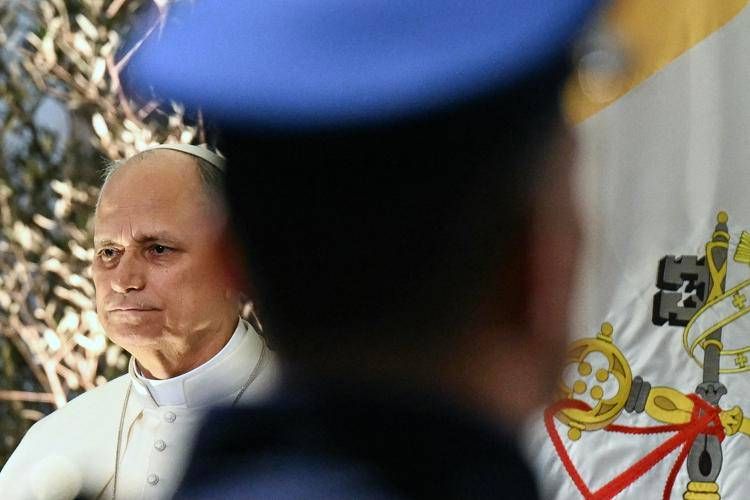
Pope Leo XIV’s trip to Lebanon after his visit to Turkey
30 Novembre 2025
Pope Leo XIV’s trip continues across the eastern Mediterranean Pope Leo XIV’s trip enters its Middle Eastern phase today, as...
Read More

Trump and the plan for Ukraine: business at the heart of the strategy
29 Novembre 2025
The plan for Ukraine aims to turn negotiations into economic opportunities The plan for Ukraine circulating between Washington and Moscow,...
Read More

Airbus A320 recall causes disruption to global air travel
29 Novembre 2025
Airbus A320 recall causes cancellations and urgent repairs It has been a difficult day for international air traffic, in the...
Read More

Israel: two Palestinians killed in Jenin after surrendering
28 Novembre 2025
Israel launches investigation into police after killing of suspects in Jenin Two Palestinians were killed in Jenin, in the West...
Read More

Humanitarian crisis in Sudan: a country devastated by civil war
28 Novembre 2025
Humanitarian crisis in Sudan: a conflict that is destroying a country. A country torn apart by the humanitarian crisis in...
Read More

Condividi su:


-
International-News23 ore ago
Pope Leo XIV’s trip to Lebanon after his visit to Turkey
-
 News23 ore ago
Indiano trovato cadavere a Pontinia: ferita alla testa mortale
-
 Primo Piano23 ore ago
Viaggio di Papa Leone XIV in Libano dopo la tappa in Turchia
-
 Flash23 ore ago
Incidente sulla Statale 106 Radd Jonica provoca due morti