Tehran warns that major U.S. tech firms could face attacks if more regime leaders are killed Iran’s Islamic Revolutionary Guard...
Read More
International-News
South Korea changes course: Lee Jae-myung is the new president
After Yoon’s impeachment, South Koreans choose stability and reform: with Lee, the centre-left returns to power with a solid parliamentary majority and an independent line on the economy, welfare and international relations
South Korea opens a new political chapter with the election of Lee Jae-myung as president. After the impeachment of Yoon Suk-yeol, who was ousted in December for attempting to invoke martial law, voters clearly chose a return to stability. The candidate of the Democratic Party (centre-left), who was narrowly defeated two years ago, won by a wide margin against Kim Moon-soo of the People Power Party.
Voter turnout reached 77.8%, the highest since 1997, a sign of exceptional civic participation after months of institutional tensions. With a solid majority in the National Assembly, Lee will be able to count on a strong mandate to bring about a change of course in Asia’s fourth largest economy.
A human rights lawyer and former mayor of Seongnam, Lee, 61, built his campaign around a powerful personal narrative: the son of factory workers, forced to work in a factory as a teenager, left disabled following an accident, he became one of the most recognisable faces of South Korean progressivism. His biography became an integral part of his political message, centred on social equality, justice and welfare reform.
Lee has promised concrete measures to reduce inequality, curb property speculation and support young people affected by unemployment and precariousness. Among his economic priorities is to relaunch Korea as a global power in artificial intelligence, aiming to make it one of the top three countries in the world in this sector. In terms of infrastructure, he proposes moving the administrative capital from Seoul to Sejong to relieve congestion in the metropolis and develop central areas, with Daejeon set to become an international scientific hub.
In foreign policy, Lee will maintain the alliance with the United States but with a more autonomous and pragmatic approach. He has expressed reservations about Donald Trump’s isolationist approach, fearing repercussions on military spending and trade relations. He has also raised the possibility of reducing imports of US weapons if Washington increases pressure on Seoul.
With regard to North Korea, Lee advocates a gradual rapprochement, consisting of small, verifiable steps and economic cooperation. He has criticised the “grand bargain” strategies of the previous US administration and fears that, in the event of direct US-Pyongyang negotiations, Seoul could be excluded (“Korea passing”).
However, there are also legal issues. Lee is at the centre of several investigations into corruption and abuse of office related to his past as mayor. On 2 May, the Supreme Court overturned a previous acquittal for violating electoral law, reopening a trial that could jeopardise his future candidacy.
However, his election represents much more than a change of leadership: it marks the rejection of authoritarianism, the return of progressives and the beginning of a new political phase that could redefine the balance of power in East Asia — between the challenge of artificial intelligence, relations with Washington and the fragile North Korean dossier.
THE LATEST NEWS
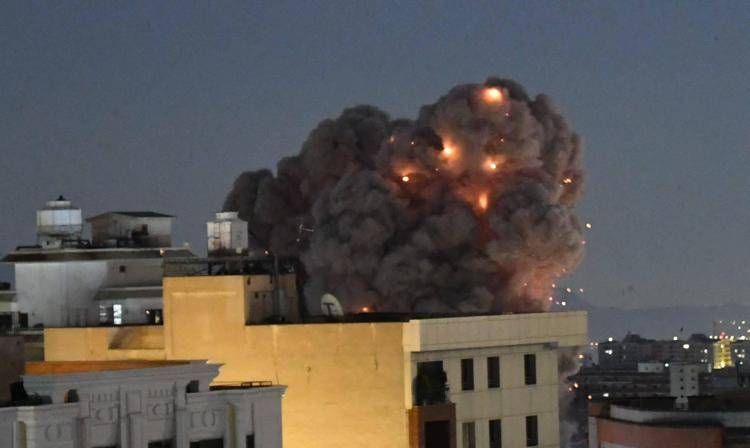
King Charles to meet Trump in US during April visit
31 Marzo 2026
Buckingham Palace confirms trip tied to 250th anniversary of American independence King Charles to meet Trump in US during April...
Read More
MF warns Iran war will raise prices and slow global growth
30 Marzo 2026
A report led by chief economist Pierre-Olivier Gourinchas outlines risks from energy shocks and limited fiscal space IMF warns Iran...
Read More
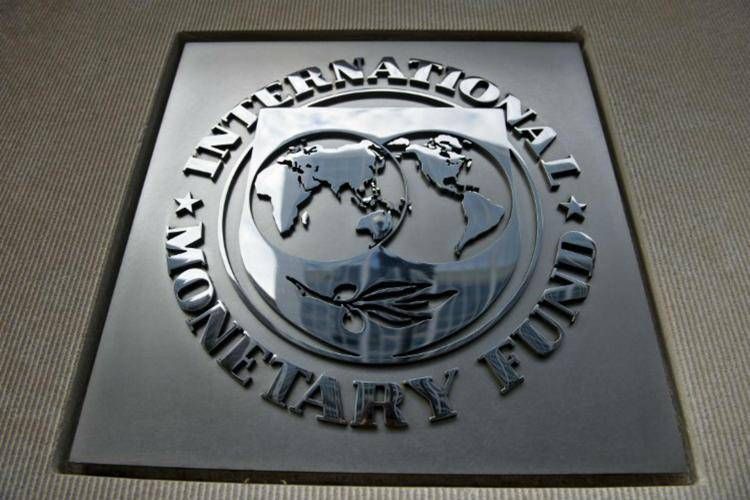
Israel approves death penalty for terrorists targeting Palestinians
30 Marzo 2026
Knesset passes law after lengthy debate; Palestinian Authority calls it a “dangerous escalation” Israel approves death penalty for terrorists targeting...
Read More
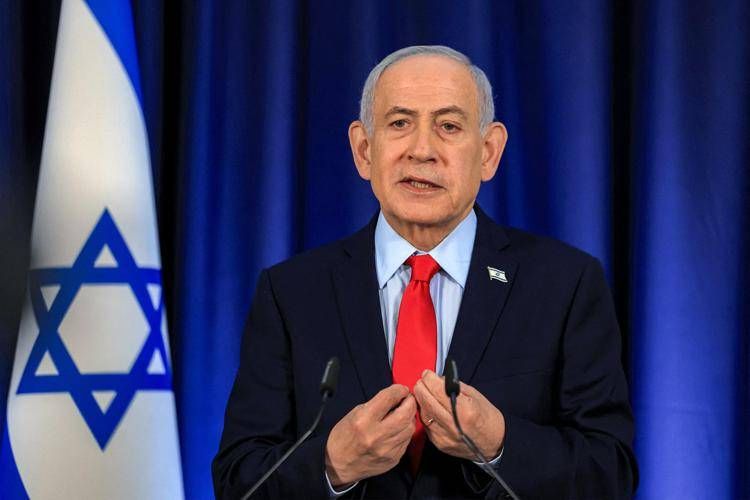
Trump Threatens Iran’s Infrastructure if Strait of Hormuz Reopening Fails
30 Marzo 2026
Amid escalating tensions, the United States warns of attacks on Iranian power plants, oil wells, and Kharg Island President Donald...
Read More
Princess Beatrice considers leaving the UK after Epstein Files
30 Marzo 2026
Reports cite strain from scrutiny over Andrew and Sarah’s ties to Jeffrey Epstein Princess Beatrice considers leaving the UK after...
Read More

(Photo: © AndKronos)