U.S. president praises “productive” meetings and invites Chinese leader to the White House as both sides stress cooperation and address...
Read More
International-News
US military options against Iran expand as Trump weighs action
📰 LiberoReporter su Google News
Segui tutte le notizie senza perderne una
SEGUI ORA →
Segui tutte le notizie senza perderne una
The Pentagon submits an expanded set of strike scenarios to the White House as diplomatic and military pressures rise across the Middle East
The Pentagon has presented President Donald Trump with an expanded list of US military options against Iran, including potential strikes aimed at nuclear and missile facilities and measures designed to weaken Supreme Leader Ali Khamenei, according to the New York Times, citing multiple U.S. officials.
The new proposals go well beyond the measures Trump was considering just two weeks ago, which he described at the time as tools to pressure Tehran into ending its violent crackdown on anti-regime protests. The updated options reportedly include direct U.S. military raids on targets inside Iranian territory, marking a significant escalation in planning.
Trump and his senior advisers are now actively weighing whether to authorize a military intervention that could also seek to trigger a change in government in Tehran. While the president has not ruled out a diplomatic solution, U.S. officials say his current approach mirrors the strategy previously used toward Venezuela, combining pressure with the threat of force.
As Washington reviews its US military options against Iran, regional actors are moving to contain the crisis. Turkey has offered to mediate between Tehran and Washington in an effort to de-escalate tensions. Turkish President Recep Tayyip Erdogan conveyed the proposal during a phone call with Iranian President Masoud Pezeshkian, according to a statement from Ankara.
Erdogan emphasized Turkey’s willingness to act as a facilitator between Iran and the United States to ease tensions and address outstanding issues, with both leaders discussing the growing military pressure in the region. The call took place as Iran’s foreign minister, Abbas Araghchi, was visiting Istanbul.
Iran, fully aware that it cannot match U.S. conventional military superiority, has spent decades developing a system of asymmetric retaliation designed to impose high costs and destabilize not only the Middle East but also the global economy. With renewed threats from Washington and what Iranian officials describe as a massive U.S. military buildup in the region, those retaliatory options are again at the center of strategic calculations.
Despite damage suffered during Israeli and U.S. strikes last summer and mounting internal unrest, Tehran still retains a broad range of response tools. These include direct military confrontation, the activation of allied militias, and economic measures with potentially global consequences. “The regime has many capabilities if it views the conflict as existential,” said Farzin Nadimi, senior fellow at the Washington Institute, as cited by CNN.
Iran’s most immediate option remains military force. The country possesses thousands of missiles and drones capable of striking U.S. troops stationed across the Middle East and targets in Israel. Following a surprise Israeli attack in June, Iran launched waves of ballistic missiles and drones that caused damage and partially penetrated Israeli air defenses.
U.S. officials believe Iran has since rebuilt portions of its arsenal. Secretary of State Marco Rubio recently noted that between 30,000 and 40,000 American troops are deployed at eight or nine bases in the region, all within range of Iranian missiles and drones. According to two U.S. officials quoted by CNN, these capabilities complicate any attempt to deliver a decisive blow through US military options against Iran.
Tehran has also warned that any attack would trigger retaliation against U.S. allies. Last summer, following American strikes on Iranian nuclear sites, Iran fired missiles at the al-Udeid air base in Qatar, the largest U.S. military installation in the region.
Alongside direct confrontation, Iran continues to rely on allied proxy forces. Although Israel has significantly weakened Tehran’s regional network in recent years, armed groups such as Kataeb Hezbollah and Harakat al-Nujaba in Iraq, as well as Hezbollah in Lebanon, have pledged support if Iran is attacked. The leader of Kataeb Hezbollah, Abu Hussein al-Hamidawi, has called on Iran’s supporters worldwide to prepare for total war.
That strategy, however, faces constraints. Hezbollah has been weakened by prolonged clashes with Israel and domestic pressure to disarm, while Iran-backed militias in Iraq operate under increasing scrutiny from a U.S.-aligned central government. The Houthis in Yemen remain the most active proxy force, having targeted Saudi Arabia, the United Arab Emirates, Israel, and U.S. vessels in the Red Sea with Iranian backing.
Many analysts argue that Iran’s most disruptive weapon would be economic rather than military. Tehran controls the Strait of Hormuz, through which more than one-fifth of the world’s oil supply and significant volumes of liquefied natural gas pass. Any attempt to disrupt traffic through the strait could send global energy prices soaring and trigger a worldwide economic downturn.
“Even partial disruptions could cause sharp price increases, supply chain shocks, and rising inflation,” warned energy analyst Umud Shokri. Such a move would also harm Iran’s own trade and that of neighboring Arab states, many of which are pressuring the Trump administration to avoid a military strike.
THE LATEST NEWS
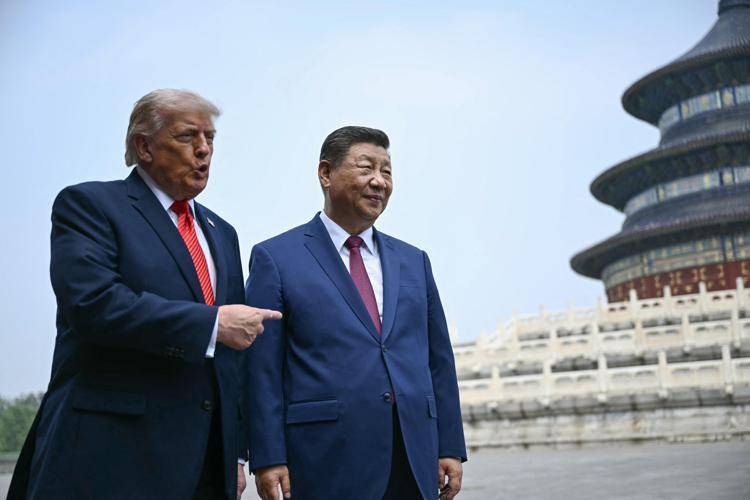
Trump says Iran is “wiped out,” intelligence shows otherwise
13 Maggio 2026
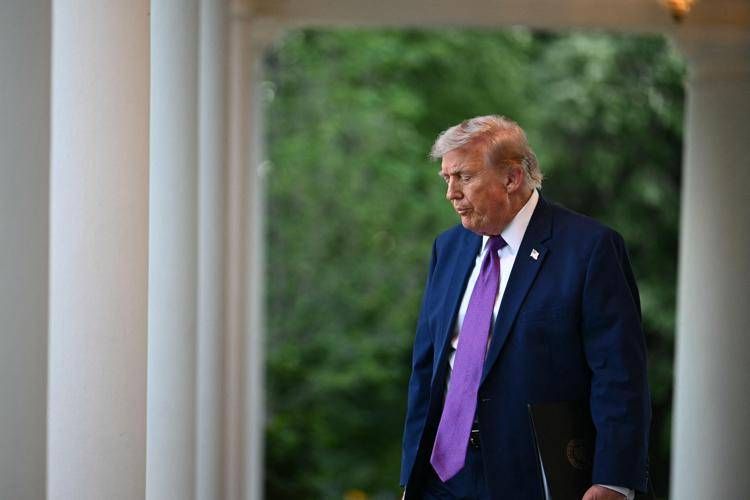
Classified briefings to Congress outline a resilient missile capability despite White House claims “The Iran is wiped out.” That is...
Read More

Iran still a threat despite Trump claims, intelligence says
13 Maggio 2026
U.S. intelligence assessments contradict the president’s narrative of a weakened Tehran. “The Iran has been obliterated,” Donald Trump has said...
Read More
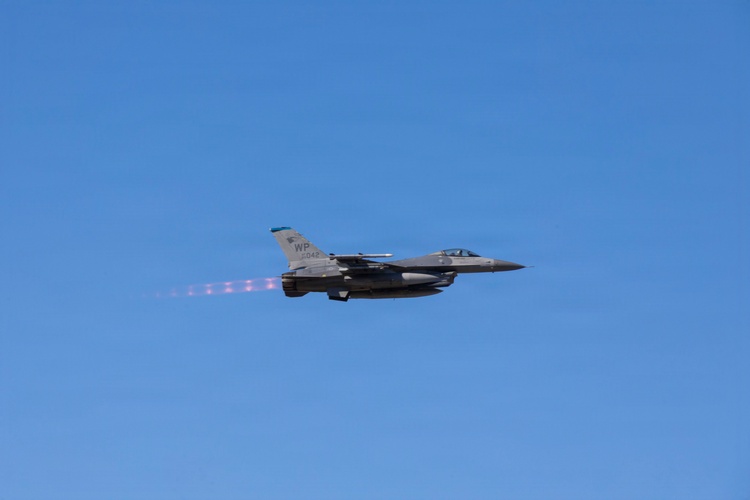
U.S. jet strikes Iranian oil tankers in the Gulf of Oman
8 Maggio 2026
Military action targets vessels accused of breaching a naval blockade before reaching Iranian ports U.S. jet strikes Iranian oil tankers...
Read More
Ryanair CEO calls for airport alcohol ban before morning flights
6 Maggio 2026
Michael O’Leary urges restrictions after surge in disruptive passengers, citing daily diversions linked to alcohol abuse Ryanair CEO calls for...
Read More

Iran strikes US bases expose wider damage than reported
6 Maggio 2026
A Washington Post analysis based on satellite imagery challenges Trump’s claims and details extensive strikes across US installations in the...
Read More
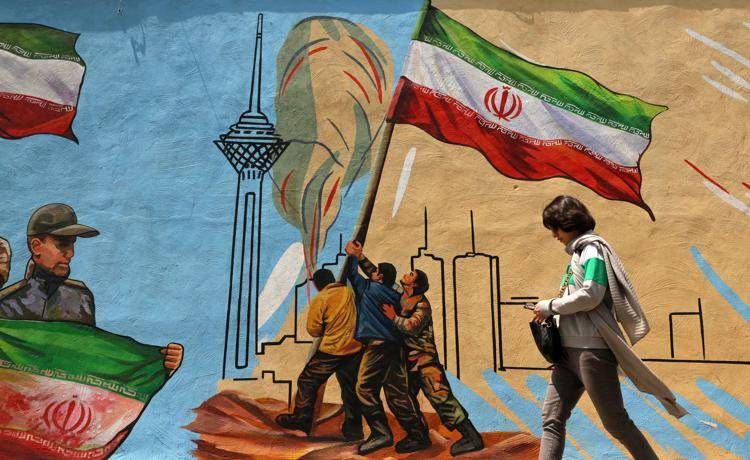
(Photo: © AndKronos)