


Military buildup, asymmetric warfare, and constant instability are reshaping the strategic balance in the Strait of Hormuz
The Strait of Hormuz Iranian risk has long been a central concern for global energy security, but rarely has its strategic importance been matched by such deep and persistent structural instability. The issue is no longer limited to how much oil and gas passes through this narrow maritime corridor, but to how the threat itself is exercised by Iran, perceived by energy-dependent nations, and managed by international security actors.
Each day, an estimated 18 to 21 million barrels of oil transit the Strait of Hormuz, accounting for roughly 20 to 25 percent of global consumption, along with a significant share of the world’s liquefied natural gas trade. Most of these flows are destined for Asian markets, making countries such as China, India, Japan, and South Korea critically dependent on the uninterrupted passage through the Strait.
Qatar, one of the world’s leading LNG exporters, relies almost entirely on the Strait of Hormuz to reach international markets. While land-based alternatives exist, including pipelines through Saudi Arabia and the United Arab Emirates, their capacity remains limited and insufficient to offset a prolonged disruption of maritime traffic. As a result, even minor tensions in the area immediately ripple through energy markets, tanker insurance premiums, and global geopolitical risk assessments.
In recent months, international attention has focused on Iran’s expanding military capabilities along its southern coastline, particularly in the Hormozgan province and around Bandar Abbas, the country’s main naval hub overlooking the Strait. This buildup does not consist of isolated shows of force, but of an integrated military system designed to exert sustained pressure on maritime traffic.
The system includes anti-ship missiles with ranges of up to 2,000 kilometers, more accurate and longer-range ballistic missiles such as the Qassem Bassir unveiled in May 2025, coastal air defense networks, coordinated drone deployments, and light naval forces, including submarines that are difficult to detect. The Islamic Revolutionary Guard Corps Navy has also introduced new platforms, such as the Shahid Bagheri drone carrier, and returned upgraded frigates like the Sahand to service, equipped with enhanced air defense systems. This architecture allows Iran to exercise asymmetric control over the sea, with capabilities more sophisticated and better integrated than in the past.
At the core of the Strait of Hormuz Iranian risk is not the feasibility of fully closing the waterway—a scenario many analysts consider unsustainable over the long term—but the ability to maintain a credible, continuous threat of instability. This constant pressure is enough to disrupt normal shipping operations without crossing the threshold of open conflict.
Historical comparisons highlight how the nature of the threat has changed. During the Iran-Iraq War of the 1980s, the so-called “tanker war” involved attacks, naval mines, and sabotage targeting commercial shipping. The risks were serious, but military capabilities were limited and patterns of escalation relatively predictable. Between 2011 and 2019, Iran repeatedly threatened to block the Strait in response to international sanctions, leading to ship seizures and targeted incidents. Even then, the strategy remained largely political and symbolic rather than based on sustained operational control.
Today, the shift is qualitative. A direct attack or formal closure is no longer necessary. The perception of a credible threat alone can slow maritime traffic, drive up insurance costs, fuel energy price volatility, and force Western governments into constant crisis management. The accuracy of new missile systems, including hypersonic platforms such as the Fattah, combined with the use of loitering munitions, has rendered traditional front-line concepts obsolete. Any commercial vessel within hundreds of kilometers can become a static target.
Missiles are only part of the picture. Iran has also invested heavily in GPS spoofing, manipulating navigation signals to cause commercial ships to drift into Iranian waters “by mistake,” enabling their legal seizure. These tactics further complicate maritime security and blur the line between civilian navigation errors and hostile action.
The most serious danger is not a declared war, but an accidental escalation. The Strait is an extremely confined maritime space, crossed daily by oil tankers, cargo ships, and military vessels from multiple countries. A downed drone, a misinterpreted radar signal, or a maneuver perceived as aggressive could trigger a chain reaction that is difficult to contain.
Modern military technologies compress decision-making timelines and increase the likelihood of error. At the same time, the immediate amplification of incidents by media and social platforms transforms local events into international political crises, narrowing the space for quiet diplomatic solutions.
The comparison with the past is stark. Where the threat was once episodic, it now appears structural. Where deterrence relied on symbolic gestures, it is now grounded in a complex and integrated military system. The Strait of Hormuz Iranian risk has become a permanent feature of the global energy landscape.
The Strait remains open, but this apparent normality is precisely what makes the risk more insidious. Stability is no longer guaranteed by the absence of conflict, but by a fragile balance in which even a single incident can rapidly shift the strategic equilibrium.
THE LATEST NEWS
Telegraph changes its stance on Sicily after controversy

Talay Riley stabbed to death in London, Grammy-winning songwriter dies at 35

James Handy killed in Los Angeles, suspect arrested in Tarzana

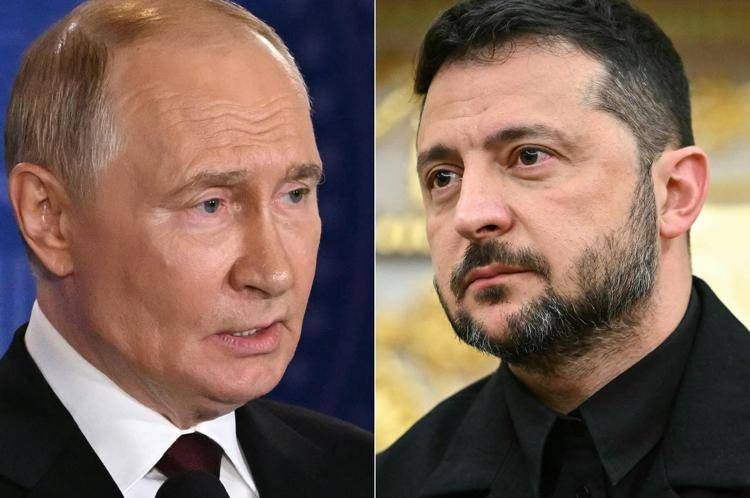
Zelensky Urges Putin to Meet, Calls for Direct Peace Talks
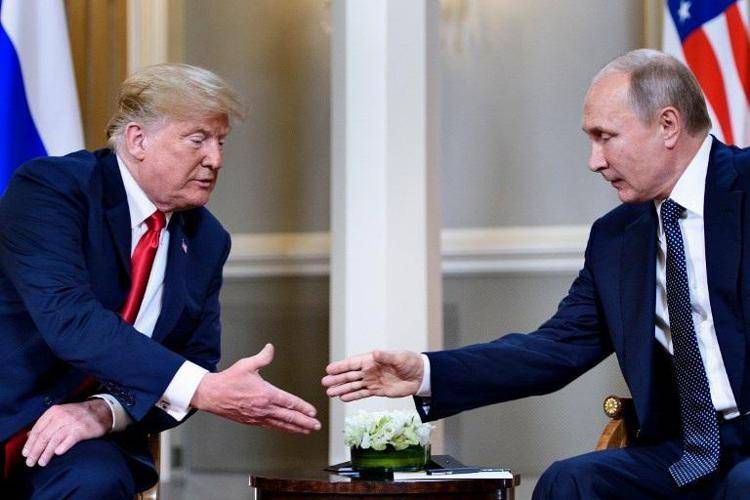
US–Russia Bering Strait Tunnel Plan Revived at St. Petersburg Forum
WHO reduces suspected Ebola cases in Central Africa amid sharp decline

(Source and photo: © AndKronos)