Defense secretary moves to replace the Army’s top general with a figure aligned with Trump’s military vision U.S. Defense Secretary...
Read More
International-News
US-Iran crisis enters decisive phase amid military buildup and diplomacy
Washington reinforces its naval presence while Tehran prepares layered defenses and retaliation options across the region
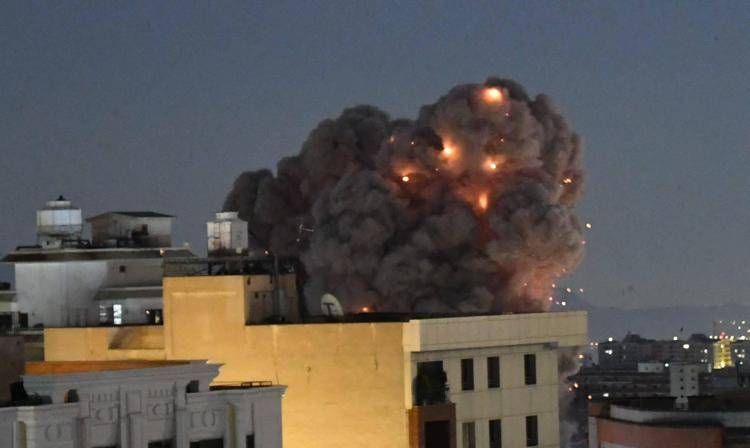
The US-Iran crisis enters a decisive phase marked by a volatile mix of military pressure, fragile diplomatic contacts, and unprecedented defensive preparations. While Washington strengthens its naval posture in the Middle East and President Donald Trump describes the situation as “evolving,” Tehran is acting as if a military strike is possible, if not imminent, preparing a response designed to expand the confrontation far beyond its borders.
“They want to make a deal. I know it. They’ve called many times. They want to talk,” Trump said in an interview with Axios. The remarks, however, contrast sharply with the deployment of what the president himself described as a “large armada” to the region, led by the aircraft carrier USS Abraham Lincoln. Iranian leaders view the move as a direct threat rather than a deterrent.
Diplomatic efforts are unfolding against this fragile backdrop. According to Israel Hayom, White House envoy Steve Witkoff delivered to Trump a message from Iranian Foreign Minister Abbas Araghchi, along with a written assurance from President Masoud Pezeshkian, aimed at delaying or preventing an attack on Tehran. An Israeli official quoted by the newspaper said Witkoff continues to push for a diplomatic solution to the Iranian issue, despite rising military tensions.
On the ground, however, Iran is not waiting for diplomacy to succeed. Regional and Western intelligence sources report a significant reinforcement of Iranian military assets along the southern coastline, particularly in Hormozgan province, around the port of Bandar Abbas, on Qeshm Island, and near the eastern entrance to the Gulf of Oman.
Units of the Islamic Revolutionary Guard Corps and Basij militias have been deployed alongside air defense systems, ballistic missiles, suicide drones, and submarines. The stated objective is to block any potential US amphibious operation and retain the ability to strike hostile naval forces in strategic waters such as the Strait of Hormuz, through which roughly 20 percent of the world’s oil supply transits.
Air defense is a cornerstone of Iran’s strategy. Short- and medium-range systems have been installed on Qeshm and Abu Musa islands, while advanced platforms have been positioned around Bandar Abbas, including the domestically produced Bavar-373 and the Russian-made S-300. Iranian officials claim the Bavar-373 can engage targets at distances of up to 300 kilometers and intercept even fifth-generation fighter jets.
Alongside this defensive shield, Tehran is reinforcing its offensive capabilities to ensure retaliation. Among the systems deployed is the Fateh-110, a short-range solid-fuel ballistic missile carrying a 400- to 500-kilogram warhead with a range of up to 700 kilometers.
More significant is the presence of missiles from the Qadr family at Bandar Abbas, Jask, and on Qeshm Island. The Qadr-110, with a range between 1,600 and 2,000 kilometers, can reach Israel, while the two-stage Qadr-380 combines long-range capability with heavy payloads, enhancing Iran’s ability to strike strategic targets at considerable distances.
Iran has also deployed a large number of anti-ship and cruise missiles along the Gulf coastline and nearby islands, including the Noor, Nasr, Khalij Fars, and Abu Mahdi. The latter is a naval cruise missile with an estimated range of about 1,000 kilometers and a warhead exceeding 400 kilograms, believed capable of hitting large military vessels such as destroyers.
These systems are complemented by swarms of Shahed suicide drones. Cameron Chell, CEO of drone manufacturer Draganfly, described the threat as a serious asymmetric challenge for the US Navy. Speaking to Fox News, he warned that saturation attacks involving hundreds of drones launched in a short time frame would almost certainly allow some to penetrate even advanced defenses.
The underwater dimension completes Iran’s military posture. Fateh- and Ghadir-class submarines operate from Bandar Abbas and within the Strait of Hormuz, designed for mine-laying and surprise attacks, according to defencesecurityasia.com. Military analysts estimate Iran operates between 28 and 30 submarines, one of the largest fleets in the Middle East.
Political messaging reinforces the military stance. A billboard unveiled in Tehran’s Enghelab Square depicting a US aircraft carrier under attack, accompanied by the slogan “If you sow the wind, you will reap the storm,” encapsulates Iran’s warning. As the US-Iran crisis enters a decisive phase, the Strait of Hormuz remains the critical flashpoint capable of turning a regional confrontation into a global shock.
THE LATEST NEWS
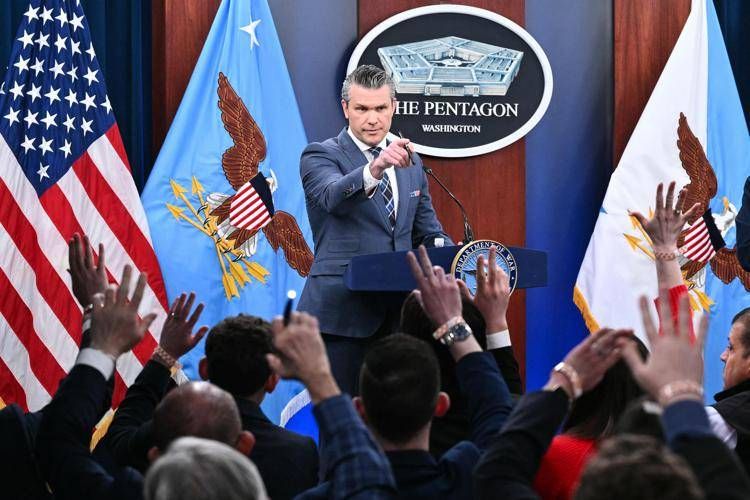
Trump removes Bondi, taps former personal lawyer Blanche as interim AG
2 Aprile 2026
The president announces the leadership change at the Justice Department, appointing his former personal lawyer as acting attorney general U.S....
Read More

Gulf States Reconsider Pipelines Amid Prolonged Iranian Control of Hormuz
2 Aprile 2026
Rising tensions over the Strait of Hormuz are prompting Gulf nations to explore new energy corridors to bypass Iran and...
Read More
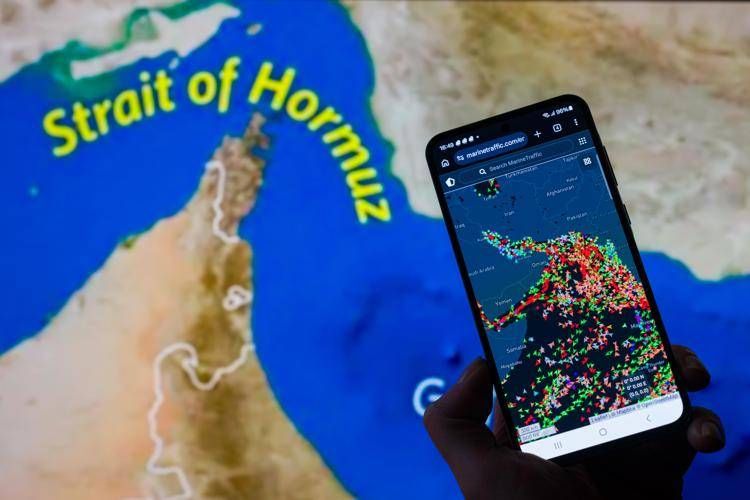
Trump threatens to pull the U.S. out of NATO
1 Aprile 2026
Donald Trump threatens to withdraw the United States from NATO, slams European allies and clashes with UK PM Keir Starmer...
Read More
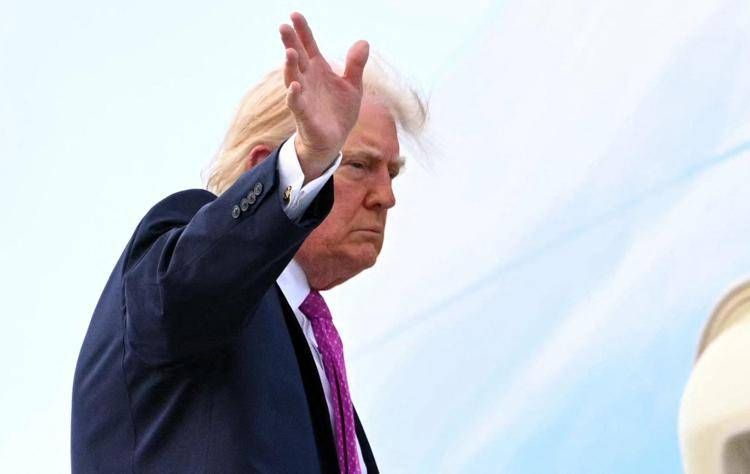
Trump says Iran requests ceasefire, but Tehran denies it
1 Aprile 2026
US president announces contacts on Iranian initiative; Islamic Republic rejects truce Tensions between the United States and Iran continue to...
Read More
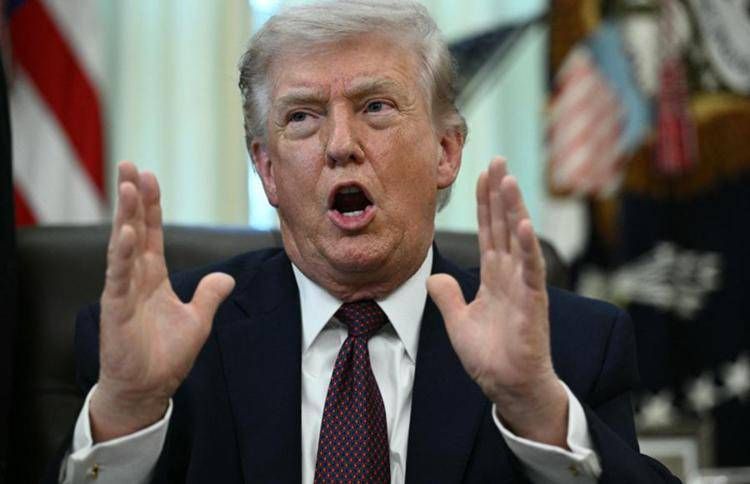
Iran Revolutionary Guards Threaten Google, Meta, and Apple
31 Marzo 2026
Tehran warns that major U.S. tech firms could face attacks if more regime leaders are killed Iran’s Islamic Revolutionary Guard...
Read More
(Photo: © AndKronos)