U.S. president praises “productive” meetings and invites Chinese leader to the White House as both sides stress cooperation and address...
Read More
International-News
NATO hybrid warfare: more aggressive responses against Moscow being considered
📰 LiberoReporter su Google News
Segui tutte le notizie senza perderne una
SEGUI ORA →
Segui tutte le notizie senza perderne una
NATO hybrid warfare is at the centre of the Alliance’s new strategic assessments
NATO hybrid warfare has become one of the most sensitive issues in recent weeks, with the Alliance committed to redefining its stance on cyberattacks, sabotage and airspace violations attributed to Russia. Confirming that the issue is on the table is Admiral Giuseppe Cavo Dragone, chairman of NATO’s Military Committee, who explained to the Financial Times how a “more aggressive” response than in the past is being considered: “We are analysing everything… on the cyber front, we are reactive, but being more aggressive or proactive is a real possibility”.
In recent years, Europe has been hit by several episodes of hybrid warfare attributable to Moscow. Many diplomats, particularly in the east of the continent, have called on NATO to stop limiting itself to reactionary measures and to adopt a strategy capable of deterring attacks. In the cyber sector, analysts note, a counterattack would be technically simpler, while responses to physical sabotage or drone intrusions remain more complex.
NATO hybrid warfare: legal issues and the question of “pre-emptive strikes”
For Dragone, pre-emptive action could be considered a form of self-defence, but this type of approach raises legal and jurisdictional issues: “Being more aggressive than our counterpart’s aggression could be an option, but it remains to be defined who does it and under what legal framework”.
One of the Alliance’s most effective initiatives, the Financial Times points out, has been the Baltic Sentry mission, with naval, aircraft and drone patrols in the Baltic Sea. Since the operation began, there have been no new cases of sabotage of submarine cables, following the incidents in 2023 and 2024 linked to the so-called Russian “shadow fleet”: ‘This deterrence is working,’ Dragone said.
The urgency of a more inventive strategy
According to a Baltic diplomat, continuing to act only in defence encourages Russia to continue with low-cost but high-impact actions: “Hybrid warfare is asymmetrical: it costs them little and us a lot. We need creativity in our response”.
Dragone acknowledges that NATO operates within stricter limits than its counterpart, due to international law, democratic processes and ethical standards. The central challenge, he explains, is to strengthen deterrence to prevent new future aggression: a delicate balance between retaliation, prevention and shared rules that will define the next chapter of NATO’s hybrid warfare.
THE LATEST NEWS

Trump says Iran is “wiped out,” intelligence shows otherwise
13 Maggio 2026
Classified briefings to Congress outline a resilient missile capability despite White House claims “The Iran is wiped out.” That is...
Read More

Iran still a threat despite Trump claims, intelligence says
13 Maggio 2026
U.S. intelligence assessments contradict the president’s narrative of a weakened Tehran. “The Iran has been obliterated,” Donald Trump has said...
Read More

U.S. jet strikes Iranian oil tankers in the Gulf of Oman
8 Maggio 2026
Military action targets vessels accused of breaching a naval blockade before reaching Iranian ports U.S. jet strikes Iranian oil tankers...
Read More
Ryanair CEO calls for airport alcohol ban before morning flights
6 Maggio 2026
Michael O’Leary urges restrictions after surge in disruptive passengers, citing daily diversions linked to alcohol abuse Ryanair CEO calls for...
Read More

Iran strikes US bases expose wider damage than reported
6 Maggio 2026
A Washington Post analysis based on satellite imagery challenges Trump’s claims and details extensive strikes across US installations in the...
Read More

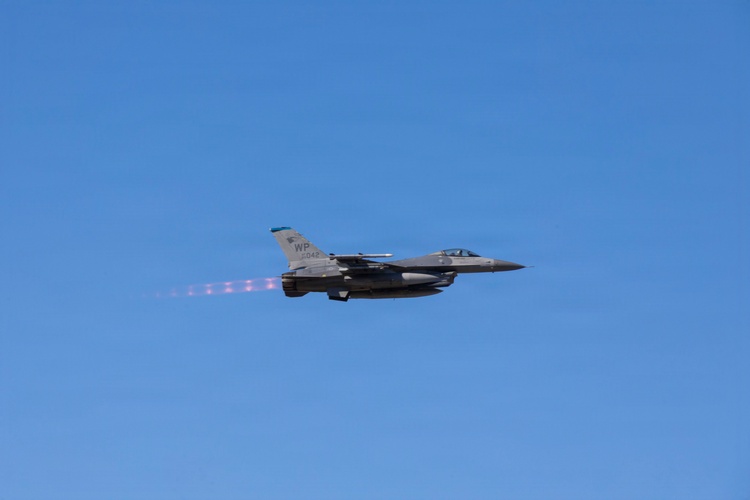
(Photo: © AndKronos) NATO hybrid warfare