

Leaked footage allegedly shows a regime security strategist defending mass killings during anti-government protests, according to activists Leaked video and...
Read More
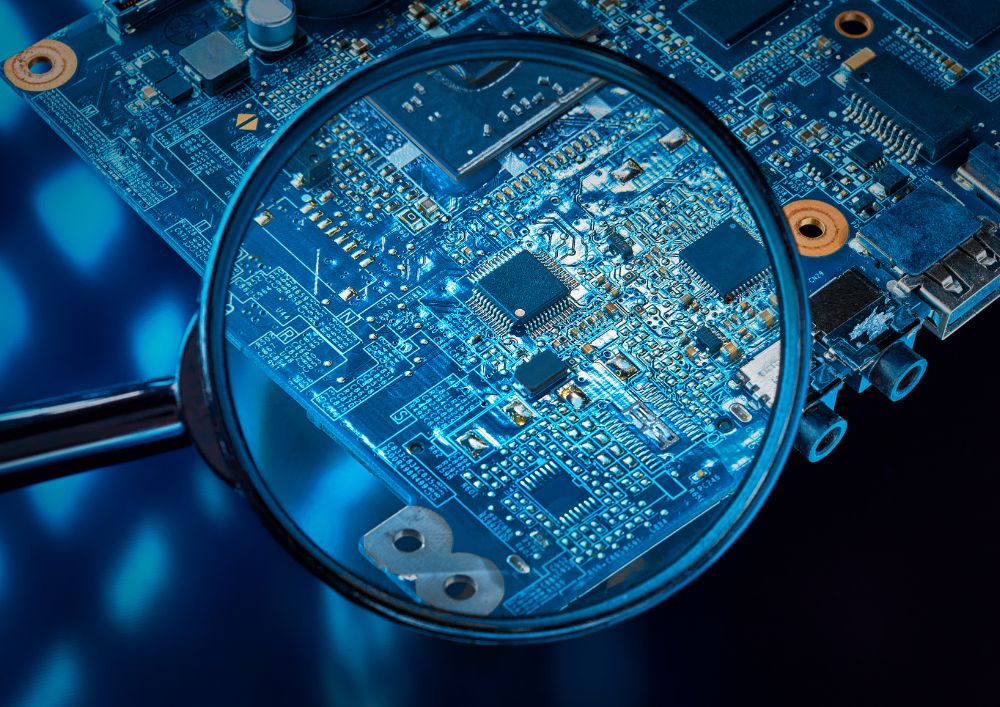
Chip war: China tightens controls on exports to the US
-

Video shock, poliziotto aggredito negli scontri di Torino
-

Alberto Trentini e Mario Burlò sono in Italia dopo la liberazione VIDEO
-

Overnight explosions in Caracas hit military area, widespread power outages reported VIDEO
-


Attacco Usa in Nigeria contro l’Isis, Trump: “Risposta al massacro di cristiani” VIDEO

New restrictions on key materials such as gallium, germanium and graphite. Beijing responds to Washington’s policies
The technological competition between China and the US is intensifying with a new chapter in the so-called ‘war on chips’. The Chinese Ministry of Commerce announced today, 3 December, stringent measures to control the export of essential materials for the production of semiconductors and electronic components to the United States.
The new restrictions
According to a report in the Global Times, the Chinese government has established a ban on the export of ‘dual-use’ goods that can be used for military purposes. Among the materials under scrutiny are gallium, germanium, antimony, and graphite, crucial elements for the production of chips and advanced technologies.
A ministry spokesman said that these measures are aimed at ‘protecting China’s security and national interests’, emphasising that the controls will be strictly enforced.
A response to Washington
This decision comes as a direct reaction to recent moves by the US, which yesterday announced new restrictions on the semiconductor sector, hitting Chinese technology companies.
Beijing accuses Washington of abusing export control policies, denouncing the ‘politicisation’ and ‘militarisation’ of economic and technological issues. ‘The US has generalised the concept of national security and used economic issues as a weapon,’ Chinese government sources said.
The effects on the global market
This escalation in trade tensions is likely to have significant repercussions on the global semiconductor market, a sector already under pressure from previous restrictions and the supply crisis. The materials targeted by the new measures, such as gallium and germanium, are in fact hard to find and vital for the production of cutting-edge technologies, from telecommunications to electric cars.
The new Chinese policies pose a further challenge to the American technology industry, which is already dependent on Asian suppliers for raw materials and key components.
A never-ending rivalry
The ‘chip war’ is just one front in the growing competition between China and the United States, who are vying for primacy in controlling next-generation technologies. With this move, Beijing reaffirms its determination to defend the strategic semiconductor sector and to respond blow by blow to American initiatives.
THE LATEST NEWS

New Epstein revelations and scrutiny on Prince Andrew
13 Febbraio 2026
Royal family highlights charity and social causes as attention returns to Epstein documents and links to the former duke. New...
Read More

Robert F. Kennedy Jr cocaine admission sparks backlash in US
13 Febbraio 2026
The Robert F. Kennedy Jr cocaine admission during a podcast interview has triggered political backlash and calls for resignation in...
Read More

UN scandal: Iran elected vice-president of social development despite human rights violations
13 Febbraio 2026
Iran has been elected vice-president of the UN Commission for Social Development, sparking fierce controversy over its violations of women's...
Read More

 Iran regime mass killing justification claims...
13 Febbraio 2026
Iran regime mass killing justification claims...
13 Febbraio 2026
 New Epstein revelations and scrutiny on...
13 Febbraio 2026
New Epstein revelations and scrutiny on...
13 Febbraio 2026
 Robert F. Kennedy Jr cocaine admission...
13 Febbraio 2026
Robert F. Kennedy Jr cocaine admission...
13 Febbraio 2026
 UN scandal: Iran elected vice-president of...
13 Febbraio 2026
UN scandal: Iran elected vice-president of...
13 Febbraio 2026
Condividi su:




-

 News16 ore ago
L’indagine per la morte della bimba di Bordighera: indagato anche il compagno della madre
-
 Primo Piano16 ore ago
Trump ordina anche dispiegamento portaerei USS Ford nel Golfo Persico
-
 Flash16 ore ago
Trapianto di cuore fallito al Monaldi di Napoli: bimbo resta grave
-
 International-News14 ore ago
UN scandal: Iran elected vice-president of social development despite human rights violations