Israeli Channel 12 reports the F-15 weapons officer was unconscious after ejecting, regaining communication only hours later A US pilot...
Read More
International-News
Trump long-term plan for Venezuela oil sector: strategy and risks
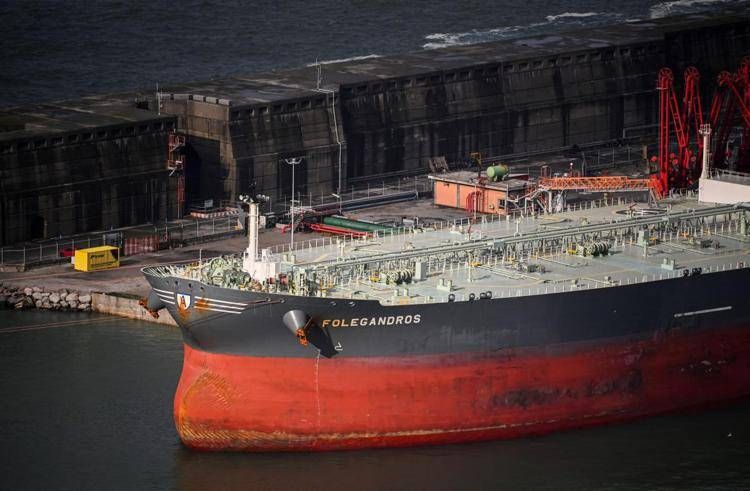
Washington signals a multi-year strategy after Maduro’s removal while industry leaders and analysts warn about costs, risks and political uncertainty
The Trump long-term plan for Venezuela oil sector is designed as a multi-year strategy aimed at reshaping the country’s energy industry and generating billions of dollars through the exploitation of the world’s largest proven crude reserves. Nearly two months after the capture and removal of Nicolás Maduro, the U.S. administration insists relations with Caracas are strong despite internal political disputes over legitimacy.
Speaking aboard Air Force One after returning from Florida, President Donald Trump downplayed statements from interim President Delcy Rodríguez, who continues to describe Maduro as the legitimate leader of Venezuela. Trump suggested such remarks were politically necessary while praising Rodríguez’s work and signaling openness to future cooperation.
The White House has also indicated that Trump intends to visit Venezuela in the future and support the reconstruction of the country’s collapsed oil sector. Meanwhile, U.S. Energy Secretary Chris Wright recently returned from Caracas after meeting Rodríguez and touring several oil fields. The visit was described as historic, with U.S. officials claiming major progress in restarting Venezuela’s core industry, now effectively operating under U.S. management influence.
The Venezuelan National Assembly has already approved legislation allowing private and foreign investment in the oil industry, marking a major shift after roughly two decades of strict state control.
Despite these moves, the Trump long-term plan for Venezuela oil sector faces major structural obstacles. Analysts estimate that restoring Venezuela’s hydrocarbon infrastructure could take up to ten years and require at least $200 billion. Industry participation will be decisive, but major oil executives remain cautious. During a White House meeting last month, ExxonMobil CEO Darren Woods reportedly described Venezuela as “not investable.”
Rather than offering investment incentives, Trump has threatened to block ExxonMobil operations in Venezuela. Historically, the governments of Maduro and his predecessor Hugo Chávez maximized oil revenue to fund social programs but failed to maintain production capacity. Output has collapsed in recent years, partly due to U.S. sanctions that Washington could now consider lifting.
According to economist William Jackson of Capitol Economics, Venezuela is dealing with equipment degraded by years of neglect. He noted that 10 to 15 years ago the country produced about 1.5 million barrels per day more than it does today. Trump has urged U.S. oil companies to invest at least $100 billion to rebuild damaged infrastructure, a necessary step before production expansion can occur.
However, corporate hesitation persists. Executives fear political instability and potential future expropriations, especially since much of the current Venezuelan power structure remains unchanged.
Security concerns also weigh heavily on investment decisions. The White House has ruled out providing security guarantees to companies operating in Venezuela, where government-linked paramilitary groups known as colectivos often operate as criminal organizations. Without stronger incentives, oil companies may consider investments too risky and expensive.
Economists such as Asdrúbal Oliveros of Caracas-based Ecoanalítica describe the U.S. approach as overly coercive, arguing Washington is applying pressure without offering sufficient incentives. He notes the situation remains fluid, opaque and strongly influenced by geopolitical factors, with oil production still in early recovery phases.
Beyond energy and economics, uncertainty also surrounds Venezuela’s political future. Opposition leader María Corina Machado remains in Washington after meeting Trump in January and has no clear timeline for returning to Venezuela, despite requesting assistance from Secretary of State Marco Rubio. U.S. officials have discussed a phased political roadmap and have not ruled out new elections, but no timeline has been defined.
Machado has stated that securing investment will require political legitimacy through an electoral process, though details remain unclear.
Some international observers fear Washington may continue cooperating with the current interim government and postpone new elections until Rodríguez’s mandate ends in 2031, while gradually stepping back from labeling the 2024 presidential election as fraudulent.
Analysts suggest the United States could maintain a deliberately ambiguous stance: promoting democratic rhetoric while preserving working relations with the current leadership to maintain leverage in negotiations.
The balance of power inside Venezuela remains heavily tilted toward state institutions and security forces rather than the opposition. This imbalance complicates any rapid democratic transition and could reinforce a wait-and-see strategy from Washington.
Key figures such as Interior Minister Diosdado Cabello and Defense Minister Vladimir Padrino López — both loyal to Maduro — are seen as unpredictable variables who could destabilize relations between Washington and Caracas. Analysts describe them as potential obstacles or tools within the broader U.S. geopolitical strategy.
Ultimately, the Trump long-term plan for Venezuela oil sector is unfolding in a context where political normalization could gradually replace the shock of recent events. Some experts argue that if Rodríguez can guarantee stability, oil production and regional cooperation, Washington may prioritize pragmatic relations over rapid political transition.
For now, analysts agree that Venezuela’s democratic future remains uncertain, distant and deeply tied to geopolitical dynamics and energy strategy.
THE LATEST NEWS

Trump the Flip-Flopper: Shifting Stance on Iran and the Strait of Hormuz, Between Threats and Delays
5 Aprile 2026
Since March 21: ultimatums, pauses, and new warnings. Deadline set for April 6 for the reopening of the Strait Donald...
Read More
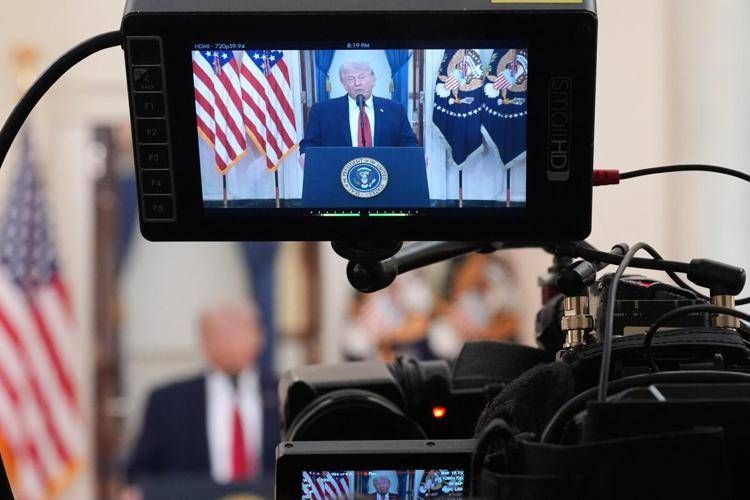
Trump seeks $152M to reopen Alcatraz prison
4 Aprile 2026
Proposal for fiscal 2027 would fund first year of operations as a maximum-security facility; separate order shuts migrant site in...
Read More
Pam Bondi subpoena over Epstein files survives Trump ouster
3 Aprile 2026
House panel moves to enforce testimony as former attorney general faces April 14 date Pam Bondi subpoena over Epstein files...
Read More
Hegseth asks Army Chief Randy George to resign
2 Aprile 2026
Defense secretary moves to replace the Army’s top general with a figure aligned with Trump’s military vision U.S. Defense Secretary...
Read More
Trump removes Bondi, taps former personal lawyer Blanche as interim AG
2 Aprile 2026
The president announces the leadership change at the Justice Department, appointing his former personal lawyer as acting attorney general U.S....
Read More
(Source and photo: © AndKronos)