




Trump weighs military or diplomatic moves against Iran, while former Iranian Vice President Sasan Karimi provides analysis on Tehran’s flexible...
Read More
Trump Evaluates Options While Former Iranian Vice President Karimi Analyzes Situation

Trump weighs military or diplomatic moves against Iran, while former Iranian Vice President Sasan Karimi provides analysis on Tehran’s flexible approach
After ordering the largest U.S. military buildup in the Middle East since the Iraq War, President Donald Trump faces critical choices on how to act toward Iran. According to CNN, the three options on the table are clear: pursue diplomacy, authorize limited strikes, or launch a large-scale operation aimed at regime change.
Trump could choose restraint, relying on the presence of two aircraft carriers, dozens of warships off Iran’s coast, and roughly 100 fighter jets to encourage Tehran to negotiate. Alternatively, he could approve targeted strikes on military sites, nuclear facilities, or Revolutionary Guard positions to compel Iran to abandon its nuclear weapons program. The most radical option would involve a broad offensive aimed at toppling the Islamic Republic, though uncertainties remain regarding the aftermath and leadership replacement.
U.S. officials also face uncertainty about whether military action would convince Tehran to negotiate or harden its resistance. Regional sources suggest that Iran would likely withdraw from talks following any strike, and any attack carries the risk of retaliation against U.S. interests in the Middle East.
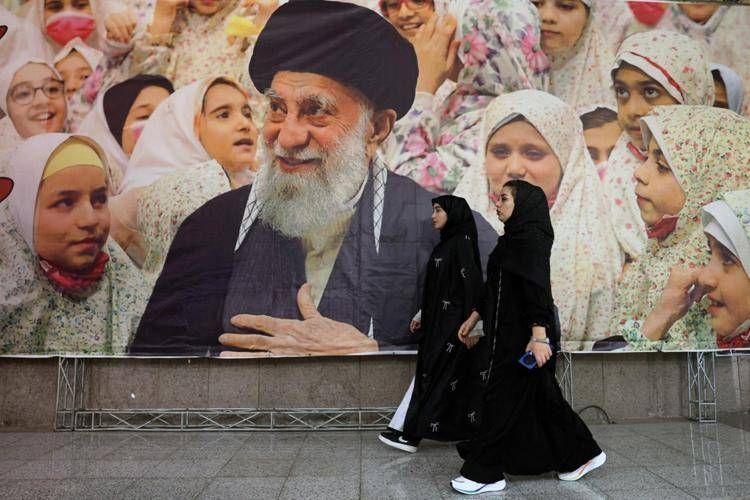
Meanwhile, former Iranian Vice President Sasan Karimi, speaking to Adnkronos, emphasizes that an American attack is not inevitable. He describes Tehran’s approach in the upcoming Geneva talks as “extremely practical and objective,” with maximum flexibility from both sides. Karimi notes that if the negotiations fail, it would reflect excessive U.S. demands, making a positive response from Iran impossible. He stresses that avoiding escalation allows Iran to manage the situation pragmatically while the U.S. must acknowledge that regime change is neither simple nor feasible.
Trump reiterated his preference for diplomacy on Truth Social, stating, “I would prefer to reach an agreement rather than not, but if we do not, it will be a very bad day for that country and, unfortunately, for its people… a thing that should never have happened to them.” The two sides remain divided, with Trump demanding a halt to uranium enrichment and Tehran insisting on its sovereign right.
The U.S. has reinforced its presence near Iran, moving over 150 aircraft to bases in Europe and the Middle East since the second round of talks ended without a breakthrough on February 17. Despite the deployment, Israeli officials estimate that U.S. forces could sustain four to five days of intense aerial attacks, followed by lower-intensity strikes.
At the same time, Iran’s Revolutionary Guard is conducting large-scale exercises in the south, including missile launches, artillery, drones, special forces, and armored vehicles. Similar drills are underway in other regions, highlighting Tehran’s preparedness.
Karimi warns that escalation would benefit neither the U.S., Iran, nor the broader international community, and could primarily serve Israeli security interests. He adds that conflict could carry significant economic costs, including rising energy prices and potential threats to regional infrastructure, and emphasizes that a pragmatic approach could mark a new phase in U.S.-Iran relations.
THE LATEST NEWS

Four Years After Russia’s Invasion of Ukraine: The Drone War Reshapes Modern Conflict
24 Febbraio 2026
From battlefield innovation to European defense policy, unmanned systems have transformed strategy, industry and security across the continent Four years...
Read More

Peter Mandelson arrested by Metropolitan Police in London
23 Febbraio 2026
Peter Mandelson arrested by Metropolitan Police in London on suspicion of misconduct in public office. Government to release files on...
Read More

Iran US tensions escalate as Trump weighs strike options
23 Febbraio 2026
Iran US tensions escalate as Trump weighs strike options ahead of Geneva talks. Tehran warns any American attack would be...
Read More

Succession to Khamenei: Larijani at the center of the new power structure
22 Febbraio 2026
The Supreme Leader strengthens the chain of command after the war with Israel and tensions with the United States: four...
Read More

Trump raises tariffs to 15% effective immediately
21 Febbraio 2026
The president escalates global trade duties a day after the U.S. Supreme Court struck down his previous tariff measures Trump...
Read More

(Photo: © AndKronos)
Condividi su:




-

 Primo Piano12 ore ago
Quattro anni di guerra in Ucraina, avanzata russa minima
-

 In Evidenza9 ore ago
Allerta intelligence occidentali per possibile risposta dell’Iran
-

 Eventi9 ore ago
CyberSec 2026 alla Scuola superiore di polizia il 4 e 5 marzo
-

 World8 ore ago
Neve record in Stato New York: 74 centimetri con la tempesta storica
You must be logged in to post a comment Login