Police say a single gunman opened fire across three homes following a domestic incident. The suspect was later shot dead...
Read More
International-News
US and Israeli strike on Iran tests layered air defenses and interceptor stockpiles
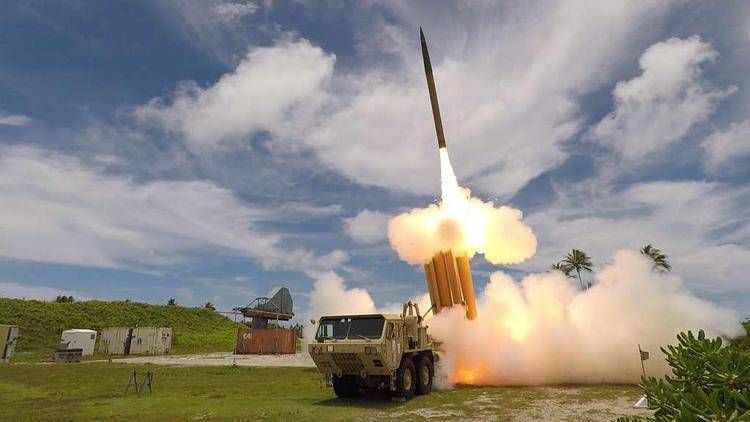
Long-range precision attacks, missile salvos and drone swarms expose the strengths — and limits — of the region’s offensive and defensive systems
The US and Israeli strike on Iran tests layered air defenses and interceptor stockpiles, opening a high-intensity confrontation built on long-range precision attacks, integrated air defense networks and retaliatory missile and drone salvos designed to overwhelm interceptors. While many operational details remain deliberately opaque — compounded by communications limits inside Iran — the architecture of the offensive and defensive systems now in play is becoming clearer, as are the constraints shaping their use.
What was targeted — and why it matters
According to multiple media reconstructions, the initial wave struck Tehran and other strategic nodes, including Isfahan, linked to Iran’s nuclear complex; Kermanshah, associated with bases tied to the Islamic Revolutionary Guard Corps; and Shiraz, where Israel has alleged the presence of underground missile production infrastructure.
That geography points to a campaign profile centered on precision strikes against infrastructure and capabilities — command and control nodes, sensitive facilities and military bases — rather than direct ground engagement.
The offensive: striking Iran from distance
In the opening phase of a campaign against a country with layered defenses and significant missile capabilities, the standard tactical objective is to limit aircraft exposure and “open corridors” by degrading radar, command nodes and weapons depots.
Key systems in such an approach typically include:
• Tomahawk cruise missiles, long-range subsonic weapons launched from surface ships and submarines. They allow deep strikes against land targets without forcing non-stealth platforms into heavily defended airspace.
• Carrier strike group packages, built around aircraft carriers and their embarked air wings. Two carrier groups have moved into the broader theater. Carriers provide operational persistence, enabling repeated sortie cycles and sustained pressure even when fixed land bases may be vulnerable to retaliation.
Fighters, sensors and enablers
Ahead of and during strike operations, aerial refueling tankers and support aircraft — including surveillance and transport platforms — have deployed to the region. These “enablers” are critical to sustaining operational tempo and extending range.
In a campaign of this type, the enabling architecture — refueling, early warning, intelligence and battle management — is as decisive as the munitions themselves.
The defensive side: layered shields across Israel and the Gulf
The US and Israeli strike on Iran tests layered air defenses and interceptor stockpiles not only in Israel but across the Gulf.
Israel’s multilayered system
Israel’s air defense architecture is structured in tiers, each optimized for a different threat set:
• Iron Dome, designed to counter short-range rockets and similar threats.
• David’s Sling, aimed at more complex projectiles, including certain cruise missiles and tactical ballistic threats.
• Arrow 3, intended for high-altitude, exo-atmospheric ballistic missile interception.
In addition to missile interceptors, Israel has advanced its Iron Beam laser system, viewed as increasingly operational against smaller threats such as drones, mortars and short-range rockets. The key advantage lies in cost efficiency: reducing reliance on expensive interceptors for lower-end threats.
US and allied systems
On the US side — and among regional partners — defensive architecture typically combines:
• THAAD (Terminal High Altitude Area Defense) for high-altitude terminal interception of ballistic missiles.
• Patriot PAC-3, a hit-to-kill interceptor effective against tactical ballistic missiles and other aerial threats.
• Aegis systems with SM-3 interceptors aboard destroyers and cruisers, capable of midcourse interception in space.
Gulf states under fire
Iran’s retaliatory missile and drone strikes have targeted Israel, US bases and Gulf countries including Bahrain, Qatar, the United Arab Emirates, Kuwait and Jordan.
In the United Arab Emirates, authorities reported that air defenses intercepted a second wave of Iranian missiles. Debris reportedly fell over Abu Dhabi without causing casualties during that second wave, following an earlier deadly impact. The Emirati Ministry of Defense emphasized the effectiveness of its integrated defense system combining radar and interceptor coverage.
In Bahrain, home to the US Navy’s Fifth Fleet, authorities confirmed missile attacks and the activation of air defense systems.
Saudi Arabia condemned the attacks on Gulf nations and signaled readiness to deploy “all capabilities” in support of regional allies, underscoring coordination with partners such as the United States and the UAE.
Iran’s response: saturation strategy
Iran’s retaliation reflects a saturation doctrine previously observed in past confrontations. The aim is to launch large volumes of comparatively cheaper missiles and drones to overwhelm advanced air defenses and create penetration windows.
Iran’s arsenal blends:
• Ballistic missiles, fast and operationally impactful, with significant psychological effect.
• Cruise missiles, slower but low-flying and potentially harder for some sensors to detect.
• Drones, usable both as decoys and strike platforms, increasing the number of tracks defenders must engage simultaneously.
The decisive constraint: interceptor inventories
Ultimately, the US and Israeli strike on Iran tests layered air defenses and interceptor stockpiles as much as it tests precision strike capabilities. Previous escalation cycles consumed interceptors at high rates, forcing planners to confront the depth of available arsenals and the sustainability of defense under prolonged pressure.
There are logistical constraints as well. Naval vessels equipped with vertical launch systems must return to port to reload interceptors, complicating efforts to maintain uninterrupted high-intensity naval defense.
The confrontation is therefore not only a contest of precision, sensors and technology, but also of production capacity, stockpile depth and operational tempo.
THE LATEST NEWS

North Korea Fires Unidentified Ballistic Missile, Seoul and Tokyo Say
19 Aprile 2026
Japan and South Korea report a suspected ballistic missile launch as Pyongyang continues a series of weapons tests under Kim...
Read More
Donald Trump Approval Rating Falls to 37% in NBC News Poll
19 Aprile 2026
A new NBC News survey shows declining support for the U.S. president, with sharp criticism over the economy and his...
Read More

Several Injured in Iowa City Shooting Near University Campus Area
19 Aprile 2026
Police say multiple people were taken to hospital after gunfire erupted during a night incident near the University of Iowa...
Read More

UK security clearance failure for Mandelson triggers top resignation
17 Aprile 2026
Sir Olly Robbins steps down after Keir Starmer was not informed that Lord Mandelson failed top-level security vetting required for...
Read More

Israel-Hezbollah ceasefire, Trump announces 10-day truce taking effect at midnight
16 Aprile 2026
U.S. president says agreement follows talks with Netanyahu and Aoun, with White House meetings planned U.S. President Donald Trump announced...
Read More
(Source and Photo: © AndKronos)