




US president talks regime change approach framed around negotiation amid Cuba’s economic crisis and ongoing discussions led by Secretary of...
Read More
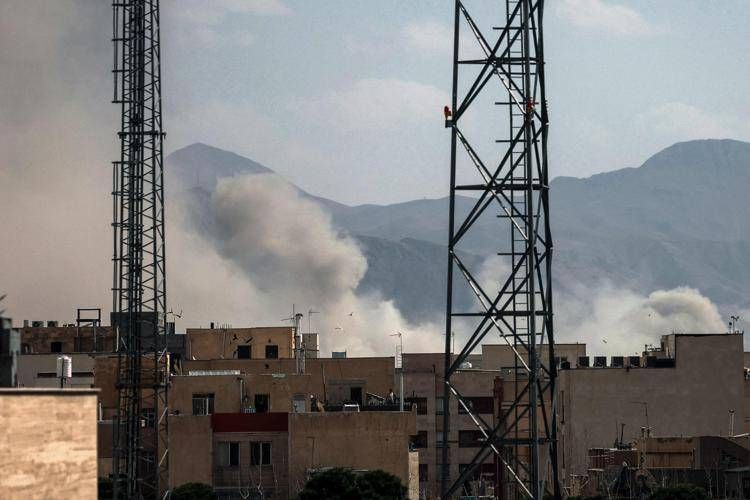
For Tehran, better war than a deal with the United States

Israeli scholar Meir Litvak says Iran chose the risk of limited conflict over accepting US demands seen as a threat to regime survival
For Tehran, better war than a deal with the United States. That is the assessment offered by Meir Litvak, director of the Department of Middle Eastern and African History at Tel Aviv University, in an interview with Adnkronos analyzing the path that led to the Israeli-American strike against Iran.
According to Litvak, US President Donald Trump attempted to reach an agreement with Tehran but failed to secure one. In his view, Iranian leaders calculated that the risks of a limited war with Washington are more acceptable than yielding to American demands they perceive as existential threats.
“For Tehran, better war than a deal with the United States,” Litvak said in substance, arguing that distrust of Washington remains deep-rooted within Iran’s leadership. Accepting US conditions, he explained, could undermine the regime’s political and institutional foundations. A contained confrontation, by contrast, might be survivable.
Litvak noted that in the weeks leading up to the strike, Washington had significantly reinforced its military presence in the region. While he initially believed Trump would push harder for a diplomatic breakthrough, given that war remains unpopular in the United States, the military buildup suggested that negotiations had not produced results.
From Tehran’s perspective, the priority is regime continuity. Litvak rejected the notion that the Islamic Republic hinges solely on Supreme Leader Ayatollah Ali Khamenei. “Iran is not a one-man show,” he said, emphasizing the depth of the country’s institutional networks.
For that reason, he argued that targeting Khamenei would not dismantle the regime. On the contrary, killing him would likely turn him into a martyr and risk triggering a prolonged religious conflict. Iran, he added, has long taken measures to protect the Supreme Leader, making any such scenario highly complex.
On the question of regional escalation, Litvak observed that Iran has struck US-linked targets across the Persian Gulf but has so far avoided attacks on oil facilities. That restraint, he suggested, signals an effort to limit the scope of the confrontation and avoid pulling Gulf Arab states directly into the conflict.
In Litvak’s analysis, for Tehran, better war than a deal with the United States reflects a strategic calculation: endure limited conflict if necessary, but reject agreements viewed as jeopardizing the regime’s survival.
THE LATEST NEWS

Trump launches massive campaign against Iran as diplomatic patience ends
28 Febbraio 2026
President orders a multi-day operation targeting Iran’s nuclear and missile capabilities after repeated refusals to negotiate President Donald Trump has...
Read More

Trump says Iran “never really wanted an agreement” after joint US-Israel attack
28 Febbraio 2026
Hours after the operation with Israel, the US president claimed Tehran repeatedly pulled back from deals and warned of long-term...
Read More

For Tehran, better war than a deal with the United States
28 Febbraio 2026
Israeli scholar Meir Litvak says Iran chose the risk of limited conflict over accepting US demands seen as a threat...
Read More

US and Israeli strike on Iran tests layered air defenses and interceptor stockpiles
28 Febbraio 2026
Long-range precision attacks, missile salvos and drone swarms expose the strengths — and limits — of the region’s offensive and...
Read More

US and Israeli Strikes Target Khamenei and Pezeshkian in Iran
28 Febbraio 2026
Senior Israeli officials say the Supreme Leader and the Iranian president were among the primary objectives of coordinated raids US...
Read More

(Photo: © AndKronos)
Condividi su:




-

 Primo Piano15 ore ago
Israele attacca l’Iran: “Attacco preventivo”, colonne di fumo a Teheran
-

 International-News15 ore ago
US-Israel joint attack on Iran targets strategic sites VIDEO
-

 Primo Piano10 ore ago
Attacco di Usa e Israele all’Iran: raid su Teheran e Golfo, risposta iraniana
-

 Salute15 ore ago
Salute: salire le scale negli over 60 migliora forza e camminata
You must be logged in to post a comment Login