



An investigation by the Financial Times reconstructs the intelligence operation and air strike that led to the killing of Iran’s...
Read More
Georgia in revolt: peaceful protests and violent repression, the role of Russia and the authoritarian government

Protests in Georgia against the government’s pro-Russian orientation intensify. Repression increases and hundreds of peaceful protesters are arrested. Fear of a clash with Russia plays a crucial role in power strategy
Tornike Turmanidze, Senior Fellow at the Rondeli Foundation, describes the situation in Georgia with concern. One of his colleagues, involved in peaceful demonstrations against the government, was arrested and beaten while in detention. “He was released, but continues to be interrogated and harassed by the authorities,” Turmanidze recounts, noting that the colleague was merely posting videos on social media without ever resorting to violence.
Peaceful protests and repression: a troubling balance sheet
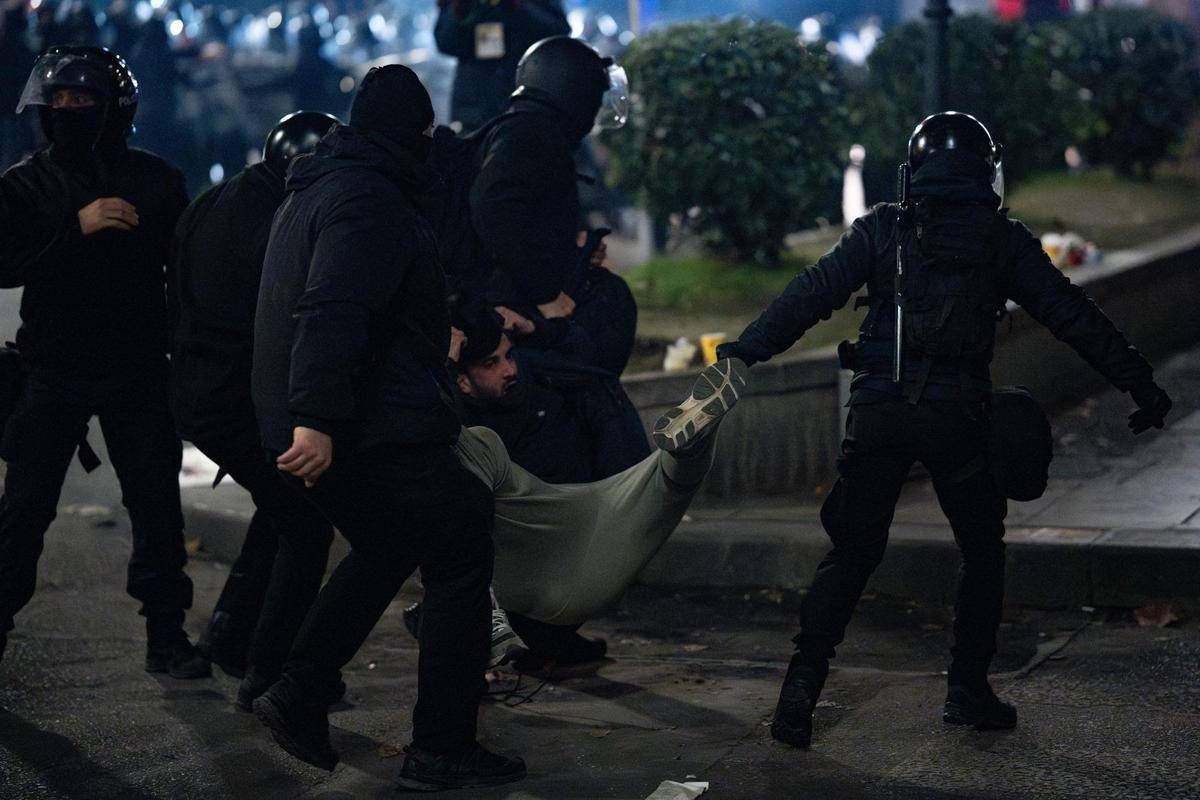
Every evening, thousands of people gather in Tbilisi, the Georgian capital, to demonstrate against the country’s political turn away from the European Union. Prime Minister Irakli Kobakhidze’s decision to halt the path to EU membership has prompted a wave of protests. According to human rights organizations such as Amnesty International and Human Rights Watch, there are now about 500 arrests and more than 300 reports of beatings by authorities or government-affiliated groups.
The role of pro-Russian propaganda and state violence
The ruling party, Georgian Dream, has consolidated its authoritarian grip through intense pro-Russian propaganda that presents the West as a threat to Georgia. Turmanidze explains how the government has convinced law enforcement officials that they are defending Georgian traditions against a malign influence. This has led to a wave of state violence against peaceful protesters, while police forces act with impunity and are paid economic incentives for their involvement in repression.
Neutralizing young protesters: a brutal strategy
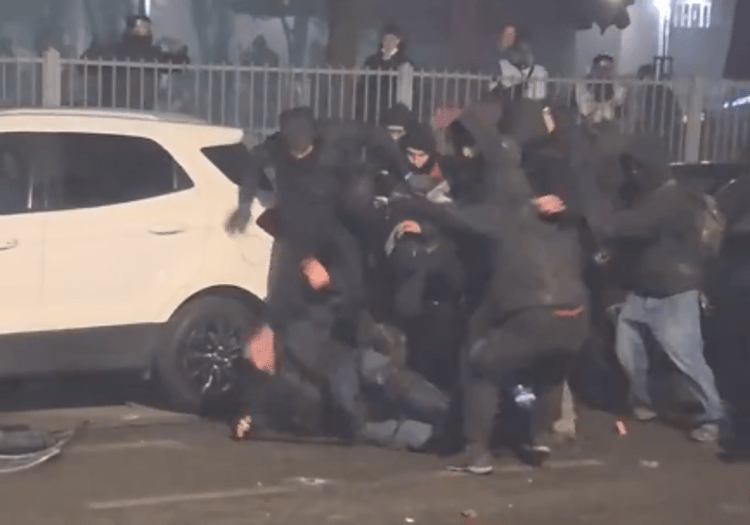
The government seeks to identify the most active protesters, especially among the youth, and neutralize them through violent methods. Beatings that force victims into long hospital stays, arbitrary arrests, and heavy fines are just some of the tactics employed. In addition to the police, protesters are at risk of being attacked by semi-criminal groups operating in the back streets, as demonstrated by the assault on journalists from an opposition TV channel, which was broadcast live.
Authoritarianism and propaganda: protection or submission?
According to Turmanidze, police violence is justified by a rigid chain of command and pervasive propaganda. The police, well paid and incentivized to suppress protests, are convinced that they are protecting Georgia from “external enemies.” Georgian Dream promotes the narrative that the West is trying to drag Georgia into a conflict with Russia, thereby frightening the population and deterring them from participating in the protests.
The weight of fear of a clash with Russia
Fear of a new conflict with Russia, after past wars, plays a key role in the Georgian Dream strategy. The government uses this fear to maintain power, presenting itself as the sole guarantor of stability and peace, while accusing the opposition of wanting to take the country to war. This narrative, while distorted, manages to keep part of the population passive and away from the demonstrations.
Elections and the challenge of the future: pro-European resistance
On December 29, the new president, Mikheil Kavelashvili, a former soccer player and the only candidate supported by Georgian Dream, will take office. However, the outgoing president, Salomé Zourabishvili, a pro-European, has declared that she will not relinquish power. For many protesters, Zourabishvili represents the only legitimate figure capable of uniting the opposition and resisting the regime. According to Turmanidze, it is crucial that a strong alternative political center be created to ensure clear international support against pro-Russian authoritarianism.
International sanctions and the future of the alliance with the West
Washington and London have recently imposed sanctions against members of the Georgian government and key Georgian Dream figures. Turmanidze hopes that the European Union will also follow the example of Estonia and Lithuania, which have already taken action, supporting the Georgian people in their aspiration toward a pro-European future. Without Western support, Turmanidze argues, the legitimacy of the Georgian government would be undermined.
THE LATEST NEWS

Who Leads Iran Now After Khamenei’s Death
2 Marzo 2026
Tehran forms an interim leadership council to run the country following the killing of Supreme Leader Ayatollah Ali Khamenei After...
Read More

US-Israel strike on Iran delayed by one week
2 Marzo 2026
According to Axios, the operation was postponed for operational and intelligence reasons, leaving room for a final round of nuclear...
Read More

Con la morte di Khamenei Putin vede scomparire un altro alleato…
2 Marzo 2026
Dopo Assad e Maduro, anche la Guida suprema iraniana scompare dalla scena: il Cremlino, impegnato in Ucraina, si limita alle...
Read More

Khamenei’s death puts Putin in a difficult position, another ally ‘lost’
2 Marzo 2026
The death of Iran’s Supreme Leader adds to a series of losses among Moscow’s foreign allies, leaving the Kremlin in...
Read More

Israel Iran Endgame: Regime Change or Neutralization?
1 Marzo 2026
As the joint U.S.-Israeli military campaign intensifies, analysts assess whether the objective is regime change in Tehran or the dismantling...
Read More

(Photo: © AndKronos)
Condividi su:




-

 Scienza e Ricerca13 ore ago
Eclissi totale Luna 3 marzo: “Luna di sangue” non sarà visibile in Italia
-

 News12 ore ago
Guerra in Medio Oriente, carburanti in rialzo: aumentano benzina e gasolio
-

 Flash13 ore ago
Carabiniere investita durante controllo a Campo di Mare
-

 Primo Piano13 ore ago
Operazione Furia Epica, Trump non esclude truppe in Iran, colpita ambasciata Usa a Riad