



As the joint U.S.-Israeli military campaign intensifies, analysts assess whether the objective is regime change in Tehran or the dismantling...
Read More
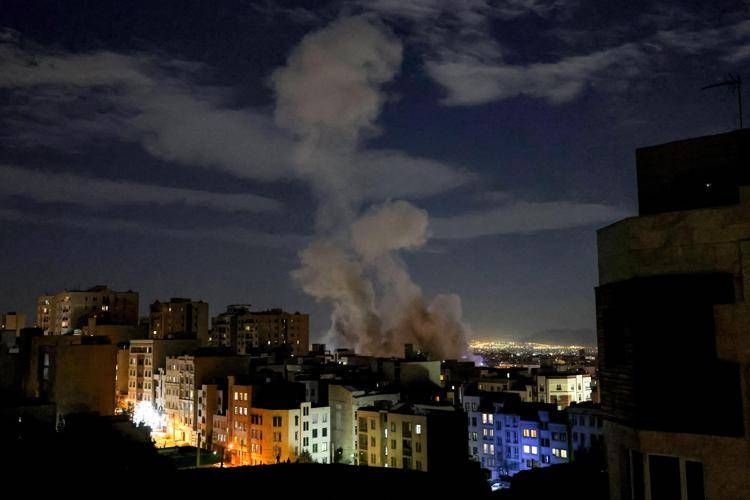
Israel Iran Endgame: Regime Change or Neutralization?

As the joint U.S.-Israeli military campaign intensifies, analysts assess whether the objective is regime change in Tehran or the dismantling of Iran’s nuclear and missile capabilities
As the joint military campaign by Israel and the United States against Iran enters a high-intensity phase, with targeted strikes on Tehran’s nuclear and missile capabilities and the risk of broader regional escalation, the central issue remains the Israel Iran endgame. Is the strategic objective regime change, or the permanent neutralization of Iran’s military threat?
According to Kobi Michael, senior researcher at the Institute for National Security Studies (INSS) at Tel Aviv University and analyst at the Misgav Institute, the primary Israeli objective is to prevent Iran from once again posing an existential threat, both nuclear and ballistic. While regime change would be a desirable outcome, he said, it cannot be imposed from outside and depends on the Iranian population’s ability to organize and capitalize on the regime’s military weakening.
Michael stated that the most realistic goal of the campaign is dismantling Iran’s strategic military capabilities—first nuclear, then ballistic missile systems—and weakening the regime to the point where it cannot reconstitute the threat against Israel and the region.
Prospects for Internal Transition in Iran
When asked whether Iran’s internal structure could realistically produce an alternative leadership, Michael noted that the country has a population of more than 90 million people. While millions are integrated into the regime’s system, he said the majority are not. However, he emphasized that effective and well-organized leadership would be essential for any transition.
He suggested that part of such leadership could emerge from within Iran’s institutional framework, particularly from the regular armed forces, which he described as less radical than the Islamic Revolutionary Guard Corps. Within those ranks, he said, there are individuals capable of temporarily leading the country. He also pointed to the presence of qualified figures within Iranian civil society.
According to Michael, the campaign is only in its second day and could last weeks. After one or two weeks of sustained military pressure, the regime could face a highly problematic situation. If, at that moment, the Iranian population is organized and determined, regime change could become a concrete possibility.
Regional Escalation and Coalition Risks
Iran has expanded its response beyond Israel, targeting countries in the region. Missiles have reportedly been launched toward British bases in Cyprus, and Tehran has threatened other states it considers cooperative with the United States and Israel, including Armenia and Azerbaijan.
Michael said Iran is attempting to widen the conflict to increase pressure on Washington in hopes of forcing a halt to the military campaign. However, he argued that the outcome could be the opposite. By attacking Saudi Arabia and the United Arab Emirates, Iran risks pushing them toward military alignment with Israel and the United States.
If Iran continues launching hundreds of missiles and drones, he said, the attacks would move beyond symbolic actions to large-scale aggression. In that scenario, Gulf states could openly join the military operation against Tehran. Massive strikes against Qatar, the UAE, or Saudi Arabia could lead to the formation of a regional coalition.
Iran’s Military Capacity Under Pressure
Regarding Iran’s ability to sustain the pressure, Michael stated that ballistic missile capabilities are likely to be drastically reduced within days. Launchers are the critical element: without them, missiles cannot be deployed. Many have already been destroyed, while others are reportedly neutralized as soon as they are exposed for launch.
Compared to previous escalations, he noted that the number of missiles launched is already lower. Iran appears to be using them tactically, one or two at a time, to maintain psychological pressure on the Israeli population and test defense systems. However, overall capacity is declining.
The situation differs for Gulf countries, which are geographically closer to Iran. Against them, Tehran can deploy drones, cruise missiles, and rockets without relying on long-range ballistic systems.
If such attacks continue, Michael concluded, the attempt to broaden the conflict could accelerate Iran’s regional isolation and reshape the Israel Iran endgame.
THE LATEST NEWS

U.S. Strike on Iran Forces Beijing to Weigh Strategic Options
1 Marzo 2026
As American and Israeli operations escalate, China faces critical decisions regarding its energy supplies and global influence The recent U.S.-Israel...
Read More

MAGA Base Divided Over Trump’s Iran Airstrikes
1 Marzo 2026
The president’s decision to strike Iran and kill Supreme Leader Ali Khamenei has sparked backlash from prominent voices within his...
Read More

Trump Says New Iranian Leadership Wants Talks, “We Will Do It”
1 Marzo 2026
The U.S. president says Washington is ready to engage after Tehran’s new leadership signaled interest in dialogue following the killing...
Read More

US-Israel intelligence led to killing of Ali Khamenei
1 Marzo 2026
Sources cited by The New York Times say months of CIA surveillance and shared intelligence prompted Israel to advance a...
Read More

Iran state TV confirms the death of Ali Khamenei
1 Marzo 2026
Official announcement aired at 5 a.m. local time; transition process for Supreme Leader succession begins as tensions escalate across the...
Read More

(Source and Photo: © AndKronos)
Condividi su:




-

 International-News23 ore ago
Iran state TV confirms the death of Ali Khamenei
-

 Primo Piano22 ore ago
La tv di Stato iraniana conferma la morte di Ali Khamenei
-

 Salute21 ore ago
Nuovo test del sangue per l’Alzheimer che identifica biomarcatori strutturali
-

 International-News8 ore ago
U.S. Strike on Iran Forces Beijing to Weigh Strategic Options
You must be logged in to post a comment Login