The U.S. president signals a deal is close, warns of consequences if Tehran refuses, and confirms a delegation is en...
Read More
International-News
Khamenei assassination: surveillance and precision strike
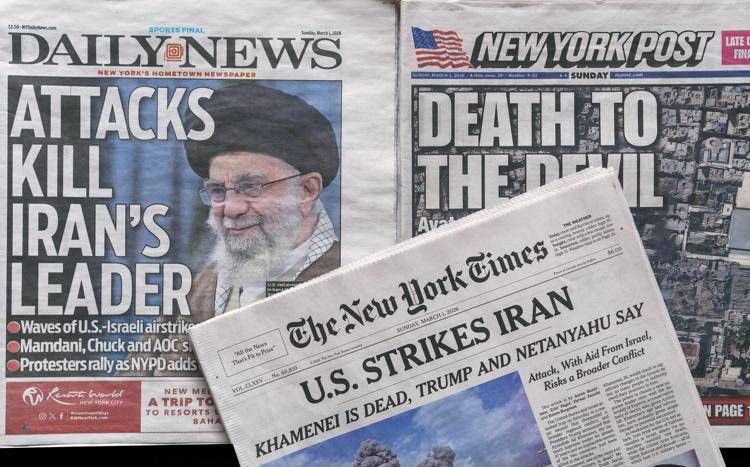
An investigation by the Financial Times reconstructs the intelligence operation and air strike that led to the killing of Iran’s Supreme Leader in Tehran
Surveillance and long-term intelligence gathering – The Khamenei assassination was the result of years of intelligence work, according to an investigation by the Financial Times.
On the day bombs struck the compound on Pasteur Street in Tehran, Israel already possessed extensive operational knowledge. It reportedly knew where the most trusted bodyguards of Ali Khamenei parked their cars, the shifts they worked, the routes they took and whom they were assigned to protect. Intelligence services were also said to know the exact time the ayatollah would arrive at his office and who would attend a meeting scheduled for that Saturday morning.
Two sources cited by the British newspaper claimed that, for years, almost all Tehran traffic cameras had been hacked, with encrypted footage transmitted to servers in Israel. One camera in particular provided a strategic vantage point over the heavily guarded compound, enabling analysts to construct what intelligence officers describe as a “pattern of life”, mapping habits, schedules, relationships and routines.
Data analysis and electronic interference
The report states that this surveillance was complemented by the analysis of billions of data points using algorithms and social network analysis tools capable of identifying hidden decision-making centres and potential new targets.
The operation is described as a systematic effort involving Israel’s military intelligence Unit 8200, the Mossad and a network of human sources, generating a continuous flow of operational information.
In addition, Israel is said to have interfered with certain mobile phone towers in the area, causing phones to appear engaged and preventing potential alerts from reaching Khamenei’s security detail. An Israeli intelligence official told the newspaper that “we knew Tehran as we know Jerusalem” long before the strike.
Target confirmation and precision strike
According to the investigation, once Israel and the Central Intelligence Agency determined that the 86-year-old ayatollah would be holding a meeting in his office, the opportunity was considered unique. Eliminating him and part of the Iranian leadership before an open conflict could drive them into underground bunkers was seen as strategically decisive.
Israeli military doctrine requires double independent confirmation of a high-value target’s presence. In this case, alongside electronic intelligence, the United States reportedly provided a direct human source. Only after these verifications did Israeli jets – airborne for hours to ensure precise timing – release up to 30 precision-guided munitions.
Security precautions and vulnerability
Unlike Hassan Nasrallah, who had reportedly spent years underground before being killed in 2024, Khamenei did not live in permanent concealment. While he adopted precautionary measures in wartime, he was not inside one of his two available bunkers on that Saturday morning.
Sources cited in the report stated that, had he been underground, the available ordnance would not have been capable of reaching him.
THE LATEST NEWS
Eight children killed in Shreveport mass shooting after dispute
19 Aprile 2026
Police say a single gunman opened fire across three homes following a domestic incident. The suspect was later shot dead...
Read More
North Korea Fires Unidentified Ballistic Missile, Seoul and Tokyo Say
19 Aprile 2026
Japan and South Korea report a suspected ballistic missile launch as Pyongyang continues a series of weapons tests under Kim...
Read More
Donald Trump Approval Rating Falls to 37% in NBC News Poll
19 Aprile 2026
A new NBC News survey shows declining support for the U.S. president, with sharp criticism over the economy and his...
Read More
Several Injured in Iowa City Shooting Near University Campus Area
19 Aprile 2026
Police say multiple people were taken to hospital after gunfire erupted during a night incident near the University of Iowa...
Read More
UK security clearance failure for Mandelson triggers top resignation
17 Aprile 2026
Sir Olly Robbins steps down after Keir Starmer was not informed that Lord Mandelson failed top-level security vetting required for...
Read More
(Photo: © AndKronos)