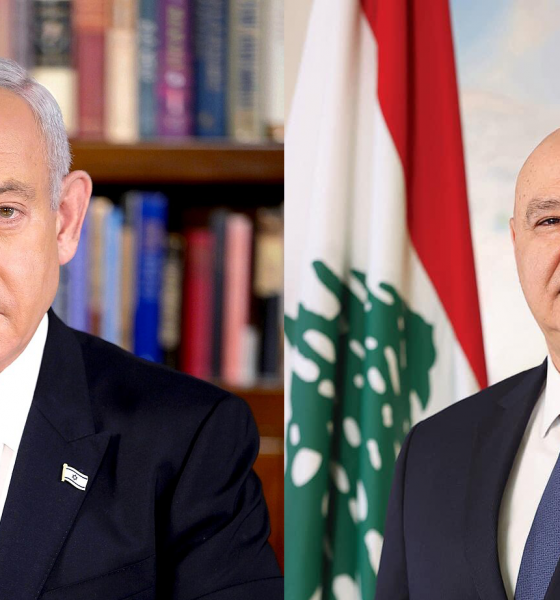
U.S. president says agreement follows talks with Netanyahu and Aoun, with White House meetings planned U.S. President Donald Trump announced...
Read More
International-News
Anti-government protests in Iran, Khamenei and the challenge of Pahlavi

Demonstrations are sweeping across the country’s major cities, driven by economic crisis and repression. The Supreme Leader’s leadership is under increasing pressure, while Reza Pahlavi, the son of the former Shah of Persia, is becoming increasingly active abroad
Anti-government protests in Iran have returned to shake the country’s major cities, fueled by a combination of economic crisis, political repression, and growing social discontent. At the center of the scene remains Ali Khamenei, Supreme Leader for over forty years, symbol of a power system that today faces one of the most complex phases since his rise to power.
Born on April 19, 1939, in Mashad, a city sacred to Shiites, Khamenei began his studies in a maktab, the elementary school of the time, and then attended the local seminary. The son of Hojatoleslam Javad Khamenei, he studied under important scholars, including Ayatollah Borujerdi and Ruhollah Khomeini. After studying in Najaf, Iraq, he moved to Qom, the nerve center of Shiite religious education, where he remained until 1964. During those years, he developed a strong adherence to Khomeini’s revolutionary line, participating in activities against the Shah’s regime and being arrested in 1963 for activities considered anti-government.
After Khomeini’s return to Tehran in 1979, Khamenei joined the Revolutionary Council, later becoming deputy minister of defense and personal representative of the Supreme Leader in the Supreme Defense Council. He was one of the negotiators during the American hostage crisis and one of the founders of the Islamic Republican Party. In 1981, he was seriously injured in an attack during a speech at a mosque in Tehran, claimed by the People’s Mojahedin.
Elected president after the assassination of Mohammad Ali Rajai, he remained in office until 1989. Upon Khomeini’s death, he was appointed Rahbar by the Assembly of Experts, despite not initially meeting the traditional religious requirements: the Constitution was amended to allow his appointment. Since then, his leadership has gone through different political seasons, from confrontation with Mohammad Khatami’s reformism to tensions with the ultra-conservative Mahmoud Ahmadinejad, to the presidency of Hassan Rouhani and the 2015 nuclear agreement, which was then abandoned by the United States in 2018.
The US withdrawal from the agreement reignited a deep economic crisis, fueling new waves of anti-government protests in Iran, including those in 2019, which were harshly repressed. The strongly critical stance towards the West has consolidated over time, accompanied by particularly harsh rhetoric towards Israel and the United States. Among the most dramatic moments in recent years were the killing of General Qassem Soleimani in 2020 and the accidental shooting down of a Ukrainian plane, which caused 176 casualties and further demonstrations.
More recently, the country has also been marked by the military escalation with Israel in June 2025, the so-called ‘12-day war’, which has had military and social consequences. In this context, US President Donald Trump has hinted at possible intervention to protect the protesters, warning the regime of the risks of violent repression.
At the same time, the visibility of Reza Pahlavi, son of the last Shah of Persia, has intensified abroad. In exile in the United States, Pahlavi has declared that he is ready to return to Iran to promote a political transition based on free elections and institutional transparency. His calls for mobilization have accompanied several demonstrations, where his name and image have become symbols for some of the protesters.
Born in Tehran in 1960 and raised in the royal palaces, Pahlavi moved to the United States on the eve of the revolution. After studying political science, he now lives in Maryland. Supporters describe him as an accessible and recognizable figure, while critics recall the shadows of the monarchical past, marked by repression and inequality. Pahlavi himself maintains that his goal is not the restoration of the monarchy, but the construction of a secular democracy.
The situation remains fluid and uncertain. Anti-government protests in Iran continue to represent a decisive test for Khamenei’s leadership and for the regional balance of power, with a confrontation that also involves international actors and raises questions about the country’s future political direction.
THE LATEST NEWS
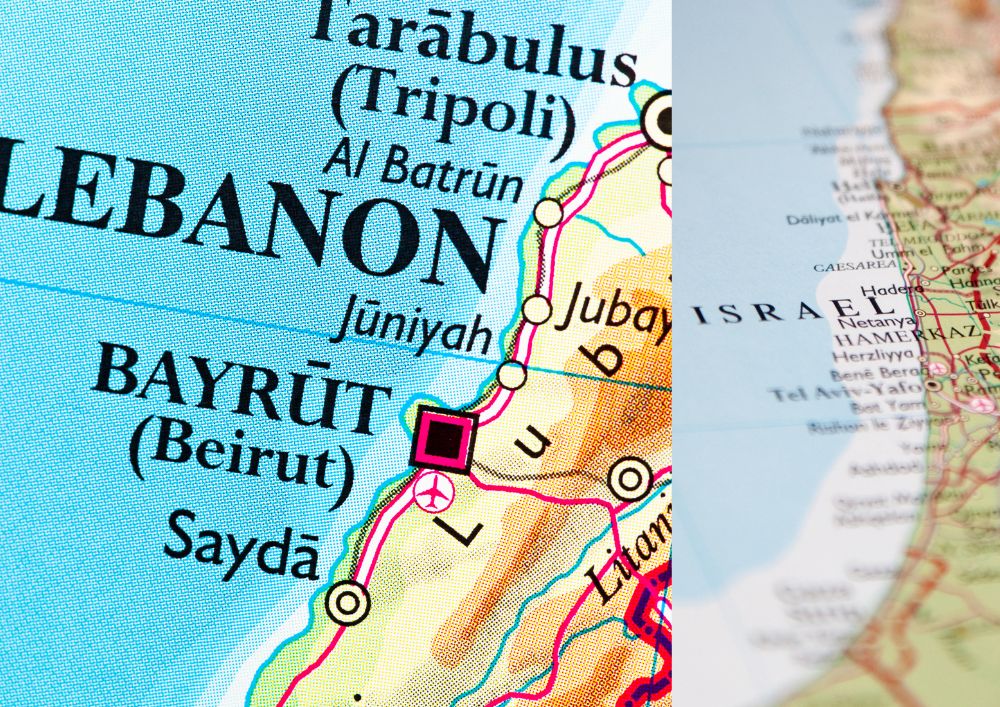
Israel-Lebanon leaders call stalls as Aoun refuses Netanyahu contact
16 Aprile 2026
Trump announces talks, but Beirut insists on ceasefire as condition U.S. President Donald Trump said Wednesday that the leaders of...
Read More
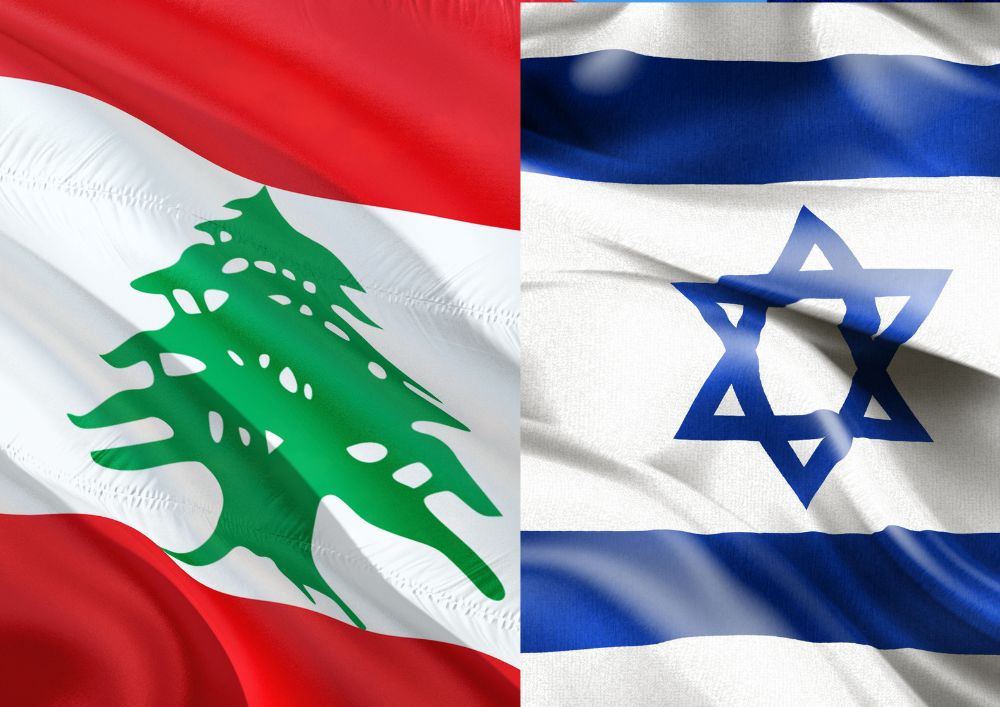
Netanyahu to Speak With Aoun as Israel-Lebanon Contacts Resume
16 Aprile 2026
U.S. signals precede confirmation from Israeli minister; Beirut had denied awareness of talks Israeli Prime Minister Benjamin Netanyahu is expected...
Read More
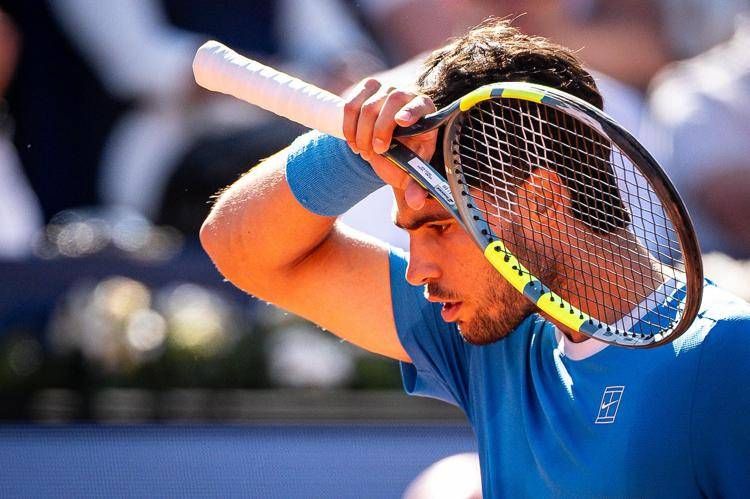
Alcaraz withdraws from Barcelona ATP, Sinner remains No. 1
15 Aprile 2026
Wrist injury halts Spaniard’s campaign and ends his bid to retake the top ranking Carlos Alcaraz has pulled out of...
Read More
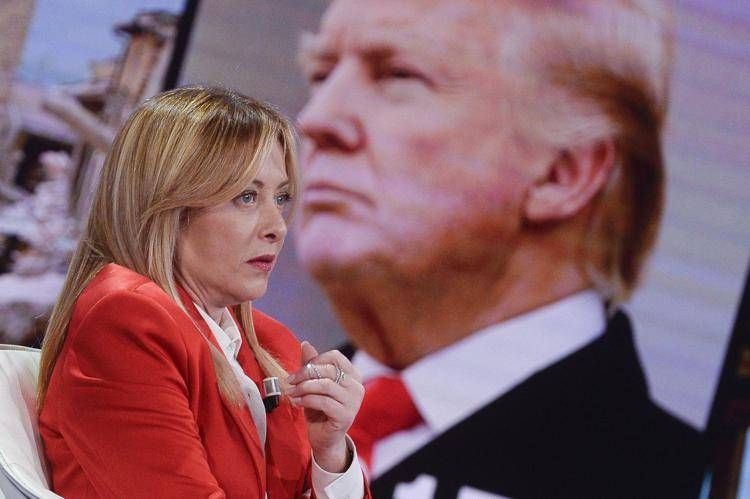
Trump attack on Meloni may boost poll numbers, analysts say
15 Aprile 2026
Pollsters suggest the Italian prime minister could gain support after distancing herself from the US president The Trump attack on...
Read More
UK asylum scam BBC investigation: migrants told to pose as gay
15 Aprile 2026
BBC probe uncovers network charging thousands to fabricate asylum claims based on sexual orientation A UK asylum scam exposed by...
Read More