



Ballistic missile destroyed over the Mediterranean after crossing Iraqi and Syrian airspace; fragment lands in Hatay province with no injuries...
Read More
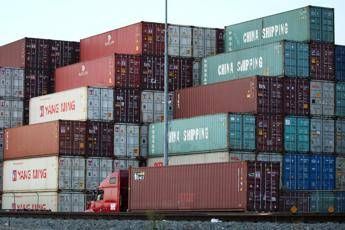
China weighs trade talks with U.S. after tariff war

Beijing’s statements on the possibility of talks with Washington come after tariffs tightened. China insists on removal of unilateral tariffs as a condition for dialogue
China is considering whether to enter into trade negotiations with the United States after Washington imposed 145% tariffs. The possibility of dialogue was announced by a Chinese Ministry of Commerce spokesman, who pointed out that senior U.S. officials have repeatedly expressed willingness to negotiate on the tariff issue.
According to the statement, the United States has recently sent messages to China through official channels, hoping to initiate talks. However, Beijing stressed that its position remains unchanged and that although there is an open door for dialogue, China will not accept any unilateral imposition.
China’s response: no concessions without tariff removal
The Chinese spokesman reiterated that Beijing is willing to negotiate, but only if the U.S. shows sincerity and is ready to correct unfair practices, especially the removal of unilaterally imposed duties. China has stated that any pressure or coercion during the negotiations will not be accepted.
Amid high tensions, Beijing also recalled that it was the United States that unilaterally initiated the tariff war. Despite this, the Chinese government has left open the possibility of negotiations while maintaining a hard line. “If we talk, the door will be open,” the spokesman said, but he made it clear that China is not willing to compromise on its fundamental positions.
China maintains hard line and responds with tariffs
In response to increased tariffs by the United States, China imposed 125 percent tariffs on some U.S. products. In addition, an official video underscored Beijing’s determination, stating that “bowing to a bully is like drinking poison to quench your thirst.” The message is clear: China will not accept threats or pressure and will continue to defend its position firmly.
Despite economic difficulties, China has resisted pressure. Trade tensions with the United States do not seem to have dented Beijing’s determination not to give in on its demands.
China’s economic difficulties and U.S. pressure
The effects of trade tensions are also beginning to be felt in the Chinese economy. In April, the country’s manufacturing activity was at its lowest level in two years, a clear sign that the trade war is negatively affecting the manufacturing sector.
Meanwhile, U.S. Treasury Secretary Scott Bessent called for a de-escalation of the trade dispute with China. In an interview with Fox Business, Bessent spoke of a multi-step process that could lead to a rebalancing of trade relations. The secretary stressed that Beijing needs to review its economic model and fulfill past commitments, including those in the trade agreement signed with Donald Trump during his first administration.
The possible revision of the bilateral agreement
Bessent added that China’s economy is slowing “substantially” and that this could prompt Washington to revise “phase one” of the trade agreement. The goal, he said, is to reduce trade barriers deemed unfair and protectionist by China. The hope is that, over time, agreements can be reached that promote more balanced trade between the two countries.
In sum, the situation between the United States and China remains tense, with Beijing prepared to negotiate only if Washington removes unilateral tariffs. Although economic difficulties are being felt, China has no intention of giving in easily. It remains to be seen how the situation will evolve in the coming months, with both superpowers waiting for mutual signals of openness and sincerity.
THE LATEST NEWS

Chamberlain Visits Andrew Mountbatten-Windsor Amid Succession Removal Speculation
4 Marzo 2026
Lord Richard Benyon holds private meeting at Wood Farm as constitutional questions intensify The Lord Chamberlain of the Royal Household,...
Read More

CIA arming Kurdish forces to spark uprising in Iran
4 Marzo 2026
Report says Trump administration in talks with Iranian Kurdish groups and Iraqi Kurdish leaders as ground operation is discussed CIA...
Read More

Khamenei assassination: surveillance and precision strike
3 Marzo 2026
An investigation by the Financial Times reconstructs the intelligence operation and air strike that led to the killing of Iran’s...
Read More

Who Leads Iran Now After Khamenei’s Death
2 Marzo 2026
Tehran forms an interim leadership council to run the country following the killing of Supreme Leader Ayatollah Ali Khamenei After...
Read More

US-Israel strike on Iran delayed by one week
2 Marzo 2026
According to Axios, the operation was postponed for operational and intelligence reasons, leaving room for a final round of nuclear...
Read More

(Photo: © AndKronos)
Condividi su:




-

 News18 ore ago
Terremoto a Catania oggi, scossa 4.5 sull’Etna: scuole chiuse
-

 Primo Piano20 ore ago
Mojtaba Khamenei Guida Suprema Iran, emergono cure per impotenza nel Regno Unito
-

 News18 ore ago
Trapianto con cuore danneggiato, funerali oggi a Nola per il piccolo Domenico
-

 Meteo18 ore ago
Clima primaverile in Italia con 20°C grazie all’anticiclone, attenzione alla nebbia