




Underground missile bases built to shield Iran’s ballistic arsenal are emerging as a key vulnerability in the ongoing military campaign...
Read More
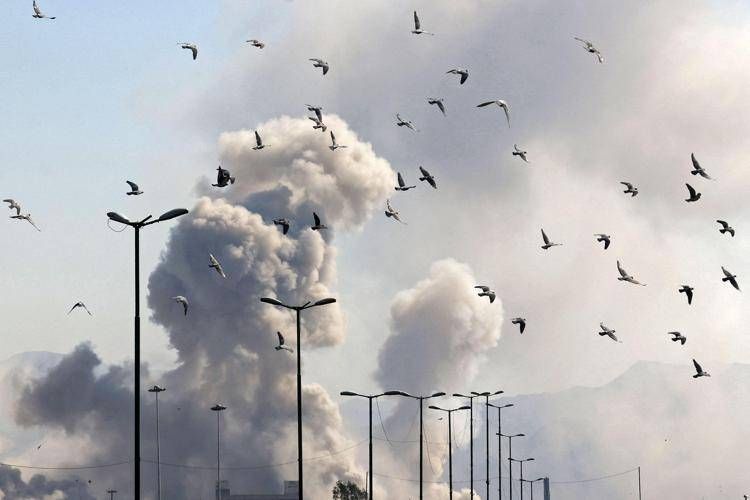
Iran’s missile cities targeted in U.S.-Israel strikes

Underground missile bases built to shield Iran’s ballistic arsenal are emerging as a key vulnerability in the ongoing military campaign
Iran’s missile cities targeted in U.S.-Israel strikes have become one of the central fronts in the ongoing military campaign against Tehran’s strategic arsenal. Six days after the conflict began, the network of underground bases built by the Iranian regime to shield its ballistic missiles is increasingly being exposed as a strategic weakness rather than a defensive advantage.
According to reporting by The Wall Street Journal, the vast system of tunnels and fortified installations—designed to conceal missile launchers and allow rapid deployment—has been repeatedly struck by U.S. and Israeli forces. Warplanes and armed drones have spent days flying over dozens of underground facilities, hitting launchers as they emerge from tunnels to fire, while heavy bombers have dropped munitions directly on the complexes, in some cases burying Iranian weapons beneath the ground.
Satellite imagery released in recent days shows debris from destroyed missiles and launchers scattered near the entrances of several underground facilities.
Since the war began, Iran has launched more than 500 missiles toward Israel, U.S. bases and other targets across the Gulf region. Many of those projectiles were intercepted by air defense systems. While the opening days of the conflict saw intense barrages, the pace of launches has dropped significantly as U.S. and Israeli airstrikes have continued to hit Iranian military infrastructure.
According to the U.S. Central Command (CENTCOM), the military operations have reduced missile launches by roughly 86 percent. Admiral Brad Cooper said U.S. forces are now “hunting the last remaining ballistic missile launchers Iran has left,” emphasizing that Tehran’s ability to carry out strikes is steadily declining.
Even so, analysts cited by the Wall Street Journal believe a large portion of Iran’s thousands of short- and medium-range missiles may still be stored inside underground bases. Many of these facilities are difficult to destroy completely, but their locations are widely known to U.S. and Israeli intelligence.
Most Iranian missile bases are buried underground, yet they feature visible entrances, access roads and supporting infrastructure that can be identified through satellite imagery. Those structural features represent the main weakness of the missile-city concept.
“What used to be mobile and hard to find is no longer mobile and much easier to strike,” said Sam Lair, an analyst at the James Martin Center for Nonproliferation Studies.
Over time, those characteristics have allowed the Pentagon and the Israeli military to map much of the network. Several sites have been hit in recent days, including bases near Shiraz, Isfahan and Kermanshah. In northern Iran, tunnel entrances near Tabriz have reportedly been damaged.
Further south, analysts report strikes on installations near Khorgo, Haji Abad and Jam. In some areas Iran built rudimentary underground silos allowing missiles to be launched directly from concealed positions. One base in southern Iran near the city of Khormuj is believed to contain nine silos carved into the side of a mountain and oriented toward the Persian Gulf.
Despite the damage, Iran continues to launch armed drones and carry out sporadic missile attacks. Analysts also warn that Tehran may still be holding back some of its most powerful long-range missile systems as a last resort should the regime face a serious existential threat.
THE LATEST NEWS

JD Vance’s Silence on Trump-Iran Attack Raises Questions Among MAGA Base
5 Marzo 2026
The U.S. Vice President’s low profile during the military strikes sparks debate over his foreign policy stance and presidential prospects...
Read More

Trump rejects Mojtaba Khamenei as Iran’s Supreme Leader successor
5 Marzo 2026
The U.S. president says the son of Ali Khamenei is “unacceptable” and insists he must be involved in choosing Iran’s...
Read More

Iran warns Europe it will “pay the price” if it stays silent
5 Marzo 2026
Tehran accuses Western countries of ignoring what it calls a violation of international law after the U.S.–Israel attack, while divisions...
Read More

Britney Spears arrested for DUI in Ventura County
5 Marzo 2026
The pop star was stopped by highway patrol officers Wednesday night in California and released a few hours later. A...
Read More

Iranian Missile Intercepted by NATO Towards Turkey Raises Regional Tensions
4 Marzo 2026
Ballistic missile destroyed over the Mediterranean after crossing Iraqi and Syrian airspace; fragment lands in Hatay province with no injuries...
Read More

(Photo: © AndKronos)
Condividi su:




-

 News13 ore ago
Prezzi dei carburanti in aumento: gasolio oltre 1,8 euro al litro
-

 In Evidenza17 ore ago
Offensiva di terra delle milizie curde nel nord-ovest dell’Iran
-

 Meteo17 ore ago
Anticipo di Pasqua con l’alta pressione: sole sull’Italia fino a metà marzo
-

 News17 ore ago
Via libera del Senato al ddl sull’antisemitismo
You must be logged in to post a comment Login