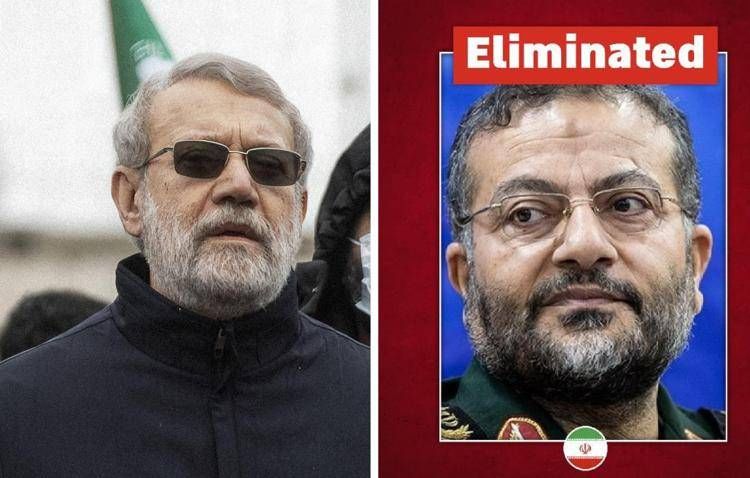
Israeli Defense Forces confirm death of Basij commander Golam Reza Soleimani and other senior officials in coordinated raids Ali Larijani,...
Read More
International-News
The Iran missile threat to the United States remains after June airstrikes
Despite heavy bombardment during June’s brief conflict, Tehran has preserved most of its ballistic missile arsenal, sustaining a direct threat to U.S. forces and allies in the Middle East
Despite sustained airstrikes during the so-called 12-day war in June, Iran has retained most of its vast missile arsenal, preserving what analysts describe as the Iran missile threat to the United States and its allies across the Middle East.
According to the Wall Street Journal, Tehran still possesses roughly 2,000 medium-range ballistic missiles capable of reaching Israel, alongside large stockpiles of short-range missiles, anti-ship weapons, drones, and fast attack craft. This combination represents a direct danger to U.S. military installations in the region and to commercial and military vessels transiting the Strait of Hormuz.
“Tehran may be weakened, but its robust missile force still makes it lethal,” said Behnam Ben Taleblu, director of the Iran program at the Washington-based Foundation for Defense of Democracies. He was commenting on recent remarks delivered to Congress by Secretary of State Marco Rubio, underscoring ongoing concerns within the U.S. government over the Iran missile threat to the United States.
In response, the Trump administration has reinforced its military posture in the region. The aircraft carrier USS Abraham Lincoln has been deployed alongside additional combat aircraft, providing the White House with multiple operational options in the event of escalation. The United States has also strengthened its defensive umbrella by expanding the deployment of Patriot and THAAD missile defense systems.
However, defense officials acknowledge that these systems would be stretched far more than during their recent use in shielding Israel. In a wider conflict, U.S. missile defenses would need to cover a vast geographic area. According to the Council on Foreign Relations, Washington is responsible for protecting roughly two dozen declared land bases, stretching from Turkey to Kuwait, as well as about 40,000 troops stationed across the region.
Military analysts say Iran would likely focus its firepower on U.S. targets closest to its own coastline, exploiting its extensive inventory of short-range missiles. At the same time, Tehran could strike Gulf countries that maintain close security ties with Washington.
“Iran has enough short-range missiles to attack U.S. bases in the Gulf in volumes that could test the defensive capacity of the United States and its partners,” said Daniel Shapiro, former deputy assistant secretary of defense for the Middle East.
Farzin Nadimi of the Washington Institute for Near East Policy added that “a significant portion of these missiles can reach their targets,” reinforcing assessments that, despite recent strikes, the Iran missile threat to the United States remains a central factor in regional security calculations.
THE LATEST NEWS
Iran regime likely to hold power, intelligence assessments say
17 Marzo 2026
U.S. officials see no imminent collapse in Tehran, warning the system could emerge more hardline despite being weakened The Iran...
Read More
South Korea energy crisis hits stocks as Iran war disrupts supply
17 Marzo 2026
Seoul’s market plunges after the Strait of Hormuz closure exposes energy dependence tied to chip production and data infrastructure South...
Read More
Sean Penn Meets Zelensky in Kyiv After Skipping Oscar Ceremony
16 Marzo 2026
The American actor visited the Ukrainian capital after missing the March 15 Academy Awards in Los Angeles, where he won...
Read More

Mojtaba Khamenei transferred to Russia for medical treatment? Moscow remains silent
16 Marzo 2026
According to international media, the new Iranian leader may have been injured in U.S. and Israeli raids. Neither Tehran nor...
Read More
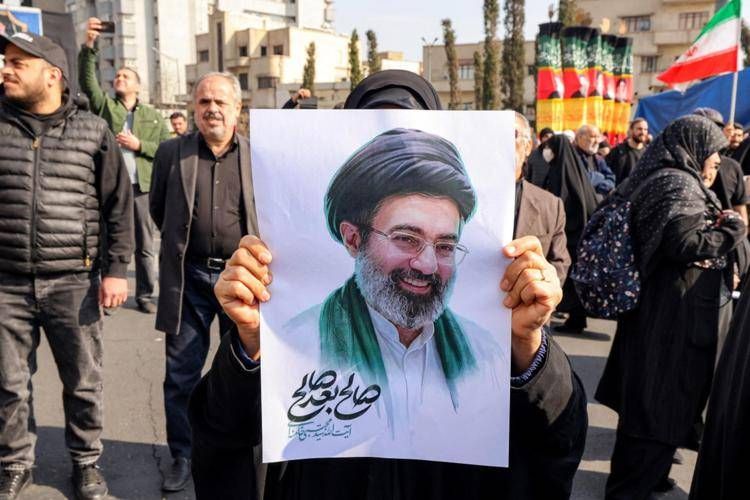
Mojtaba Khamenei’s Reported Sexual Orientation Draws Attention in U.S. Intelligence Briefings
16 Marzo 2026
U.S. intelligence reportedly informed President Donald Trump that Mojtaba Khamenei may be gay, according to the New York Post, amid...
Read More
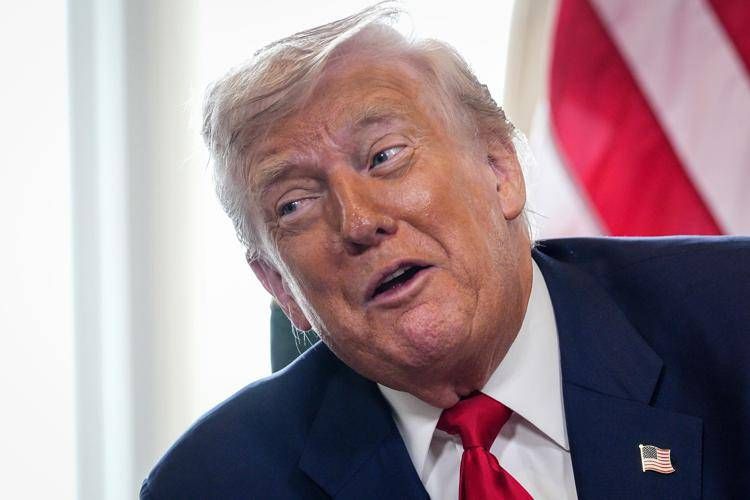
(Photo: © AndKronos)