
Israeli Defense Forces confirm death of Basij commander Golam Reza Soleimani and other senior officials in coordinated raids Ali Larijani,...
Read More
International-News
South Korea energy crisis hits stocks as Iran war disrupts supply
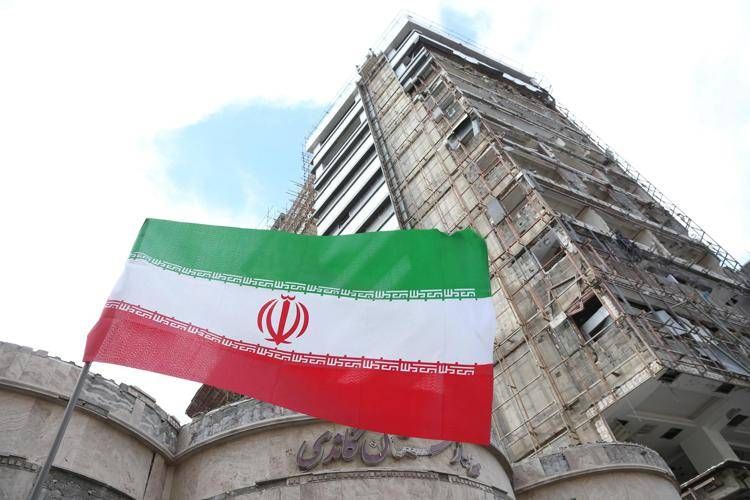
Seoul’s market plunges after the Strait of Hormuz closure exposes energy dependence tied to chip production and data infrastructure
South Korea energy crisis has sharply impacted financial markets after the outbreak of war in Iran, despite Seoul having no direct military involvement in the conflict. In the first four trading days, the country’s stock market lost 18 percent of its value, marking the fastest decline since 2008 and wiping out more than $500 billion.
The drop is tied to energy disruption rather than direct conflict. The Strait of Hormuz, a narrow waterway between Iran and the Arabian Peninsula, carries about one-fifth of the world’s oil supply. It is also the main route for oil imports feeding South Korea’s industrial base. The country sources roughly 70 percent of its oil from the Middle East, with nearly all shipments passing through Hormuz.
The immediate impact has hit the semiconductor sector. Samsung and SK Hynix together account for about 80 percent of global production of a key memory used in artificial intelligence and nearly 70 percent of another type found in computers and smartphones. Both companies lost more than 20 percent of their market value within two days.
According to Darcie Draudt-Véjares of the Carnegie Endowment for International Peace and Tim Sahay of the Net Zero Industrial Policy Lab at Johns Hopkins University, the conflict has not created the vulnerability but has exposed it. South Korea remains heavily dependent on imported fossil fuels despite its advanced technological base.
The issue is compounded by future demand. A new industrial complex under construction in Yongin, south of Seoul, is expected to become the world’s largest chip production hub, with partial operations scheduled for 2027. The facility alone will require 16 gigawatts of energy, equivalent to about 17 percent of the country’s peak electricity demand. How that demand will be met remains unresolved.
The crisis also highlights broader supply chain risks. Previous disruptions, including the pandemic and the war in Ukraine, had already affected key inputs such as neon gas used in chip manufacturing. Each geopolitical shock has exposed a different vulnerability within the system.
Attention is now turning to critical materials. Helium and bromine are under particular scrutiny. On March 2, Iranian drones struck a helium facility in Qatar. The country produces more than one-third of the world’s helium supply, and the Ras Laffan plant has remained offline since the attack. Industry estimates suggest the disruption could last at least two to three months, with full recovery taking up to six months.
Helium is essential in semiconductor manufacturing for maintaining controlled temperatures and conditions, with no practical substitutes. Bromine, used in chip etching, is largely produced in Israel and Jordan, accounting for nearly two-thirds of global supply.
Peter Hanbury of Bain & Company noted that while alternative helium sources exist in Canada and the United States, they would take time to scale. The risk to critical materials is considered moderate, but closely monitored.
The global semiconductor industry is valued at approximately $1 trillion this year, underpinning cloud services, artificial intelligence, digital payments, and communications infrastructure. Prolonged disruptions would have consequences beyond the economy, affecting core global systems.
A second front has emerged in digital infrastructure. On March 1, Iranian drones struck two Amazon Web Services facilities in the United Arab Emirates and a third in Bahrain. The sites host large volumes of data rather than military assets. Following the attacks, residents in Dubai and Abu Dhabi experienced disruptions in basic digital services, including payments and food delivery.
Nvidia temporarily closed its offices in Dubai, while Google reported employees stranded due to flight cancellations. Chris McGuire, a former National Security Council technology adviser and now with the Council on Foreign Relations, said companies investing in the region may need to consider missile defense for data centers. He warned that such facilities are likely to become increasingly strategic targets as artificial intelligence grows in importance.
(Source and photo: © AndKronos)
THE LATEST NEWS
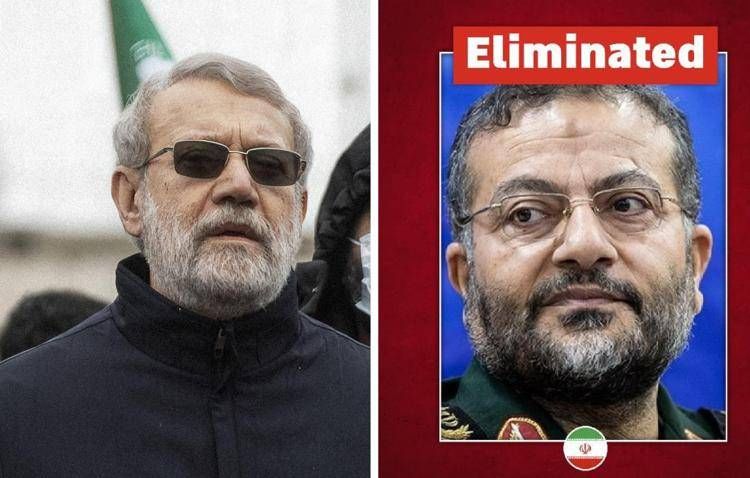
Iran regime likely to hold power, intelligence assessments say
17 Marzo 2026
U.S. officials see no imminent collapse in Tehran, warning the system could emerge more hardline despite being weakened The Iran...
Read More
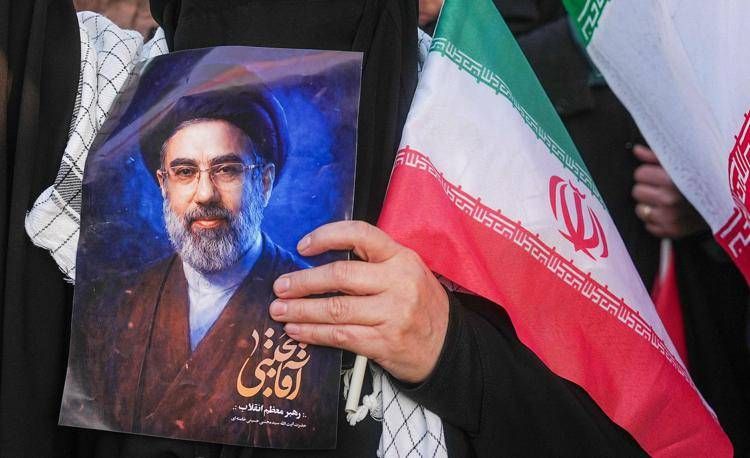
South Korea energy crisis hits stocks as Iran war disrupts supply
17 Marzo 2026
Seoul’s market plunges after the Strait of Hormuz closure exposes energy dependence tied to chip production and data infrastructure South...
Read More
Sean Penn Meets Zelensky in Kyiv After Skipping Oscar Ceremony
16 Marzo 2026
The American actor visited the Ukrainian capital after missing the March 15 Academy Awards in Los Angeles, where he won...
Read More

Mojtaba Khamenei transferred to Russia for medical treatment? Moscow remains silent
16 Marzo 2026
According to international media, the new Iranian leader may have been injured in U.S. and Israeli raids. Neither Tehran nor...
Read More
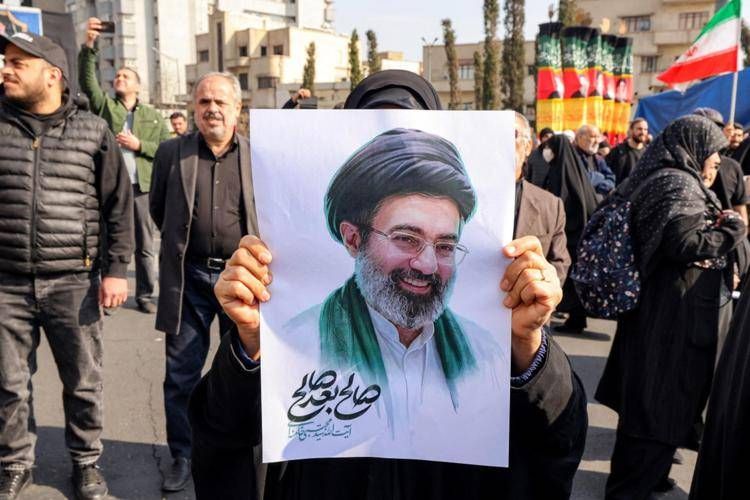
Mojtaba Khamenei’s Reported Sexual Orientation Draws Attention in U.S. Intelligence Briefings
16 Marzo 2026
U.S. intelligence reportedly informed President Donald Trump that Mojtaba Khamenei may be gay, according to the New York Post, amid...
Read More

(Source and photo: © AndKronos)

You must be logged in to post a comment Login