
Reopening the Strait of Hormuz requires 10–14 Aegis destroyers, up to 16 mine countermeasure ships, persistent air cover, and coordinated...
Read More
International-News
Trump’s Plan to Reopen the Strait of Hormuz Requires Major Naval and Allied Forces
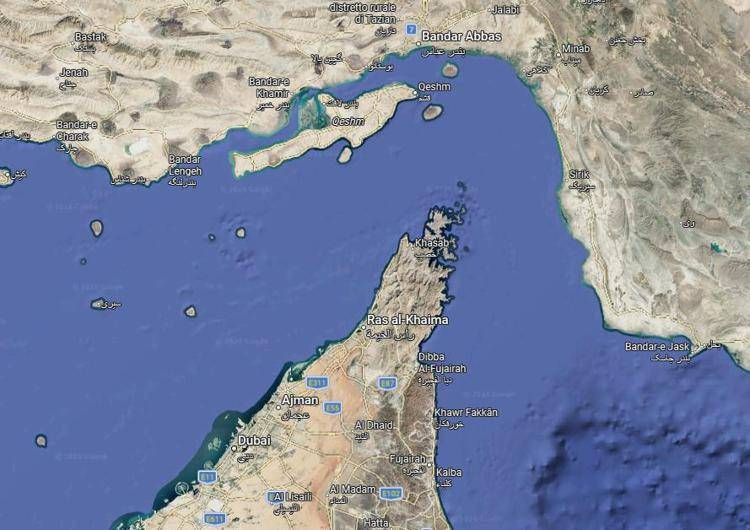
Reopening the Strait of Hormuz requires 10–14 Aegis destroyers, up to 16 mine countermeasure ships, persistent air cover, and coordinated allies, according to military analysis
On March 4, 2026, Iran officially closed the Strait of Hormuz, a critical maritime passage that handles roughly 20% of global oil, as well as key gas supplies from Qatar, sulfur, and helium. The U.S.-led effort to reopen the strait faces a complex mix of threats and logistical challenges, according to military experts.
Iran’s Islamic Revolutionary Guard Corps (IRGC) has developed an asymmetric anti-access/area-denial (A2/AD) doctrine designed to make navigation through the Persian Gulf highly risky without direct naval engagement with U.S. forces. Threats include naval mines, aerial drones, unmanned surface vehicles (USVs), fast attack boats, and coastal anti-ship missiles.
Rear Admiral (Ret.) Mark Montgomery, a former carrier strike group commander, outlined the operational requirements to secure the strait:
- Neutralize Iranian threats to a “militarily manageable risk,” including missiles, mines, drones, and USVs. Although the U.S. Central Command (Centcom) has struck over 7,000 targets and flown more than 6,500 combat sorties, these threats remain active.
- Maintain continuous surveillance over 50 miles on each side of the strait and 100 miles inland, using MQ-9 Reaper drones and maritime patrol aircraft.
- Deploy 4–8 armed aircraft for persistent aerial protection, specifically equipped to intercept Shahed drones in real time.
- Station armed helicopters to counter fast boats emerging from coasts or islands.
- Provide 10–14 Aegis destroyers to escort convoys and provide integrated air defense, gradually transferring responsibilities to allied navies once the situation stabilizes.
- Clear mines from the strait. Estimates from the Washington Institute suggest up to 16 dedicated mine countermeasure vessels would be required; currently, the U.S. has only one operational ship in the region.
Trump has called for an international “Hormuz Coalition,” requesting assistance from Britain, France, Japan, South Korea, and China. To date, responses have been limited: Germany and Luxembourg declined participation, the U.K. offered partial support, and Japan and Australia have held back. Only France, Italy, Belgium, the Netherlands, Japan, and South Korea possess relevant anti-mine capabilities.
Persistent air cover, mine clearance, armed naval escorts, and allied cooperation are all critical to reopen the Strait of Hormuz safely. Without sufficient forces and unified political support, the strait remains a high-risk zone where Iran only needs to make navigation unsustainable rather than win a conventional naval battle.
THE LATEST NEWS
Cuba Faces Total System Collapse, Dissident Warns
17 Marzo 2026
Kenia Rodríguez says internal opposition grows as energy and economic crises deepen Cuba is facing one of the most critical...
Read More

Iran leaders killed, Israel-US strikes target Tehran command
17 Marzo 2026
From Ali Khamenei to Ali Larijani, senior officials killed in coordinated raids At least a dozen senior Iranian officials have...
Read More

Ali Larijani Killed in Israeli Airstrike While in Tehran Shelter
17 Marzo 2026
Israeli Defense Forces confirm death of Basij commander Golam Reza Soleimani and other senior officials in coordinated raids Ali Larijani,...
Read More

Iran regime likely to hold power, intelligence assessments say
17 Marzo 2026
U.S. officials see no imminent collapse in Tehran, warning the system could emerge more hardline despite being weakened The Iran...
Read More

South Korea energy crisis hits stocks as Iran war disrupts supply
17 Marzo 2026
Seoul’s market plunges after the Strait of Hormuz closure exposes energy dependence tied to chip production and data infrastructure South...
Read More
(Photo: © AndKronos)

You must be logged in to post a comment Login