Opposition leader says her return is tied to a US-backed transition plan aimed at political change and reconstruction by 2026...
Read More
International-News
The history and evolution of the Papal Conclave
📰 LiberoReporter su Google News
Segui tutte le notizie senza perderne una
SEGUI ORA →
Segui tutte le notizie senza perderne una
The conclave, the symbol of papal election, has a long history rooted in antiquity, evolving over the centuries to meet the needs of the Church. Today, its rules are precise and codified
The term ‘conclave’, derived from the Latin cum clavis, meaning ‘locked place’, has an origin related to the private spaces of Roman houses, usually locked to guard precious goods. The term was adopted by the Church as a reference to the place where the cardinals, locked in seclusion, must proceed to elect the Pope.
Initially, “conclave” had no specific religious connotations, but over time, starting in the 13th century, the term acquired an ecclesiastical connotation. The conclave thus became the sacred and protected place where the cardinals withdrew to make a fundamental decision for the Catholic Church, far from any outside influence.
Historical Origins
The first documented traces of a conclave date back to the period of the pontificate of Honorius III, elected in 1216, when for the first time the cardinals were locked up in order to force a quick election of the Pope. Indeed, this practice became customary in the course of time as a way to avoid political hindrances and outside influences. However, it was the election of Gregory X in 1271 that marked a fundamental change in the history of the conclave.
After the death of Pope Clement IV, the papal election was prolonged for a full two years, nine months and two days, a situation that caused concern throughout the Church. Eventually, on the advice of St. Bonaventure, the people of Viterbo, a town that hosted the cardinals, decided to lock the prelates inside the papal palace to force them to make a decision. The next step was even more radical: Ranieri Gatti, the city captain, had the roof of the palace removed, in the hope that the forced gesture would have the desired effect. Indeed, the election of Theobald Visconti, who took the name Gregory X, took place on 1 September 1271, marking the beginning of the formalisation of the rules for papal election.
The formalisation of the rules
In 1274, during the Council of Lyons, Pope Gregory X established the first official rules for the conclave, stipulating that the election process had to take place in the very place where the pope had died. These new rules were incorporated into canon law by Boniface VIII, giving rise to an established practice. The rule of the sede vacante and the isolation of the cardinals was never questioned, but the location of the conclave changed several times in the following centuries.
In 1455, Callistus III ruled that although the election of the pope should take place at the place of the predecessor’s death, the conclave would always be held in Rome, at the Vatican. The papal election was an act that increasingly focused on protecting the Church from external political influences and maintaining the sacredness of the process.
Changes and evolutions over time
Over the centuries, the rules regarding the conclave underwent numerous changes. In the 19th century, the most significant changes came with Pius IX, who in 1871, through the bull In hac sublimi, granted dispensation from seclusion for cardinals, easing the rigidity of tradition. The cardinals’ seclusion, although maintained, was mitigated to encourage greater communication between them during the conclave.
Modern reforms began to take hold in the 20th century. Pius X, with the constitution Vacante Sede Apostolica of 1904, began to establish more detailed regulations for the period of the sede vacante, especially regarding the manner in which the conclave was convoked. Pius XII, in 1945, with Vacantis Apostolicae Sedis, introduced further rules, which were further refined in 1962 by John XXIII with the motu proprio Summi Pontificis electio.
In 1975, Paul VI made a fundamental change: the introduction of the exclusion of cardinals over the age of 18 from conclaves, a decision that, although controversial, has been maintained to this day. John Paul II, in 1996, with the constitution Universi Dominici Gregis, perfected the election procedures, introducing new provisions for voting and the behaviour of cardinals during the conclave.
The current conclave rules
The current rules are those established by John Paul II and amended by Benedict XVI in 2007. The rules stipulate that, after the death of the Pope, the sede vacante must be officially announced and a conclave convened. The election of the new pope must take place between the 15th and 20th day after the pontiff’s death. During this period, the cardinals meet for private consultations, discussions and voting, with the aim of electing a successor.
Once the pope is elected, the last of the cardinal deacons goes to the Sistine Chapel to confirm the election and formally ask the new pope if he accepts the position. If the answer is positive, the new Pope chooses a name and the minutes of the election and the papal vesting are drawn up.’0
THE LATEST NEWS
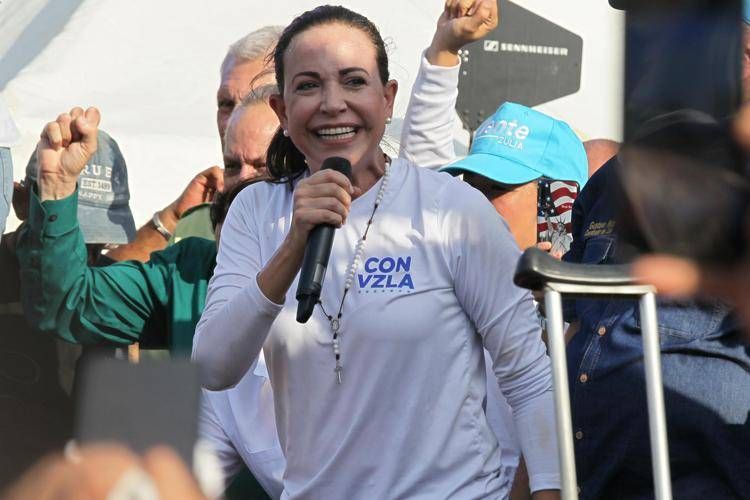
Secret Service shoots man near White House after gunfire
24 Maggio 2026
21-year-old opened fire at checkpoint; bystander wounded, no agents injured A man was shot and killed by Secret Service agents...
Read More
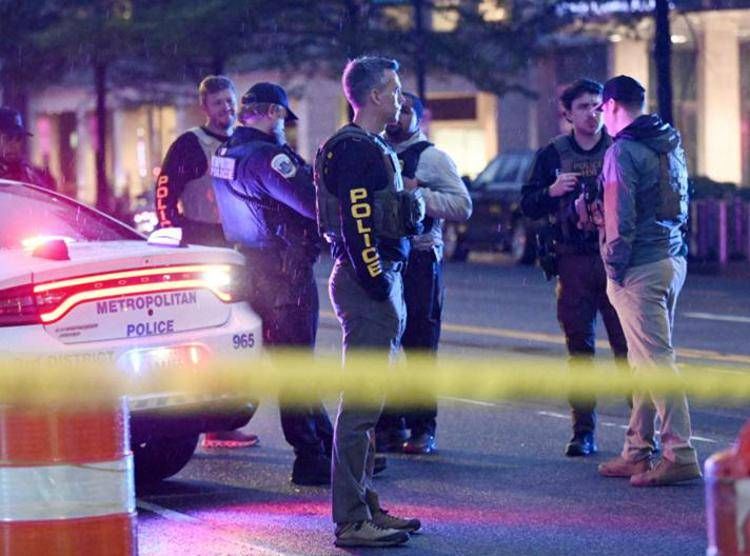
Iran-trained suspect plotted to kill Ivanka Trump, US says
23 Maggio 2026
Arrested Iraqi national allegedly mapped her Florida home and tied threats to Soleimani killing An Iraqi national allegedly trained by...
Read More

Trump Skips Son’s Bahamas Wedding Over White House Duties
22 Maggio 2026
The U.S. president says official responsibilities will keep him in Washington during Donald Trump Jr.’s weekend ceremony Trump declines to...
Read More
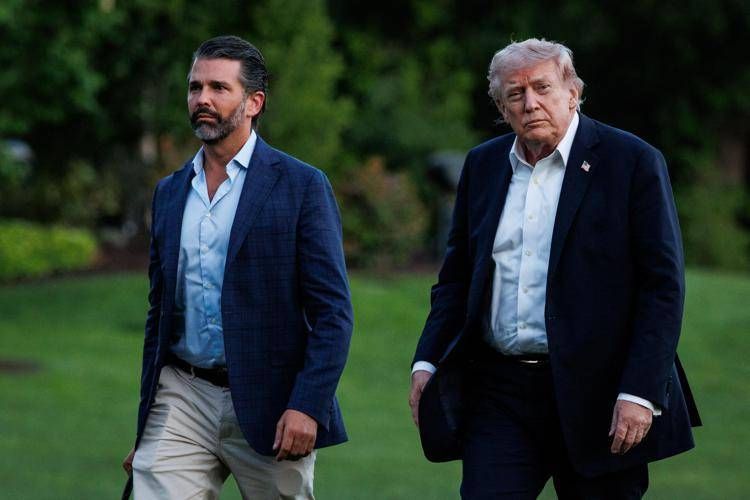
U.S.-Iran Ceasefire Draft Framework Emerges in Pakistan-Mediated Talks, Report Says
22 Maggio 2026
A reported draft outline for a potential agreement between Iran and the United States includes an immediate and unconditional ceasefire,...
Read More
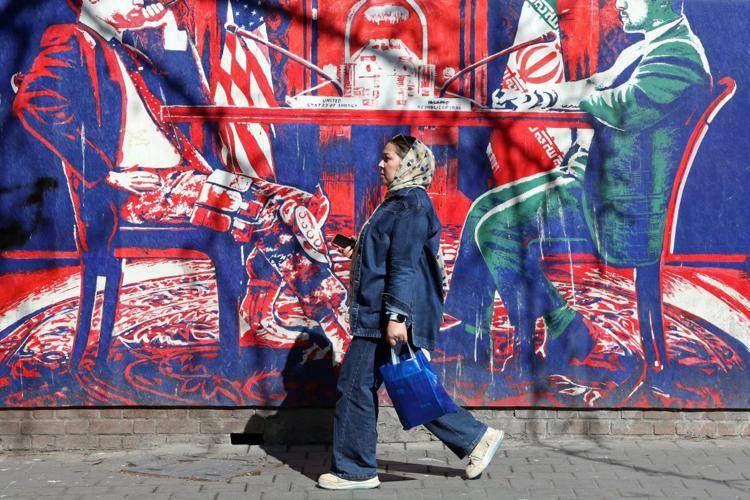
Trump says Iran strike was “one hour away” as U.S. sets deadline for talks
19 Maggio 2026
The U.S. president signals a narrow diplomatic window for Tehran while warning that a large-scale attack remains possible if negotiations...
Read More

(Source and photo: © AndKronos)