
Lufthansa cancels 20,000 short-haul flights, while Ryanair warns of rising costs and market instability A growing jet fuel crisis is...
Read More
International-News
US scientists deaths and disappearances prompt federal review
White House and Congress seek links in cases involving nuclear and aerospace researchers
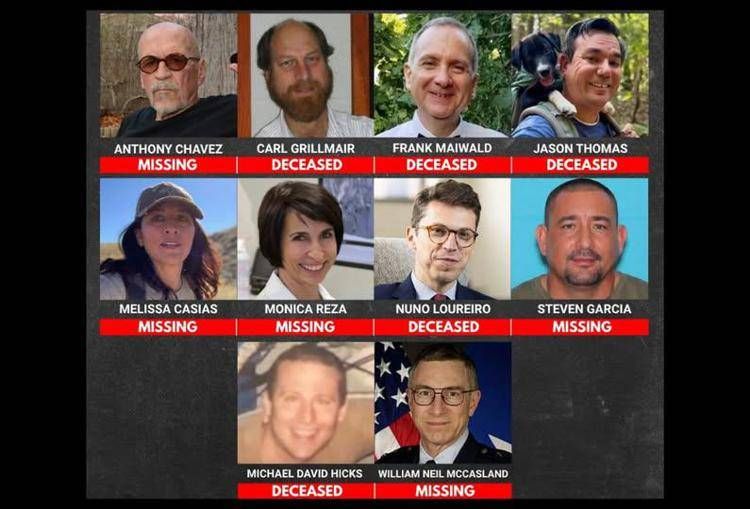
At least 10 scientists tied to sensitive nuclear and aerospace programs have died or disappeared in the United States over the past three years, prompting a federal review amid growing political scrutiny.
There is no confirmed link among the cases. Still, the pattern has raised questions significant enough for the White House to confirm that federal agencies are assessing whether any connections exist, including the possibility—so far unsupported by evidence—of external interference or unauthorized access to sensitive information.
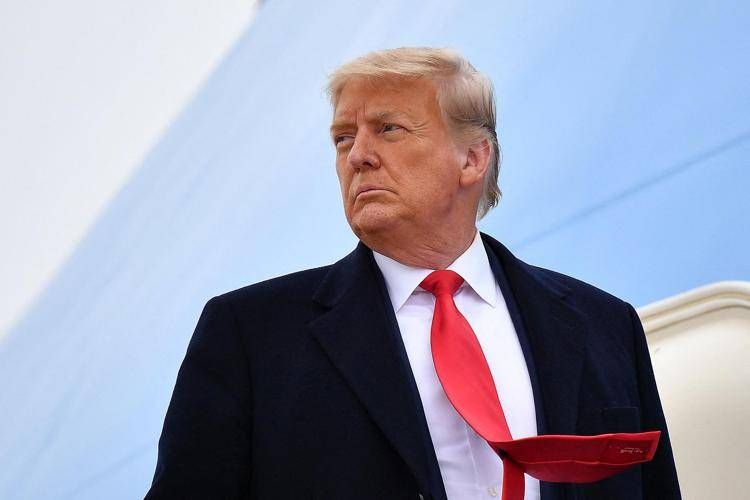
“It’s a very serious matter. Hopefully it’s a coincidence,” President Donald Trump said.
The issue has reached Capitol Hill, where the House Oversight Committee has opened a formal inquiry. Lawmakers have requested updates from the Federal Bureau of Investigation, the Department of Defense, the Department of Energy, and NASA to determine whether the deaths and disappearances—some still unresolved—share any common element, particularly given the individuals’ access to sensitive scientific data.
The FBI confirmed it is coordinating with federal agencies and local authorities “to identify potential links,” but officials say no concrete connection has been established so far.
Several cases are concentrated in California, particularly in Los Angeles County, involving figures connected to scientific and space research. Among them are Carl Grillmair, who died in February 2025 at age 67, and Michael David Hicks and Frank Maiwald, both associated with NASA’s Jet Propulsion Laboratory and deceased in 2023 and 2024, respectively. Aerospace engineer Monica Jacinto Reza disappeared in June 2025 during a hike near a forested area in the region.
Another case under scrutiny involves retired General William Neil McCasland, 68, a former head of the Air Force Research Laboratory. He vanished from his home in Albuquerque, New Mexico, in February 2025.
Authorities are also examining the case of Jason Thomas, who disappeared in Massachusetts in December and was found dead three months later. Police reported no evidence of a crime.
Attention has also focused on Amy Eskridge, who died in Alabama in June 2022 from a self-inflicted gunshot wound. Eskridge had recently spoken publicly about pressure and alleged “psychological warfare” related to her work on antigravity.
In December 2025, Nuno Loureiro, a professor at MIT and director of the Center for Plasma Science and Fusion, was killed in a shooting at his home in Massachusetts during a broader attack that also involved Brown University.
The list also includes the disappearances of Melissa Casias, Anthony Chavez, and Steven Garcia, all connected to scientific institutions or research centers in the United States.
The cases vary widely: confirmed homicides, deaths without clear causes, and disappearances with no evident trace. In some instances, investigators have found no signs of criminal activity, while others remain open.
The developments have fueled debate in Washington. Some lawmakers have raised concerns about a potential national security threat, while others emphasize that, at this stage, the incidents appear unrelated.
Despite increased attention, including on social media, federal institutions have taken a cautious stance. NASA said it is cooperating with investigators and noted that “there is currently no indication of a threat to national security.” The FBI added that if evidence of criminal or coordinated activity emerges, appropriate action will be taken.
Several members of Congress have also urged restraint, noting that the scientific community involved in nuclear and aerospace sectors includes thousands of professionals, and that no evidence currently points to a coordinated or targeted campaign.
THE LATEST NEWS
Texas clears Ten Commandments display in classrooms after appeals court ruling
22 Aprile 2026
Split federal decision says law does not breach First Amendment; civil rights groups plan Supreme Court appeal Texas can require...
Read More
US scientists deaths and disappearances prompt federal review
22 Aprile 2026
White House and Congress seek links in cases involving nuclear and aerospace researchers At least 10 scientists tied to sensitive...
Read More
Trump says Iran agreement in Pakistan expected Wednesday night
20 Aprile 2026
The U.S. president signals a deal is close, warns of consequences if Tehran refuses, and confirms a delegation is en...
Read More
Eight children killed in Shreveport mass shooting after dispute
19 Aprile 2026
Police say a single gunman opened fire across three homes following a domestic incident. The suspect was later shot dead...
Read More
North Korea Fires Unidentified Ballistic Missile, Seoul and Tokyo Say
19 Aprile 2026
Japan and South Korea report a suspected ballistic missile launch as Pyongyang continues a series of weapons tests under Kim...
Read More
(Photo: © AndKronos)

You must be logged in to post a comment Login