Police say a single gunman opened fire across three homes following a domestic incident. The suspect was later shot dead...
Read More
International-News
Four Years After Russia’s Invasion of Ukraine: The Drone War Reshapes Modern Conflict
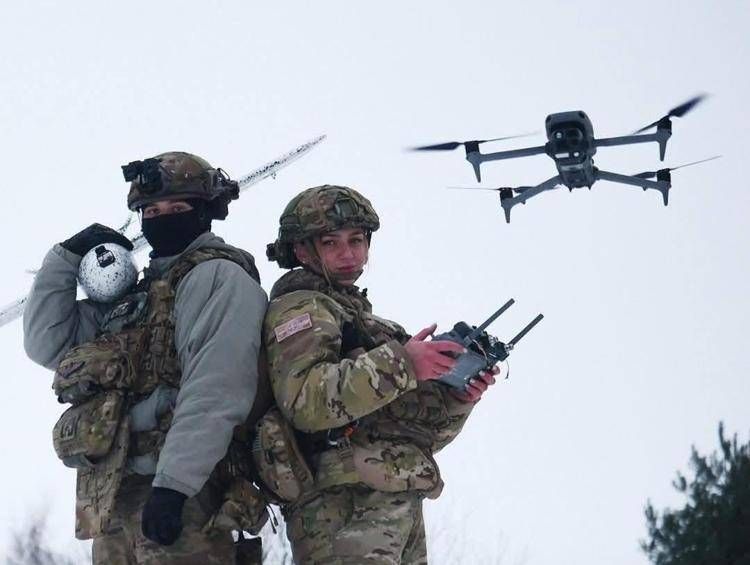
From battlefield innovation to European defense policy, unmanned systems have transformed strategy, industry and security across the continent
Four years after Russia’s invasion of Ukraine: the drone war has emerged as one of the defining elements of the conflict, fundamentally altering how high-intensity warfare is conducted. That assessment comes from Federico Borsari, a researcher at the Center for European Policy Analysis (Cepa), whose work focuses on the intersection of technology and international security, with particular attention to unmanned systems, NATO and transatlantic defense.
According to Borsari, describing the conflict as a drone war does not mean unmanned systems have replaced traditional weapons platforms. Rather, they have transformed their role and operational effectiveness. In Ukraine, drones have become central to reconnaissance, target acquisition, strike missions and even logistical support. They have reshaped battlefield awareness and the conduct of high-intensity operations. Today, he argues, it is difficult to imagine a conflict of this scale without an extensive unmanned component.
Ukraine as an Operational Laboratory
Four years after Russia’s invasion of Ukraine: the drone war is widely regarded as a laboratory of military innovation. A distinctive model has taken shape, built on continuous interaction between industry and the armed forces. Companies design and refine systems around immediate operational needs: extended endurance, resilience against electronic warfare, ease of repair and enhanced offensive capability.
Military units provide direct feedback on performance in combat, generating rapid innovation cycles — what Borsari describes as “learning through combat.” This accelerated adaptation, he notes, represents a competitive advantage that is difficult to replicate in more bureaucratic defense environments.
Yet the ecosystem also reveals structural weaknesses. Alongside industrial dynamism and a strong operational culture, challenges persist in interoperability, production rationalization and economies of scale. Fragmentation remains a tangible risk. For this reason, partnerships with European companies are becoming increasingly critical to sustain long-term development.
European Cooperation and Structural Delays
Four years after Russia’s invasion of Ukraine: the drone war also directly concerns Europe. Cooperation between Kyiv and European partners extends beyond technology transfer toward a deeper integration of expertise. Europe contributes industrial standards, capital, access to supply chains and large-scale manufacturing capacity. Ukraine offers hard-earned operational experience and battlefield-tested tactical knowledge.
However, Borsari highlights Europe’s accumulated delay in the drone sector. For years, many European countries relied heavily on U.S. and Israeli technologies, slowing the development of a fully autonomous industrial base. Only recently has the sector accelerated, with increased investment and the involvement of major defense groups and innovative startups.
Meanwhile, actors such as China and Turkey have consolidated dominant industrial and geopolitical positions. Turkey’s Bayraktar TB2, in particular, has become not only a commercially successful system but also a tool of strategic influence.
The “Drone Wall” and the EU Action Plan
The rapid proliferation of drones represents both an operational asset and a growing security threat for Europe. Against this backdrop, proposals have emerged for a so-called “Drone Wall” — a technological barrier along the European Union’s eastern flank.
Borsari considers the proposal understandable but conceptually problematic. The drone threat — especially from small, low-cost systems — is adaptive and constantly evolving. Static architectures based on fixed sensors and permanent installations risk becoming obsolete quickly.
In his view, an effective response must be modular and integrated within a coherent operational doctrine, combining technology, training, qualified personnel and continuous upgrades. This logic underpins the European Commission’s Drone and Counter-Drone Action Plan, aimed at strengthening cooperation, shared research and joint training programs among member states.
A Strategic Lesson for Europe
Four years after Russia’s invasion of Ukraine: the drone war offers Europe a clear strategic lesson. Military innovation, Borsari concludes, cannot be separated from operational experience. Without a direct connection to those deploying systems in combat, industrial strategies remain incomplete.
The trajectory is unmistakable: not the disappearance of the soldier, but deeper integration between human forces and autonomous systems. Drones are reshaping concepts such as mass, risk, deterrence and technological superiority. Ukraine, Borsari observes, is not only fighting a war — it is anticipating the defining features of future conflicts.
THE LATEST NEWS

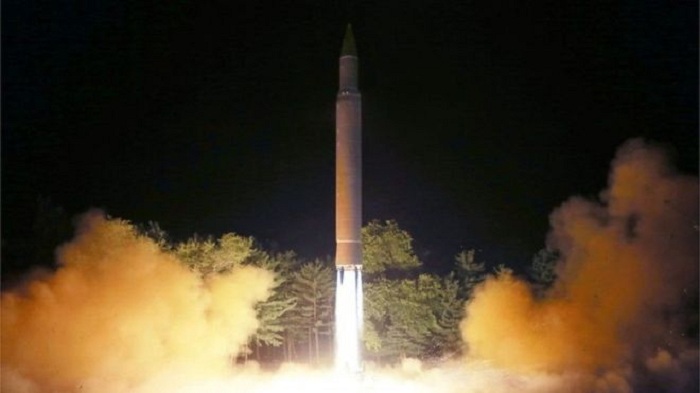
North Korea Fires Unidentified Ballistic Missile, Seoul and Tokyo Say
19 Aprile 2026
Japan and South Korea report a suspected ballistic missile launch as Pyongyang continues a series of weapons tests under Kim...
Read More
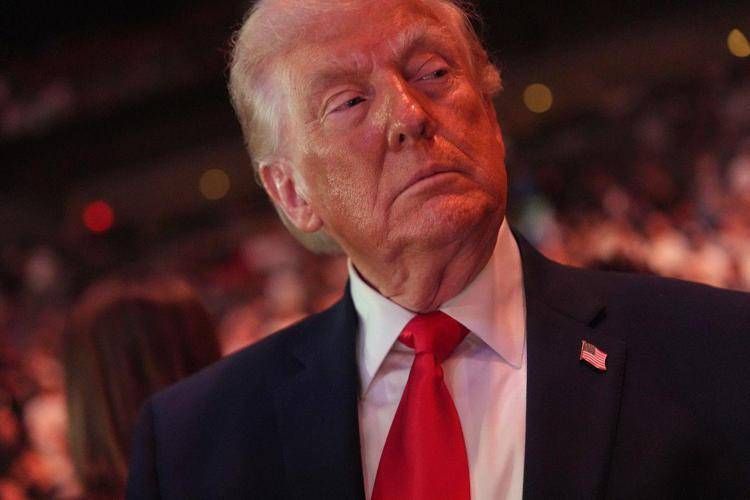
Donald Trump Approval Rating Falls to 37% in NBC News Poll
19 Aprile 2026
A new NBC News survey shows declining support for the U.S. president, with sharp criticism over the economy and his...
Read More
Several Injured in Iowa City Shooting Near University Campus Area
19 Aprile 2026
Police say multiple people were taken to hospital after gunfire erupted during a night incident near the University of Iowa...
Read More

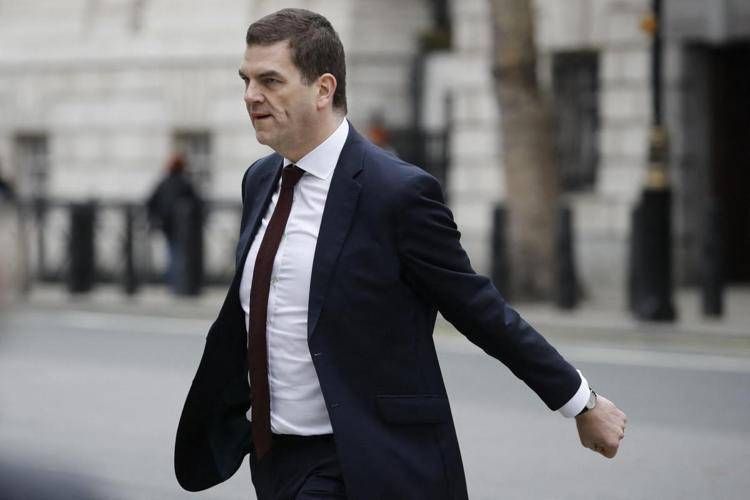
UK security clearance failure for Mandelson triggers top resignation
17 Aprile 2026
Sir Olly Robbins steps down after Keir Starmer was not informed that Lord Mandelson failed top-level security vetting required for...
Read More
Israel-Hezbollah ceasefire, Trump announces 10-day truce taking effect at midnight
16 Aprile 2026
U.S. president says agreement follows talks with Netanyahu and Aoun, with White House meetings planned U.S. President Donald Trump announced...
Read More

(Source and photo: © AndKronos)