House panel moves to enforce testimony as former attorney general faces April 14 date Pam Bondi subpoena over Epstein files...
Read More
International-News
China nuclear testing allegations raise global arms control fears
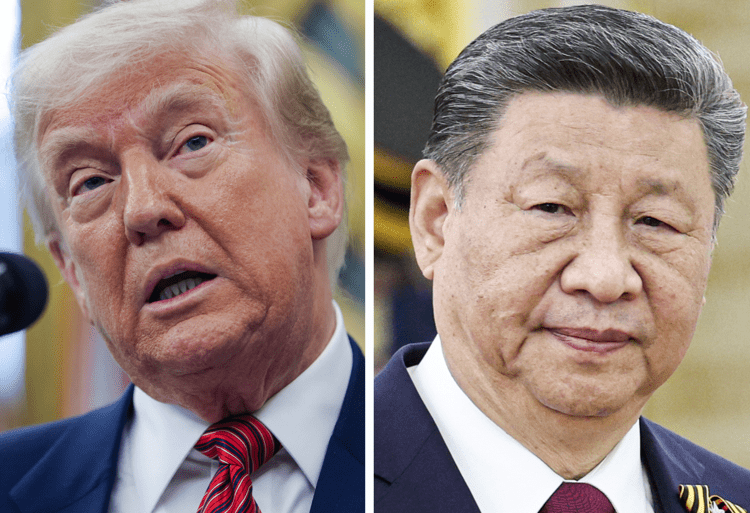
U.S. intelligence claims about possible Chinese nuclear tests trigger denials from Beijing and revive tensions over global nuclear restraint rules
U.S. Intelligence Claims and Chinese Denials – The China nuclear testing allegations emerged after officials from the United States accused China of secretly planning and possibly conducting nuclear weapons tests.
According to U.S. intelligence disclosures presented by Thomas DiNanno during a disarmament conference in Geneva in early February, Beijing may have conducted explosive nuclear experiments, including preparations for tests with yields in the hundreds-of-tons range. DiNanno also stated that one such test allegedly occurred on June 22, 2020.
Chinese officials strongly rejected the accusations. In a statement to Agence France-Presse, Beijing described the claims as “absolutely false,” accusing Washington of creating pretexts to justify a possible return to nuclear testing.
The China nuclear testing allegations are widely viewed as potentially undermining long-standing norms among nuclear powers aimed at limiting test detonations.
Strategic Pressure and Nuclear Negotiation Dynamics
According to Lucrezia Goldin of Sky TG24, the accusations may represent strategic pressure designed to push Beijing toward nuclear arms control negotiations following the expiration of previous agreements with Russia.
Goldin argues that Washington’s approach toward Beijing has remained transactional across trade and diplomacy, including during the administration of Donald Trump and partly during the final phase of the administration of Joe Biden.
She also noted that U.S. deterrence strategy has increasingly shifted toward China rather than focusing primarily on North Korea.
U.S. intelligence estimates suggest China could expand its nuclear arsenal from roughly 200 warheads in 2019 to around 1,000 by 2030.
Nuclear Testing, Monitoring Limits, and Legal Ambiguities
Although major nuclear powers have not conducted full nuclear detonations for decades, research continues through simulations and subcritical explosive tests. Similar programs are believed to exist in China and Russia.
According to Jeffrey Lewis of Middlebury College, part of the uncertainty stems from the fact that international rules do not clearly define what qualifies as a nuclear explosion under monitoring regimes linked to the Comprehensive Nuclear-Test-Ban Treaty Organization.
Lewis suggested some countries might interpret the rules as allowing very small nuclear chain reactions as long as they remain limited in scale.
Meanwhile, Ankit Panda of the Carnegie Endowment for International Peace believes smaller-scale testing could be aimed at improving weapon safety rather than developing new nuclear designs.
Security Concerns and Taiwan Factor
Officials at the Pentagon fear that a rapidly expanding Chinese arsenal could be linked to potential military scenarios involving Taiwan or attempts to overcome U.S. missile defense systems.
However, publicly available seismic data from June 22, 2020 did not show clear evidence of an explosive test, and international monitoring bodies have reported no confirmed detection. Some analysts suggest the possibility of “decoupling,” a technique that reduces seismic signals by conducting explosions inside large underground cavities.
Despite this, experts believe it would be extremely difficult to conceal a large-scale nuclear test using such methods.
Risk of a New Nuclear Testing Era
The China nuclear testing allegations are also linked to broader U.S. strategic calculations, including reconsideration of nuclear testing policies following the expiration of the latest arms control treaty with Russia in 2026.
Some analysts warn that escalating rhetoric around nuclear testing could revive Cold War–style competition between major powers, although others argue China traditionally moves cautiously in strategic confrontations.
THE LATEST NEWS
Hegseth asks Army Chief Randy George to resign
2 Aprile 2026
Defense secretary moves to replace the Army’s top general with a figure aligned with Trump’s military vision U.S. Defense Secretary...
Read More
Trump removes Bondi, taps former personal lawyer Blanche as interim AG
2 Aprile 2026
The president announces the leadership change at the Justice Department, appointing his former personal lawyer as acting attorney general U.S....
Read More
Gulf States Reconsider Pipelines Amid Prolonged Iranian Control of Hormuz
2 Aprile 2026
Rising tensions over the Strait of Hormuz are prompting Gulf nations to explore new energy corridors to bypass Iran and...
Read More

Trump threatens to pull the U.S. out of NATO
1 Aprile 2026
Donald Trump threatens to withdraw the United States from NATO, slams European allies and clashes with UK PM Keir Starmer...
Read More
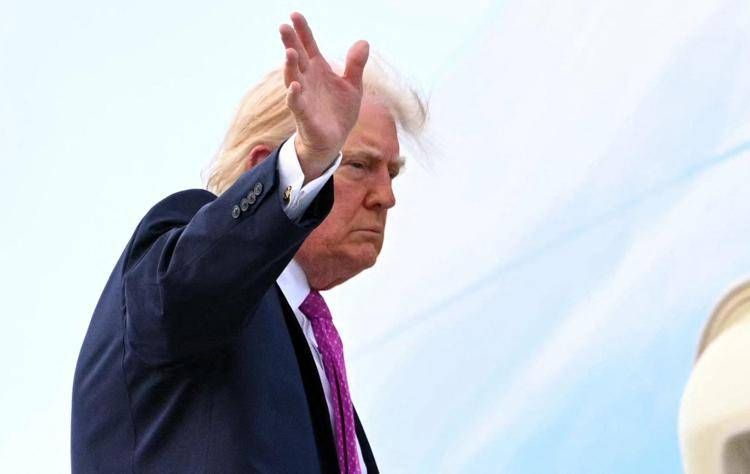
Trump says Iran requests ceasefire, but Tehran denies it
1 Aprile 2026
US president announces contacts on Iranian initiative; Islamic Republic rejects truce Tensions between the United States and Iran continue to...
Read More
(Photo: © AndKronos)