Italian premier meets Algerian president Tebboune to discuss regional stability and Gaza humanitarian situation Italian Prime Minister Giorgia Meloni expressed...
Read More
International-News
Trump announces new 25% tariffs on steel and aluminium: tensions with international partners
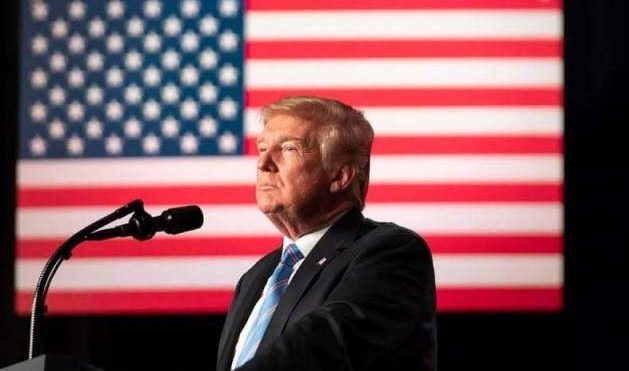
The US President initiates a disturbing escalation in his trade policies, threatening tariffs on steel and aluminium, with significant impacts on international relations
US President Donald Trump has announced a move that could have far-reaching economic and diplomatic repercussions. During his trip to New Orleans for the Super Bowl, Trump told reporters that he intends to impose 25% tariffs on steel and aluminium imports, including those from Canada and Mexico. The proposal is part of an increasingly tense trade policy framework and marks an increase in the protectionist measures that the president has promoted since taking office.
Duties on steel and aluminium
In a clear and unambiguous statement, Trump made it clear that all steel imports into the US will be subject to a 25% tariff, a commitment that also includes imports from neighbouring Canada and Mexico, two of the US’s closest economic allies. ‘All steel coming into the US will be subject to tariffs. A 25% tariff,’ Trump said, adding that the same rate will also apply to aluminium.
This announcement comes against a backdrop of growing protectionism and could have devastating effects on global supply chains, especially affecting industries that depend on these materials. The decision to also impose tariffs on Canada and Mexico represents a significant turning point in relations with these countries, which are already marked by negotiations on the North American trade treaty (USMCA).
Trade retaliation: China and reciprocal tariffs
Trump’s statement is part of a framework of escalating trade tensions not only with traditional allies, but also with China. The US administration is already facing the repercussions of a trade war with Beijing, and the situation could escalate further. In fact, new Chinese tariffs on a range of goods from the US, including coal, liquefied natural gas (LNG), crude oil, agricultural equipment and some vehicles, came into effect this week in response to the desired increase in US tariffs against Beijing, which Trump demanded shortly after his official inauguration in the White House.
Against this backdrop, Trump reiterated his intention to apply ‘reciprocal tariffs’ on other products, in a context of trade retaliation. The president made it clear that these measures will come into effect ‘almost immediately’ and that the idea is very simple: ‘If they make us pay, we make them pay’. This logic of retaliation could result in escalation, with potentially serious damage not only to the US, but also to the economies of the countries involved.
Europe ready to defend
The international response has not been long in coming. The European Union has already made it known that it is ready to oppose any tariffs imposed by the United States. French Foreign Minister Jean-Noel Barrot said that Europe would not hesitate to ‘retaliate’ against such protectionist measures. ‘There is no hesitation when it comes to defending our interests,’ Barrot said in an interview with TF1.
Meanwhile, the European Commission emphasised that it had not received any ‘official notification’ about the introduction of new duties, but warned that if ‘unjustified’ measures were introduced, Brussels would not hesitate to respond to protect the interests of European companies.
A disturbing escalation in trade policies
With the announcement of the new duties and the intention to impose further ‘reciprocal’ tariffs, Trump is pursuing an increasingly aggressive trade policy with possible global repercussions. The move marks an important step in an economic conflict that could go far beyond the borders of the United States, with historical allies such as the European Union ready to defend themselves. The coming weeks could prove decisive in understanding the evolution of this ‘trade war’ and its long-term consequences.
THE LATEST NEWS

Epstein case, suspicions on guard Tova Noel before death
25 Marzo 2026
U.S. Congress summons former Manhattan jail guard over searches and cash deposits Epstein case, suspicions on guard Tova Noel before...
Read More
Ghalibaf’s role in Iran’s new phase after February 2026 crisis
24 Marzo 2026
Following Ali Khamenei’s death and external strikes, Iran’s power structure shifts, elevating the Parliament speaker as a key political figure...
Read More
Kentucky farmer rejects $26M offer for land sale to AI company
24 Marzo 2026
An 82-year-old landowner near Maysville refuses to sell farmland despite a bid far above market value A farmer in Kentucky...
Read More

Sarah Ferguson book on Epstein sparks tension with Buckingham Palace
23 Marzo 2026
A potential biography by the Duchess of York could reveal royal secrets. King Charles reportedly ready to respond A book...
Read More

Hungary, Russian plan to boost Orban: fake assassination plot before the vote
22 Marzo 2026
According to an intelligence report, Moscow considered extreme measures to influence the election One month before the elections in Hungary,...
Read More