Police say a single gunman opened fire across three homes following a domestic incident. The suspect was later shot dead...
Read More
International-News
Baltic Sea: Nato strengthens military presence against Russian sabotage
Nato launches a new monitoring mission in the Baltic Sea to protect critical infrastructure from sabotage attributed to Russia, with the use of naval drones and advanced technologies
Nato has announced a significant increase in its military presence in the Baltic Sea to counter security threats to critical infrastructure such as submarine cables and energy pipelines. Aircraft, ships, satellites and a small fleet of submarine drones will be deployed in a new monitoring mission, aimed at preventing attacks and sabotage, believed to be linked to Russia’s so-called ‘shadow fleet’. This was stated by NATO Secretary General Mark Rutte at a press conference after a meeting with the leaders of the Baltic States.
The mission will be coordinated by US General Christopher Cavoli and will include the use of advanced technologies for monitoring maritime traffic. The operation was launched in response to a series of suspicious incidents involving submarine cables and vital infrastructure in the Baltic region, including sabotage attributed to Russia.
Rutte pointed out that ‘several submarine cables have been damaged in recent months’, highlighting that this infrastructure is crucial not only for energy supply, but also for global internet traffic and financial transactions, which amount to USD 1.3 trillion per day. According to Rutte, the increasing number of suspicious incidents, including damage to cables and sabotage, is part of a strategy of destabilisation by Russia against Europe, which includes cyber attacks and assassination attempts.
During the meeting, the Baltic NATO countries agreed to set up a group of legal experts to study legitimate actions that can be taken in international waters in case of threats to freedom of navigation. Finnish President Alexander Stubb reiterated the importance of deterrence and cooperation between the allies, announcing that ‘the capacity and willingness to act has increased’.
The most recent example of such incidents concerns a Russian tanker seized in December by Finnish authorities for suspected damage to submarine cables, including the Estlink 2 power cable and four telecommunication cables between Finland and Estonia.
THE LATEST NEWS

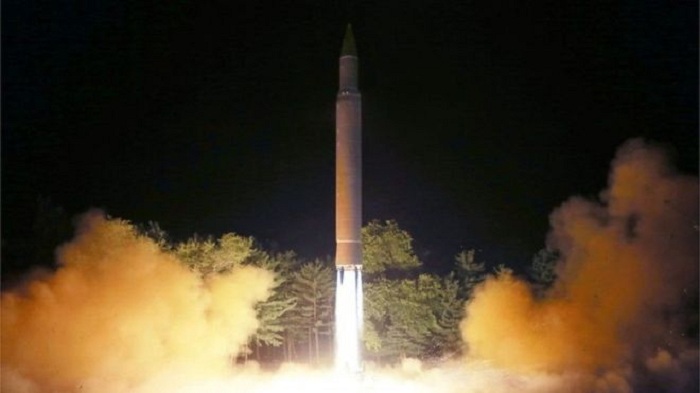
North Korea Fires Unidentified Ballistic Missile, Seoul and Tokyo Say
19 Aprile 2026
Japan and South Korea report a suspected ballistic missile launch as Pyongyang continues a series of weapons tests under Kim...
Read More
Donald Trump Approval Rating Falls to 37% in NBC News Poll
19 Aprile 2026
A new NBC News survey shows declining support for the U.S. president, with sharp criticism over the economy and his...
Read More

Several Injured in Iowa City Shooting Near University Campus Area
19 Aprile 2026
Police say multiple people were taken to hospital after gunfire erupted during a night incident near the University of Iowa...
Read More

UK security clearance failure for Mandelson triggers top resignation
17 Aprile 2026
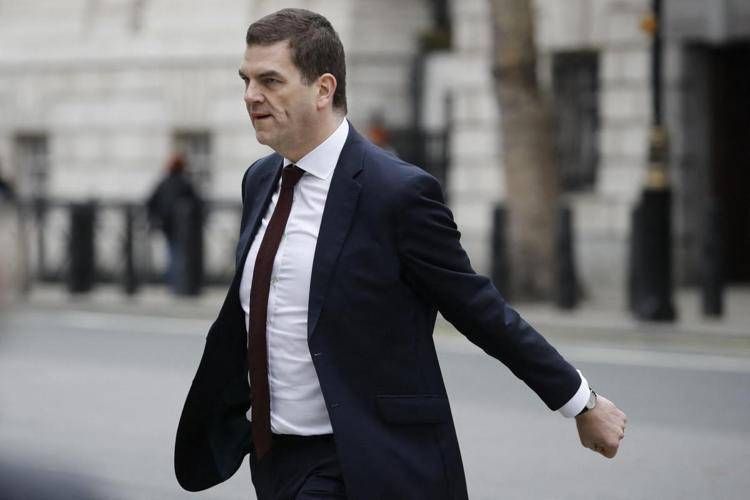
Sir Olly Robbins steps down after Keir Starmer was not informed that Lord Mandelson failed top-level security vetting required for...
Read More
Israel-Hezbollah ceasefire, Trump announces 10-day truce taking effect at midnight
16 Aprile 2026
U.S. president says agreement follows talks with Netanyahu and Aoun, with White House meetings planned U.S. President Donald Trump announced...
Read More

(Photo: © AndKronos)