Opposition leader says her return is tied to a US-backed transition plan aimed at political change and reconstruction by 2026...
Read More
International-News
US-Iran deadline and oil market scenarios drive global volatility
📰 LiberoReporter su Google News
Segui tutte le notizie senza perderne una
SEGUI ORA →
Segui tutte le notizie senza perderne una
Markets brace for the outcome of Donald Trump’s ultimatum to Tehran, with analysts outlining paths from de-escalation to renewed US strikes and sharp moves in oil prices
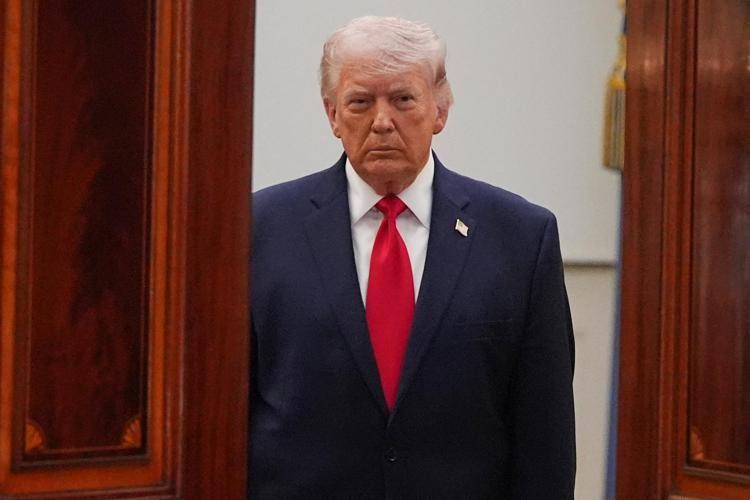
Global markets are entering a critical phase as the US-Iran deadline and oil market scenarios converge around an ultimatum set by President Donald Trump, with investors weighing outcomes that range from diplomatic de-escalation to renewed military strikes.
According to Filippo Diodovich, Senior Market Strategist at IG Italia, financial markets are oscillating between multiple short-term scenarios, none of which has yet fully priced in the most extreme risks. At present, oil prices reflect heightened geopolitical tension without tipping into full systemic panic. Brent crude is trading around $108 per barrel, with May futures near $110, while WTI stands close to $106, with futures at $116.
The deadline set by Trump expires Tuesday at 8 p.m. New York time—2 a.m. Wednesday in Italy—and centers on a US demand that Iran reopen the Strait of Hormuz and accept a truce or ceasefire. Tehran has rejected a temporary pause, insisting instead on a permanent end to hostilities, immediate cessation of attacks, reparations, and guarantees against future strikes.
For markets, the immediate question is not only whether military action will follow, but how Washington frames its next move. Trump has described the deadline as “final,” escalating rhetoric with threats of severe strikes against Iranian infrastructure, including bridges and power plants. In recent hours, he has also warned that “an entire civilization could die today” if Tehran refuses the deal.
Diodovich identifies five possible scenarios shaping the US-Iran deadline and oil market scenarios narrative.
The first, and most constructive for markets, is a genuine de-escalation. This would not require a full peace agreement overnight, but rather a credible delay in hostilities or a structured reopening of negotiations. In such a case, the geopolitical risk premium embedded in oil prices could unwind দ্রুত, pushing Brent below $95 per barrel and supporting a recovery in equity markets, particularly in Europe.
The second scenario—considered the most likely in the immediate term—is a prolonged standoff. The deadline would pass without agreement, but also without immediate escalation. This “TACO trade” dynamic—short for “Trump Always Chickens Out”—reflects investor expectations that Washington may once again delay or soften its stance. Under this scenario, Brent would likely fluctuate between $95 and $105, with equities staging only a partial rebound.
The third scenario involves new US strikes targeting Iranian infrastructure or other sensitive assets. This outcome, repeatedly signaled in Trump’s rhetoric, would mark a clear escalation. Oil prices could rise to between $110 and $120 per barrel, while equity markets would come under pressure, particularly in Europe, with cyclical sectors weakening and energy and defense stocks outperforming.
A fourth, more severe scenario would see the conflict expand to key maritime chokepoints and highly sensitive infrastructure. Particular attention is focused on Bab el-Mandeb, a strategic corridor between Yemen and the Horn of Africa, and on potential strikes near Iranian nuclear facilities such as Bushehr. Disruption in these areas would not only drive oil prices higher but also strain global shipping routes and supply chains. In this case, Brent could range between $120 and $160, with broad declines across global equities.
The fifth and most extreme scenario remains outside standard market modeling: a level of escalation severe enough to trigger panic pricing. While no concrete signals currently point to non-conventional military action, the language used by Washington forces investors to consider tail risks. In such a case, oil prices could surge well above $160 per barrel, accompanied by a sharp flight to safe-haven assets and widespread losses across risk markets.
For now, markets remain suspended between tension and restraint, with the next moves from Washington and Tehran set to determine whether current volatility stabilizes—or accelerates into a more disruptive phase.
THE LATEST NEWS

Secret Service shoots man near White House after gunfire
24 Maggio 2026
21-year-old opened fire at checkpoint; bystander wounded, no agents injured A man was shot and killed by Secret Service agents...
Read More

Iran-trained suspect plotted to kill Ivanka Trump, US says
23 Maggio 2026
Arrested Iraqi national allegedly mapped her Florida home and tied threats to Soleimani killing An Iraqi national allegedly trained by...
Read More

Trump Skips Son’s Bahamas Wedding Over White House Duties
22 Maggio 2026
The U.S. president says official responsibilities will keep him in Washington during Donald Trump Jr.’s weekend ceremony Trump declines to...
Read More
U.S.-Iran Ceasefire Draft Framework Emerges in Pakistan-Mediated Talks, Report Says
22 Maggio 2026
A reported draft outline for a potential agreement between Iran and the United States includes an immediate and unconditional ceasefire,...
Read More
Trump says Iran strike was “one hour away” as U.S. sets deadline for talks
19 Maggio 2026
The U.S. president signals a narrow diplomatic window for Tehran while warning that a large-scale attack remains possible if negotiations...
Read More
(Photo: © AndKronos)