Negotiations continue over location and conditions as diplomatic framework advances between Washington and Tehran Lake Geneva is being considered as...
Read More
International-News
Russian refusal to negotiate: Moscow blocks progress on Ukraine peace efforts

-The Russian refusal to negotiate is stalling diplomatic efforts on the Ukraine war, with Moscow rejecting key proposals and reinforcing its strategic pressure on Kyiv-
The Russian refusal to negotiate continues to overshadow attempts to revive a peace process in Ukraine. While Kyiv is in dialogue with the United States to explore a compromise based on Donald Trump’s draft plan, a crucial question hangs over the diplomatic landscape: is Moscow genuinely willing to sit down and talk? According to the Institute for the Study of War (ISW), at least three clear indicators suggest the opposite.
Why the Russian refusal to negotiate remains the main obstacle
Signals from the Kremlin support the idea of a persistent Russian refusal to negotiate. Vladimir Putin has reiterated that Moscow will achieve its objectives “on the battlefield if necessary”, with the Donbass remaining the top priority. Russia controls only part of the region, and its territorial ambitions alone represent a major obstacle to any rapid breakthrough.
In recent days, new elements have emerged. Ukraine’s president Volodymyr Zelensky continues to stress the need for solid security guarantees. Meanwhile, Russian foreign minister Sergei Lavrov has warned that Moscow will respond to “any hostile step”, referring specifically to the possible deployment of European troops in Ukraine and to the seizure of frozen Russian assets.
At the same time, Alexei Chepa, first vice-chair of the State Duma’s International Affairs Committee, declared that Russia would deliberately target any European military contingent deployed in Ukraine.
A challenge to Kyiv’s political legitimacy
Moscow has also broadened the scope of its objections by questioning the legitimacy of the Ukrainian government. The Kremlin has long labelled Zelensky an “usurper” due to his expired mandate. Interestingly, even Trump has highlighted the need for elections in Kyiv. Zelensky has already stated he is ready to hold them within 60–90 days if security conditions are guaranteed by the US and Europe.
For Moscow, however, this is not the right path. Foreign ministry spokesperson Maria Zakharova accused Zelensky of “cynicism” for seeking Western support, describing it as a surrender of sovereignty. These statements, notes the ISW, echo the pattern of Putin’s repeated claims—27 in total—suggesting he would prefer to sign a peace deal with a pro-Russian government in Kyiv.
Another rejection: no to Ukraine’s proposal for an energy ceasefire
Moscow has also dismissed the Ukrainian idea of an “energy ceasefire”, which would involve halting attacks on refineries and oil facilities. Kremlin spokesperson Dmitry Peskov rejected the proposal outright, saying: “We work for peace, not for a truce.”
With such barriers, meaningful dialogue appears distant, and the war continues on the ground. The focal point remains Donetsk, where Russian forces have not seized full control of Pokrovsk despite Putin’s public assertions.
Potential new fronts: the Transnistria risk
According to the ISW, the Russian refusal to negotiate may also reflect a broader strategy to prolong the war by opening additional fronts. Moscow “could create conditions to threaten the Odesa oblast from Russian-occupied Transnistria”, an attempt to stretch Ukrainian resources across the southwest.
Ukrainian military intelligence (GUR) reports that Russia is reinforcing its presence in Transnistria by recalling reservists, removing weapons from storage sites, and establishing drone production and training centres.
These developments increase the risk of Russian sabotage and reconnaissance groups infiltrating the Odesa region from Transnistria. Tiraspol, the regional capital, lies only 80 km from Odesa—well within range for medium-range Russian drone attacks. Moscow has already demonstrated its capacity to strike 25–100 km behind Ukrainian lines using specialised drone units, and could transfer part of this capability to its forces in Transnistria.
This strategy would stretch Ukrainian defences, forcing Kyiv to redirect manpower away from the eastern front. However, according to the ISW, Russia is unlikely to capture the Odesa or Mykolaiv oblasts in the short term: any operations would consist mainly of limited raids and drone strikes rather than a large-scale offensive.
THE LATEST NEWS
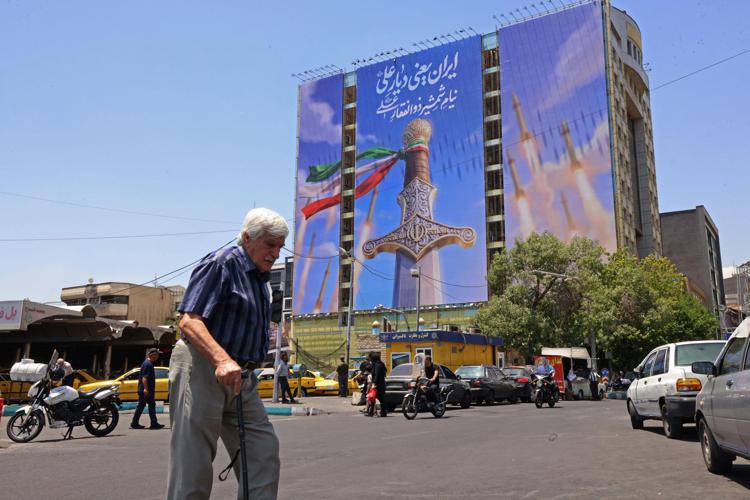
Trump Claims US–Iran Deal Reached as Markets React With Caution
11 Giugno 2026
The US president announces on Truth Social that strikes against Iran have been cancelled after an alleged agreement involving multiple...
Read More
Trump Signals Continued Military Pressure on Iran Amid Fragile Negotiations Over Nuclear Deal and Oil Assets
11 Giugno 2026
U.S. President Donald Trump reiterates threats of sustained strikes and strategic pressure on Iran while diplomatic channels remain open over...
Read More

Bill Gates Testifies in Jeffrey Epstein Inquiry, Denies Knowledge of Crimes
10 Giugno 2026
Bill Gates told the U.S. House Oversight Committee he had no awareness of Jeffrey Epstein’s criminal activity and called their...
Read More
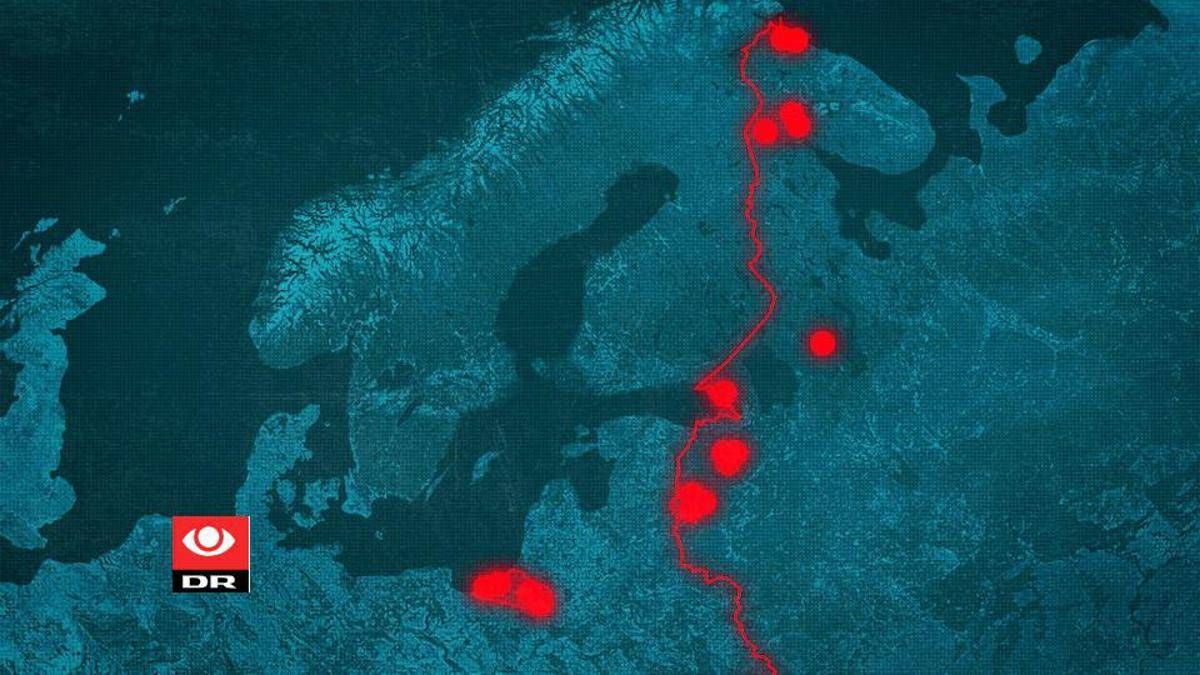
Russia prepares for possible NATO conflict in Northern Europe
10 Giugno 2026
A joint Nordic investigation points to a structural military buildup along Russia’s northern frontier, with a potential one-to-three-year window of...
Read More
Telegraph changes its stance on Sicily after controversy
9 Giugno 2026
From coverage of Dua Lipa’s wedding at Villa Valguarnera, with references to the mafia, to a study naming the island...
Read More

(Photo: © AndKronos)